The Best Way to Get Your Dishwasher to Actually Dry the Dishes

Few things are more frustrating than opening the dishwasher and finding plates, glasses, and containers still coated in water. It feels like the job is only half finished, even though the dishes are clean. Many people assume this means something is broken, but modern dishwashers are designed very differently from older models. Today’s machines are built to save energy and water, which means they rely less on intense heat and more on controlled processes like condensation, airflow, and surface chemistry. Drying is no longer a brute-force step at the end of the cycle. Instead, it depends on how heat is retained, how moisture moves, and how quickly steam can escape once washing is complete.
Understanding this shift changes how you approach dishwasher use and explains why results vary so much. The way dishes are loaded, the materials they are made from, and what happens after the cycle ends all influence drying. Plastics shed heat quickly, crowded racks trap moisture, and poor airflow allows water to settle back onto clean surfaces. Once you stop expecting modern machines to behave like older heat-heavy models, the process becomes predictable. Simple habits such as spacing items properly, using rinse aid, choosing the right cycle, and releasing steam at the right time work together to guide moisture away.
Why Dishwashers Leave Dishes Wet
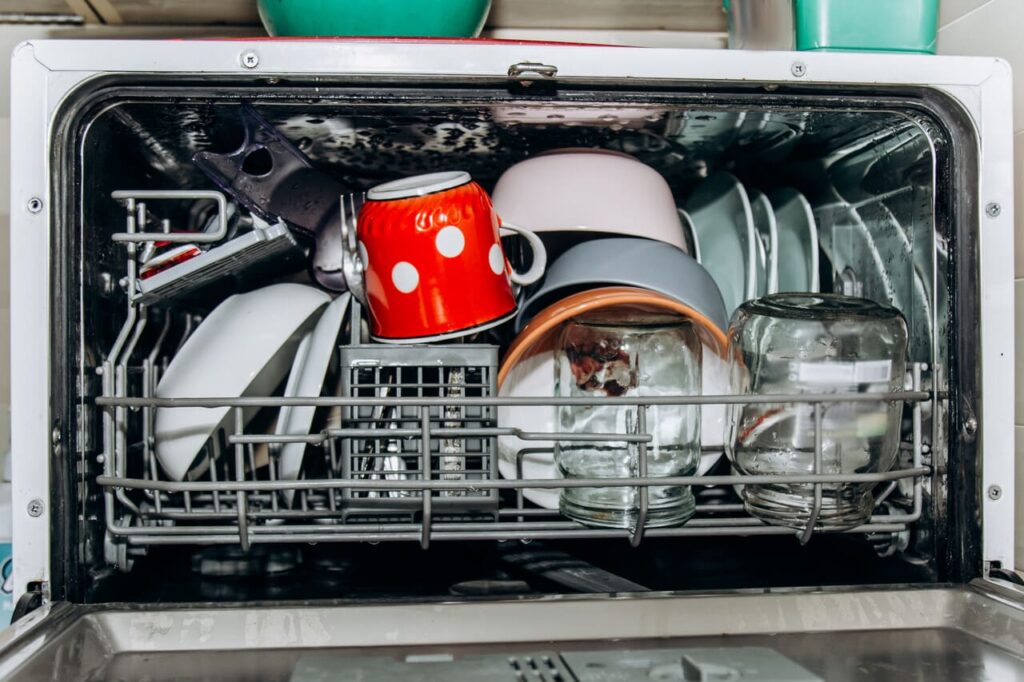
A dishwasher that ends its cycle with clean but wet dishes is often functioning exactly as it was designed to. Many modern machines no longer rely on powerful heating elements to bake moisture away. Instead, they use condensation drying to reduce energy use. During the final rinse, very hot water warms the dishes themselves. As the interior cools, steam is supposed to condense on the cooler stainless steel walls and drain away. Glass, ceramic, and metal respond well because they retain heat long enough to encourage evaporation. When this process works properly, moisture leaves the dishes naturally rather than being forced off by high heat.
Plastic items create the most noticeable drying problems because they behave very differently. Plastic does not retain heat, so water droplets have nothing warm to evaporate from once the rinse ends. Moisture clings to containers, lids, and utensils long after the cycle finishes. Shape also plays a role. Flat bottoms, deep rims, and recessed areas allow water to pool instead of draining. Crowded loading makes the issue worse by blocking airflow and trapping steam. What appears to be weak performance is usually the result of material properties and loading patterns rather than a faulty dishwasher.
How Rinse Aid Changes Everything
Rinse aid often sounds optional, but it plays a central role in how dishwashers dry dishes effectively. Its main job is to change the behavior of water during the final rinse. Normally, water forms droplets that cling to plates, glasses, and especially plastics. Rinse aid reduces water’s surface tension, causing it to spread into thin sheets instead of beads. These sheets slide off surfaces quickly and drain away before the cooling phase begins. This process limits how much moisture remains available to cling to dishes once the wash cycle ends, setting the stage for better drying without extra heat.
Without rinse aid, even a high-quality dishwasher struggles to dry properly. Detergent removes food and grease, but it does nothing to control how water behaves afterward. During the final rinse, rinse aid coats surfaces invisibly, helping water release instead of sticking. This is especially important for plastics, which cool rapidly and encourage droplets to remain. Rinse aid also improves glass clarity, reduces spots, and shortens drying time. In dishwashers that rely on condensation rather than heating elements, it is not a luxury. It is one of the most dependable ways to achieve dry dishes without changing cycles or loading habits.
Heat and Airflow Explained
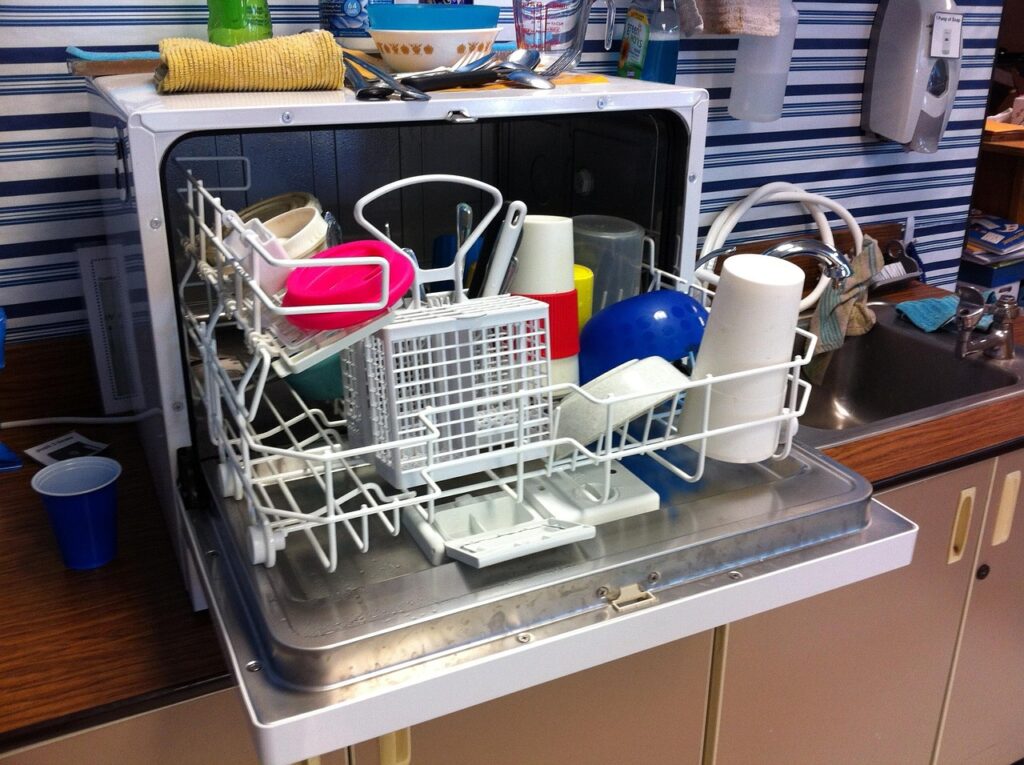
Heat still plays a role in drying dishes, but its function has changed in modern dishwashers. Older machines relied on exposed heating elements to aggressively evaporate water at the end of the cycle. Newer models are designed to use less energy, so they depend more on retained heat from the final rinse. Hot water warms dishes, and as the interior cools, moisture is meant to evaporate and move away. Some dishwashers enhance this process with fans that circulate air and push humid air out of the tub. Others rely on passive airflow, where steam naturally rises and condenses on cooler interior walls instead of on dishes.
Airflow is the factor that determines whether heat actually leads to dry results. When air can move freely, moisture escapes instead of settling back onto surfaces. If racks are crowded or large items block vents, steam becomes trapped and condenses where it shouldn’t. Even very hot dishes will stay wet if humid air has nowhere to go. Fan-assisted systems improve consistency, but they still depend on clear pathways. Poor airflow can undo the benefits of high temperatures in just minutes. Heat creates the conditions for evaporation, yet airflow decides whether that moisture leaves the dishwasher or returns to your dishes.
Loading Habits That Improve Drying
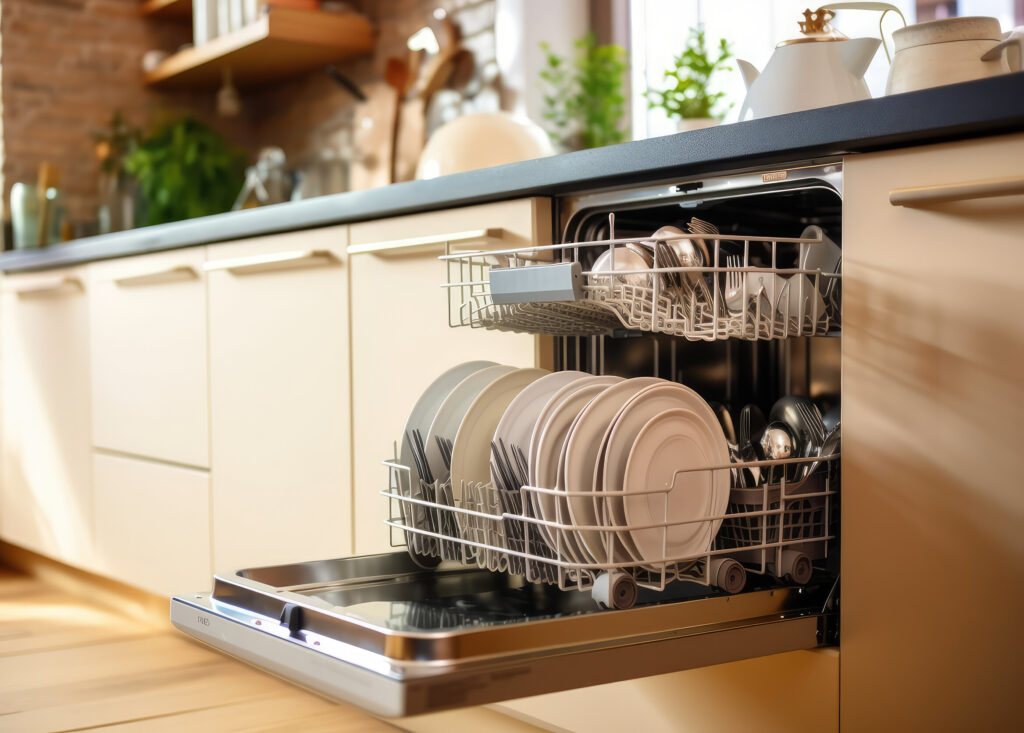
How a dishwasher is loaded plays a larger role in drying than most people realize. When dishes are crowded or stacked too closely, water becomes trapped between surfaces with no clear path to drain or evaporate. Airflow is disrupted, steam lingers, and moisture settles back onto clean items. Proper spacing allows gravity to pull water downward while warm air circulates each piece. Plates should face inward toward the spray arms, bowls should sit at an angle so water cannot pool, and cups should always be tilted rather than placed flat. Even small adjustments in orientation can prevent hidden puddles that lead to damp results.
Rack placement is just as important as spacing. Plastics should always go on the top rack, where the heat is lower, and water can drain more easily from lightweight items. On the bottom rack, glass and ceramic perform better because they retain heat longer, helping moisture evaporate during cooling. Mixing materials thoughtfully can improve results, as warmer items nearby encourage evaporation. Overloading is one of the most common drying mistakes. A slightly smaller load with clear gaps between items almost always dries better than a tightly packed dishwasher filled, even if the cycle time is the same.
Timing and Technique That Work
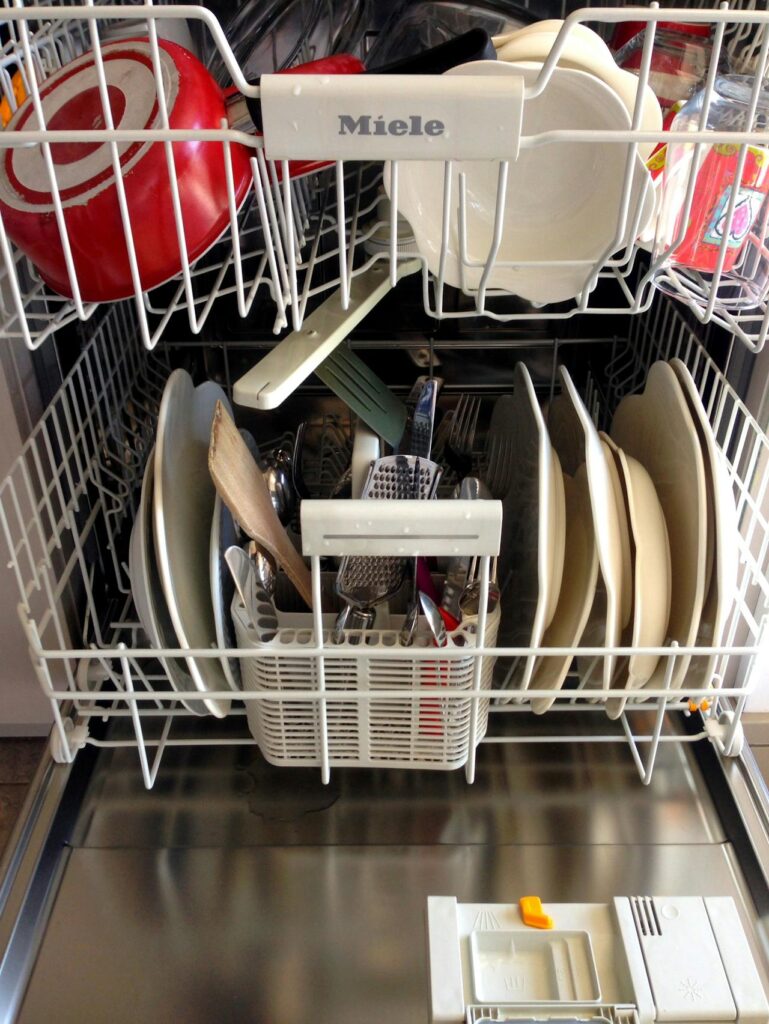
Sometimes the simplest change happens after the dishwasher stops running. Opening the door slightly as soon as the cycle ends allows trapped steam to escape instead of lingering inside the tub. When steam has nowhere to go, it cools and settles back onto dishes as condensation, undoing much of the drying process. Releasing that moisture early helps redirect it away from plates, glasses, and containers. This step is especially helpful for plastics, which cool quickly and attract water droplets. Even cracking the door open an inch can significantly reduce leftover moisture and improve overall drying results without changing any settings.
Timing matters just as much as the action itself. Allowing dishes to rest for a few minutes before unloading encourages gradual cooling, which supports evaporation rather than condensation. Rapid temperature shifts cause water to reappear on surfaces that were nearly dry moments before. Some modern dishwashers automate this by opening the door at the end of the cycle, but manual timing works just as well. Drying should be viewed as a short continuation of the wash process, not a finished step. Paying attention to when and how you unload helps turn damp dishes into consistently dry, ready-to-use ones.
Reference
- The Best Way to Get Your Dishwasher to Actually Dry Your Dishes – sg.news.yahoo.com
- How dishwashers dry dishes—and why it matters – reviewed.com
- Pull Truly Dry Dishes From the Dishwasher With This Simple Trick – cnet.com