7 Traditional German Recipes That Tell a Story on the Plate

German food is often described as hearty, but that word barely scratches the surface. Traditional German recipes were shaped by geography, climate, trade routes, and daily survival, long before they were ever judged for flavor alone. Each dish reflects how people lived, what they had access to, and what they needed to endure long winters, physical labor, and limited resources. Preservation techniques, careful use of ingredients, and slow cooking methods were not trends. They were necessities. Over time, these practical choices evolved into deeply rooted traditions passed from one generation to the next.
1. Sauerbraten
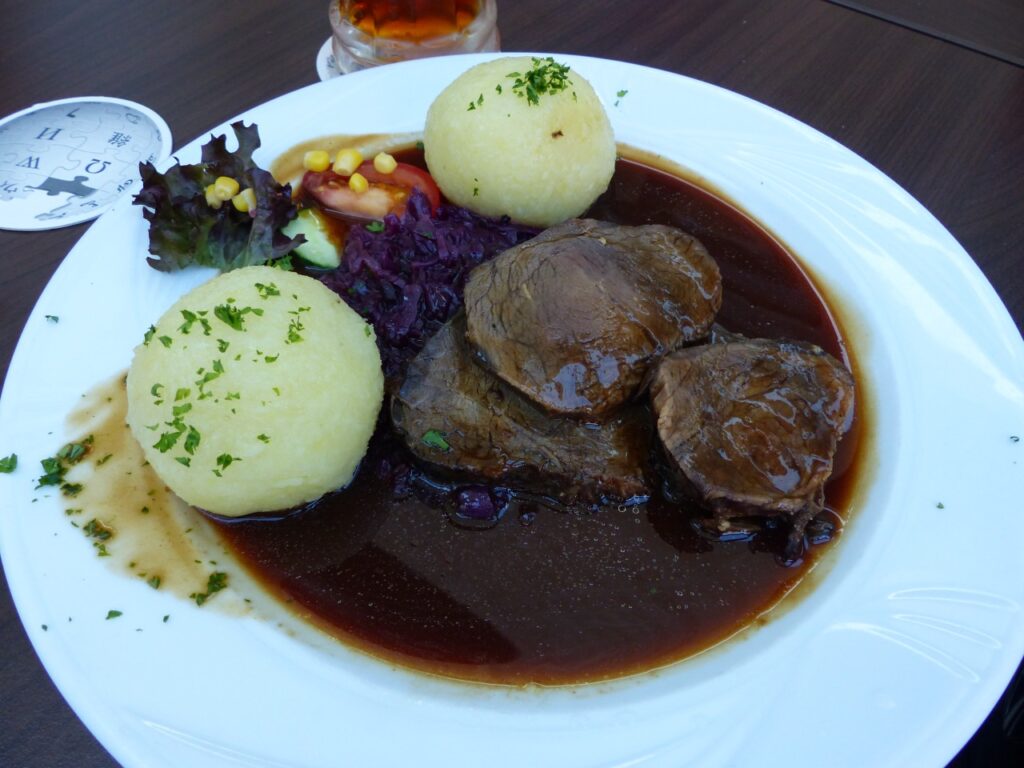
Sauerbraten begins with time, not heat, and that choice explains almost everything about the dish. Long before refrigeration, German cooks relied on acidic marinades to preserve meat and improve texture. Beef was soaked for several days in vinegar or wine with onions, juniper berries, cloves, and bay leaves, allowing tough muscle fibers to break down slowly. This process creates tenderness without masking the flavor of the meat itself. After marinating, the beef is braised gently, producing a roast that is rich but balanced, with a mild tang rather than sharp sourness. Regional traditions shape the final taste.
2. Schweinshaxe
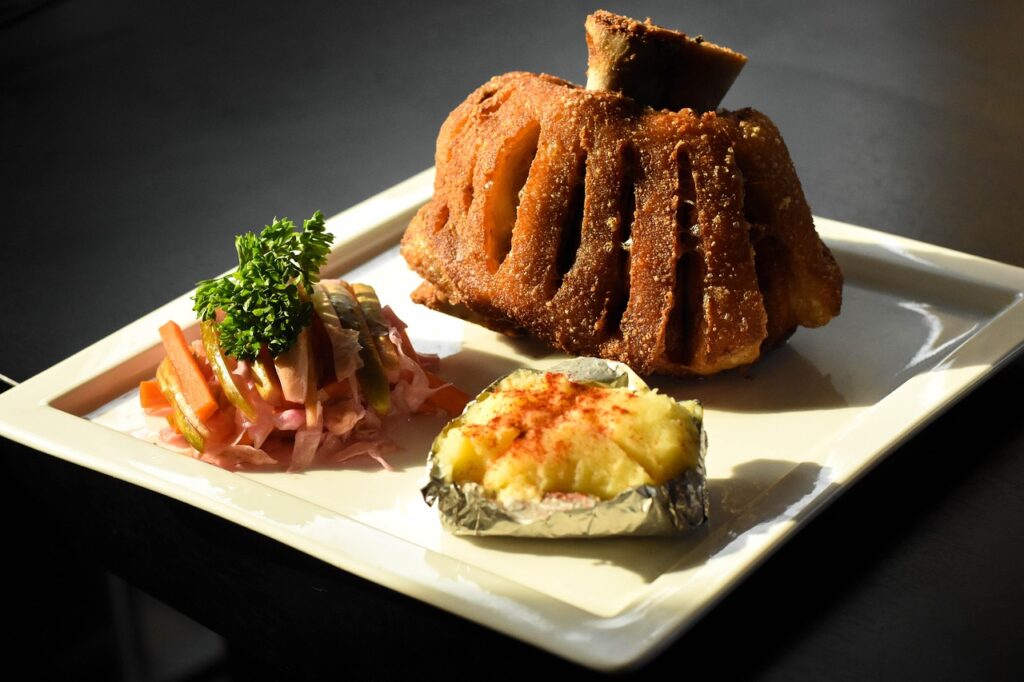
Schweinshaxe tells the story of rural abundance and physical labor. This roasted pork knuckle was historically eaten by farmers and workers who needed dense, sustaining meals. The cut itself is tough and sinewy, but when cooked slowly at first, the connective tissue softens, and the fat renders into the meat. Toward the end of cooking, high heat transforms the skin into crisp crackling, creating contrast between the crunchy exterior and juicy interior. This technique shows a deep understanding of the animal rather than reliance on expensive cuts. Schweinshaxe is especially associated with Bavaria, where pork has long been central to the die,t and beer halls encouraged large communal meals.
3. Rouladen
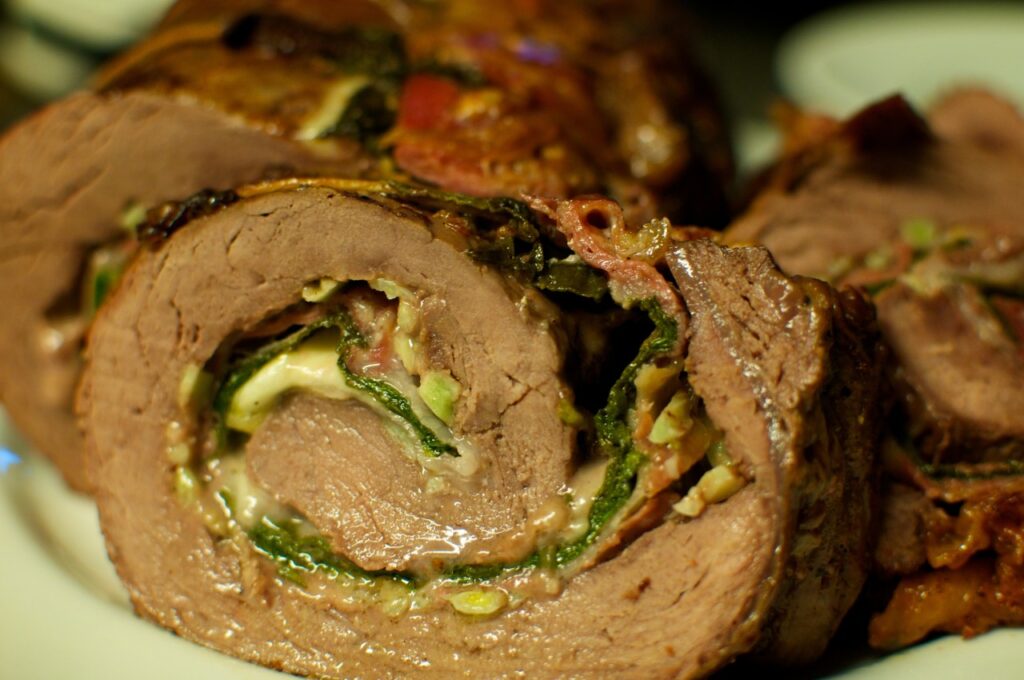
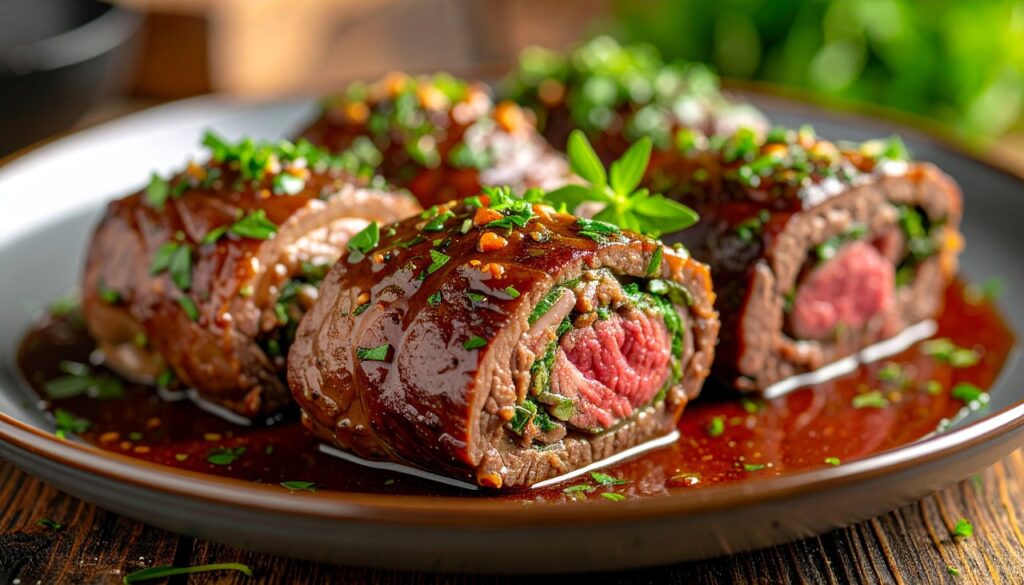
Rouladen is built on the idea that careful assembly can elevate simple ingredients. Thin slices of beef are spread with mustard, then layered with onions, bacon, and pickles before being rolled and braised. Each component has a purpose. Mustard adds acidity, pickles provide brightness, bacon contributes fat, and onions soften into the sauce. The dish emerged from households where meat was expensive and needed to be stretched thoughtfully. By rolling rather than cutting, cooks created portions that felt generous without using more beef. Slow braising tenderizes the meat while allowing flavors to meld into a savory gravy.
4. Königsberger Klopse
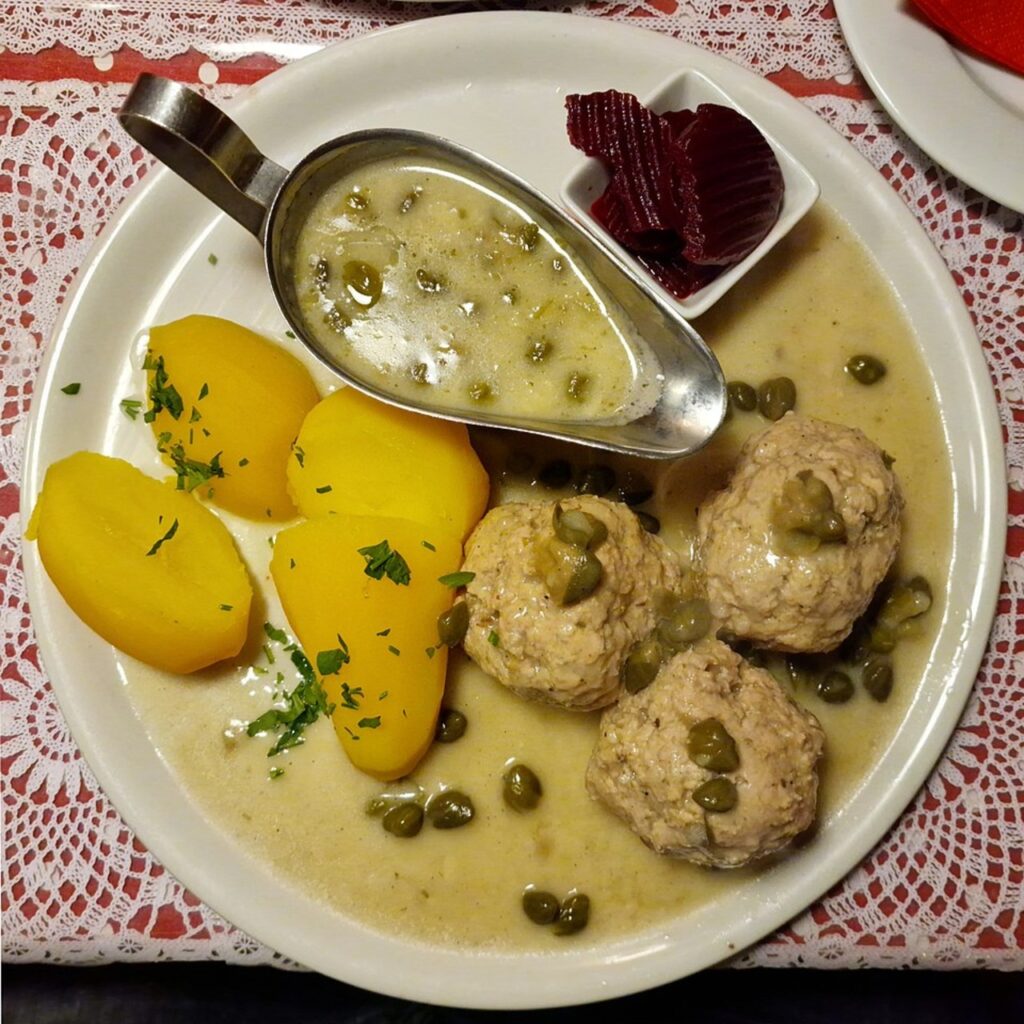
Königsberger Klopse represents a more refined chapter of German culinary history. Originating in the former East Prussian city of Königsberg, this dish reflects the influence of trade and aristocratic tastes. The meatballs are made from finely ground veal or beef, often mixed with soaked bread rather than breadcrumbs to create a soft texture. They are gently poached rather than fried, keeping them pale and delicate. The defining element is the sauce, a creamy broth finished with capers. At a time when imported ingredients were costly, capers signaled sophistication and access to global trade routes.
5. Spätzle

Spätzle reflects everyday life more than celebration. These soft egg noodles originated in southern Germany, where eggs were plentiful and dough-based foods were practical. Unlike uniform pasta, Spätzle is intentionally irregular, shaped by hand or scraped into boiling water. This lack of precision is part of its identity. The dough relies on a few ingredients, yet technique matters. Proper mixing creates elasticity, while quick cooking keeps the noodles tender without becoming dense. Spätzle absorbs sauces, making it a reliable companion to gravies, roasted meats, or melted cheese. In poorer households, it often served as a main source of calories, replacing meat when necessary.
6. Labskaus
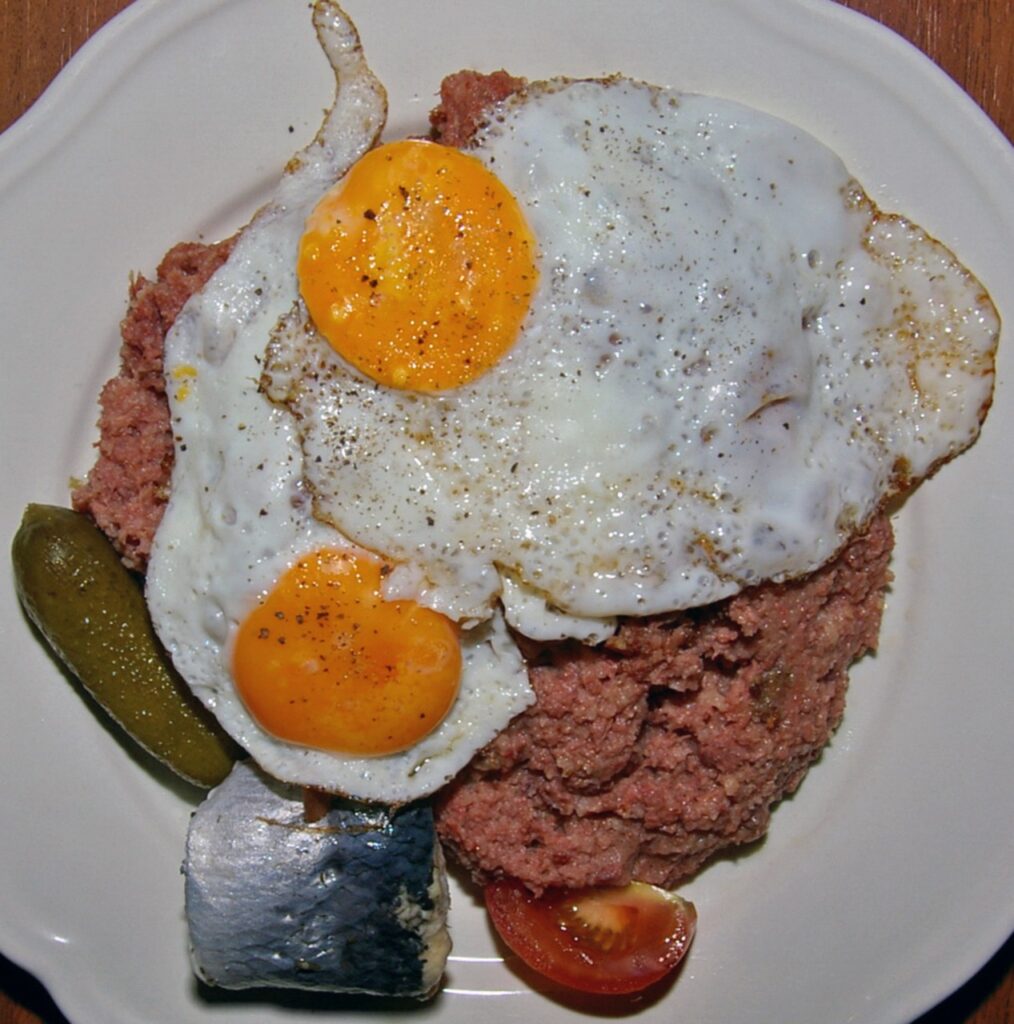
Labskaus is a dish shaped entirely by necessity and geography. Developed among sailors in northern Germany, it was designed for long sea voyages where fresh ingredients were scarce. Corned beef, potatoes, and onions could be stored for extended periods and prepared with minimal equipment. These ingredients were mashed together for ease of eating, especially for sailors suffering from dental problems. Beets were added for vitamins and color, while pickled herring or gherkins provided acidity and preserved nutrients. Though its appearance is often surprising, Labskaus is nutritionally balanced for its context.
7. Schwarzwälder Kirschtorte

Black Forest cake represents celebration and regional pride rather than survival. Originating in southwestern Germany, it is built around ingredients native to the Black Forest region, including cherries, cream, and kirsch made from local fruit. Chocolate sponge layers are lightly soaked in cherry brandy, then filled with whipped cream and cherries. The balance is intentional. The cake is rich but not overly sweet, with acidity from the fruit and bitterness from the cocoa. This dessert gained popularity in the twentieth century, when improved access to ingredients allowed home bakers to attempt more elaborate creations. It became associated with birthdays, weddings, and holidays.