11 Unique Christmas Cookies from Around the World

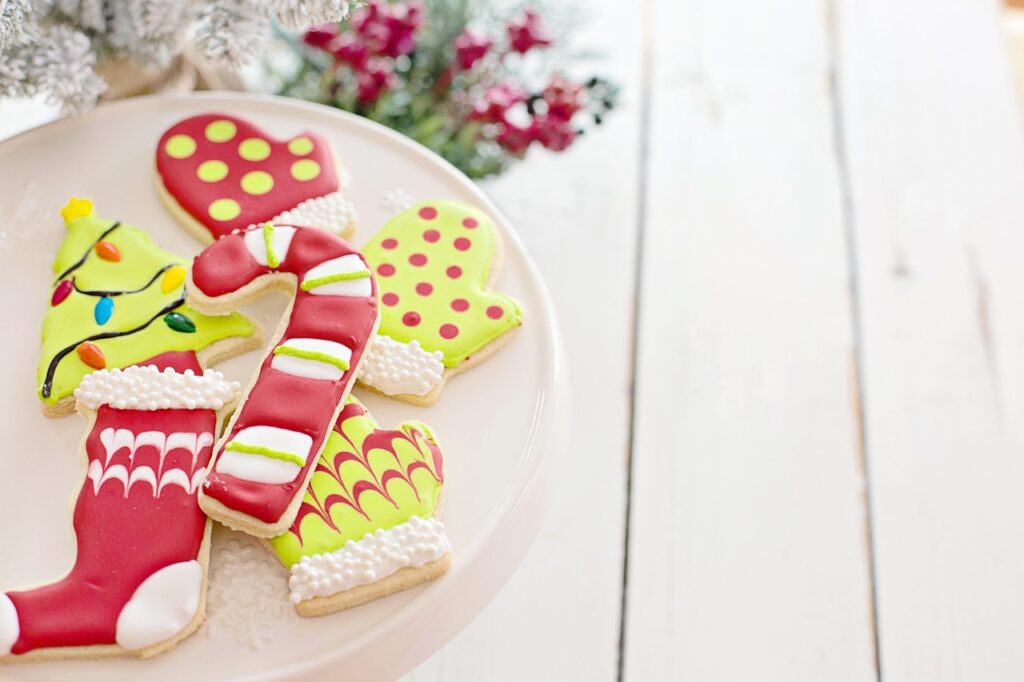
Christmas cookies reflect the history, ingredients, and baking techniques that different cultures have passed down through generations. Many of these recipes began as regional specialties shaped by local spices, grains, and festive rituals, yet they now appear on holiday tables around the world. Each cookie carries its own texture and flavor profile, from crisp and spiced to soft and buttery, showing how varied holiday baking can be. Exploring these traditions offers a welcoming way to appreciate global culinary heritage.
1. Speculaas
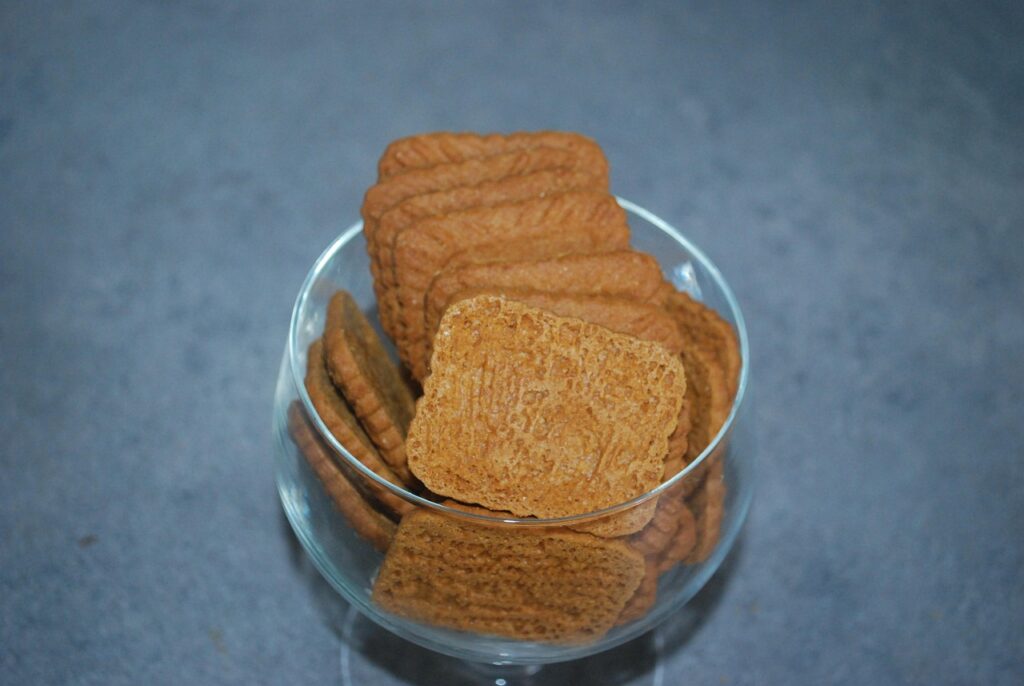
Speculaas are distinctive spiced cookies that have become a holiday symbol in the Netherlands and Belgium, known for their carved designs and crisp texture. Their flavor comes from a blend of warming spices such as cinnamon, nutmeg, ginger, and cloves, which were historically linked to winter feasts and long-distance spice trade routes. The dough is traditionally pressed into wooden molds that imprint decorative scenes, although modern bakers often use cookie cutters for convenience. When baked, the cookies develop a firm, slightly sandy texture that keeps well for days, making them practical for gifting and festive displays.
2. Sandbakelse
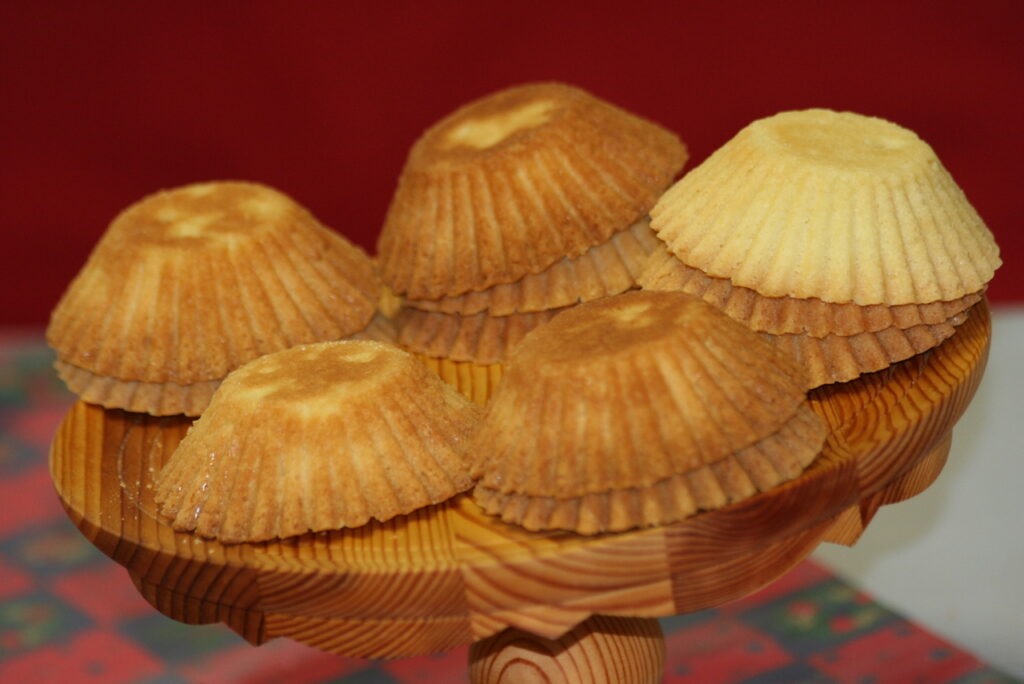
Sandbakelse, or sandbakkels, are delicate Norwegian almond cookies shaped in small fluted tins that give them a signature shell-like appearance. The dough is rich in butter and finely ground almonds, which creates a crumbly, melt-in-the-mouth texture that explains the name, referring to a sand-like consistency. Because the cookies themselves are mildly sweet, they are often served plain or filled lightly with fruit preserves or whipped cream during celebrations. Their long history in Norwegian holiday traditions reflects both the region’s reliance on almond-based baking and its emphasis on handcrafted techniques.
3. Krumkake
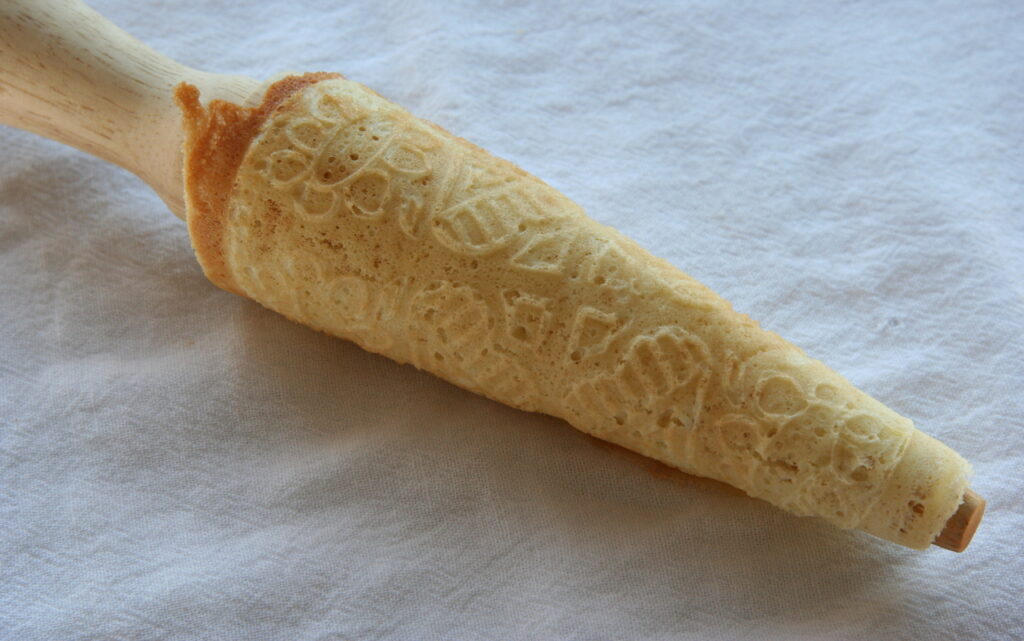
Krumkake are thin, delicate Norwegian cookies made using a decorative iron that imprints intricate patterns onto the batter. Once cooked, the warm wafers are quickly rolled into a cone shape around a wooden dowel, which gives them their characteristic structure. The batter itself is simple, typically made from eggs, sugar, butter, and flour, which allows the flavor of the caramelized surface to shine through. Some variations include cardamom, a spice widely used in Scandinavian baking. Krumkake can be enjoyed plain or filled with lightly sweetened whipped cream just before serving to maintain crispness.
4. Zimtsterne
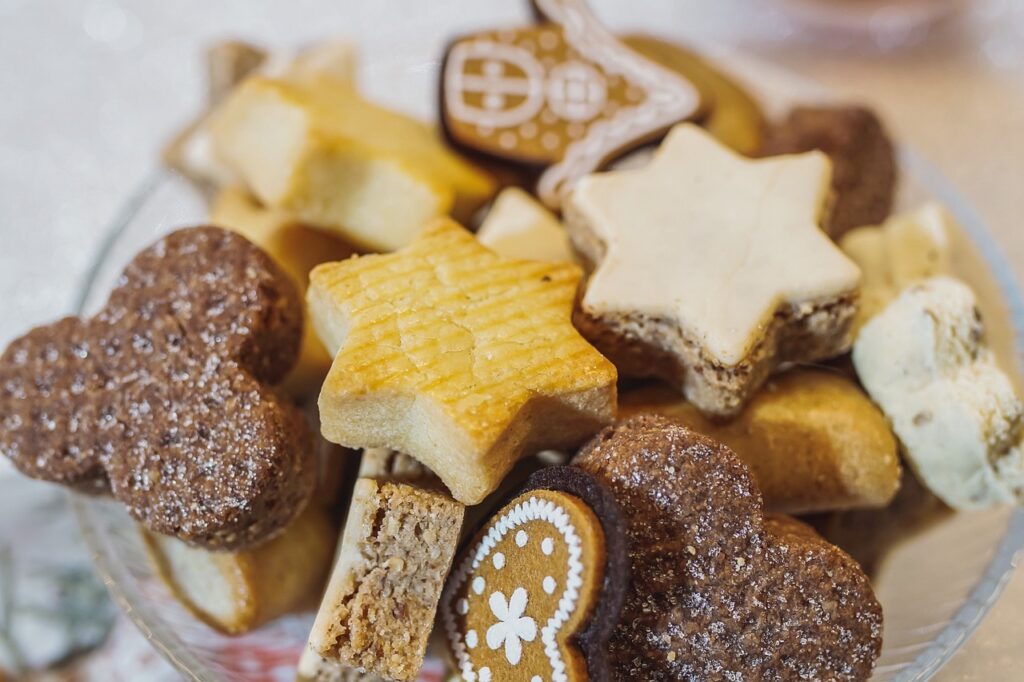
Zimtsterne are German cinnamon almond cookies recognized by their star shape and snowy white icing. They rely on ground almonds rather than wheat flour, which produces a chewy interior with a glossy surface once baked. Cinnamon is the defining flavor, and its intensity reflects the long-standing German tradition of spice-centered Christmas baking. The cookies are typically coated with a meringue-style icing before baking, creating a crisp top layer that contrasts with the moist center. Zimtsterne keep well and are commonly included in assortment tins during the holiday season, offering both visual appeal and a distinct spice profile.
5. Rosette Cookies
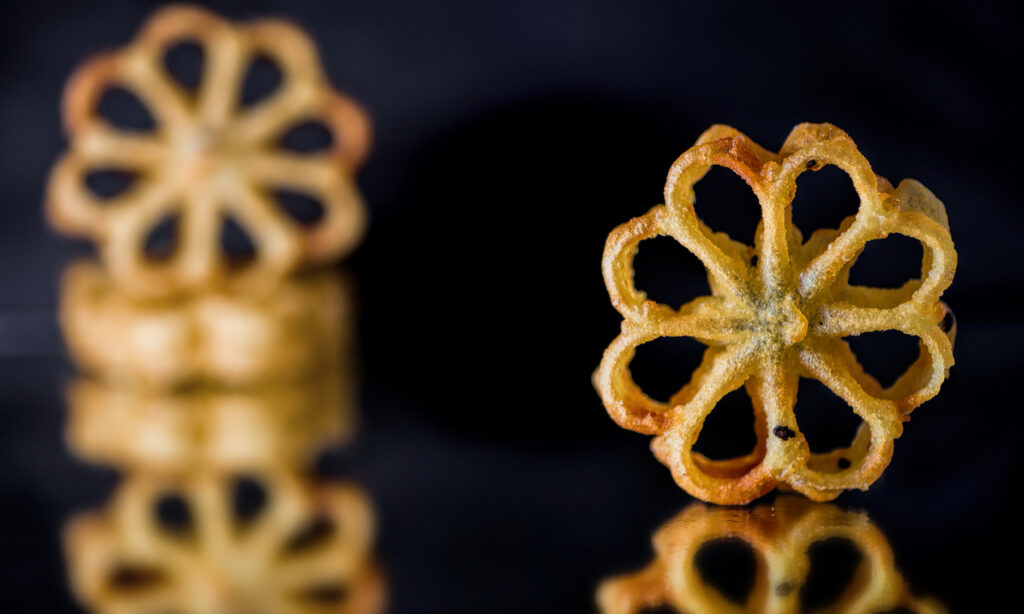
Rosette cookies are thin, crisp pastries made by dipping a rosette iron into batter and then into hot oil, creating a delicate, lacy structure. Originating in Scandinavia and common in many Nordic American households, rosettes depend on the temperature of the oil and the even coating of the batter to achieve their hallmark crispness. Once fried, they are dusted lightly with powdered sugar, which adds sweetness without masking their subtle vanilla or citrus notes. Rosettes require attention during frying but yield visually striking cookies that resemble snowflakes, making them particularly fitting for winter celebrations.
6. Pizzelle
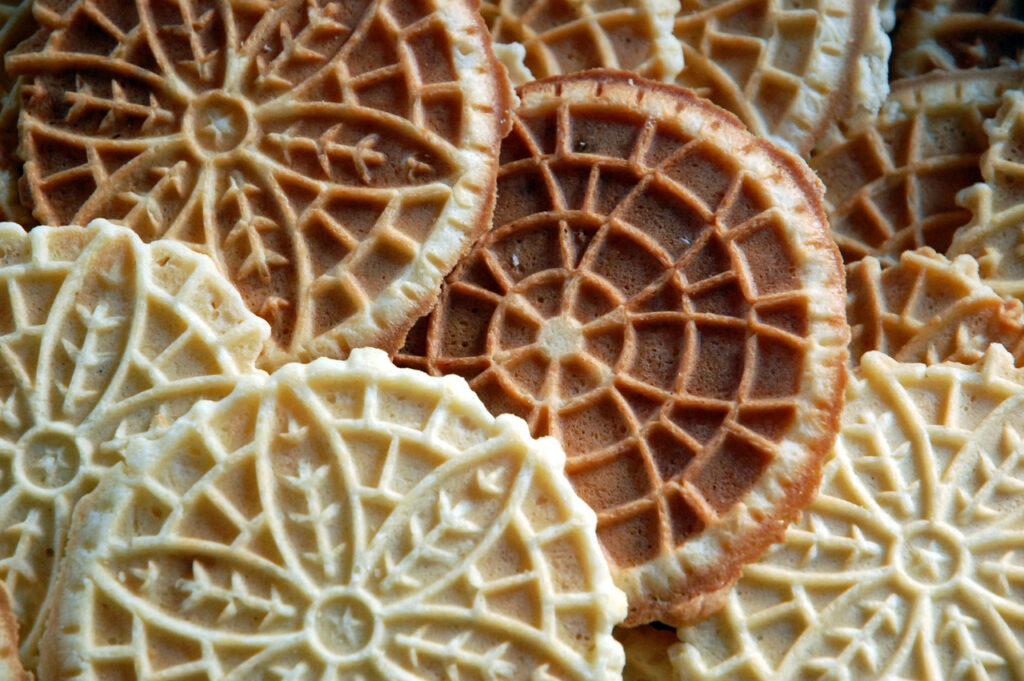
Pizzelle are traditional Italian waffle cookies formed using an iron that imprints a floral or geometric pattern onto thin discs. The batter is typically flavored with anise, vanilla, or lemon, each ingredient offering a distinct aromatic profile rooted in regional Italian preferences. When cooked, the cookies can be left flat or shaped while warm into tubes or bowls for filling with cream or chocolate. Their light crispness comes from a balance of eggs, sugar, and butter. Pizzelle often appear at Italian holiday gatherings because they are simple to prepare in large batches and offer versatility in flavor and presentation.
7. Kolachkes
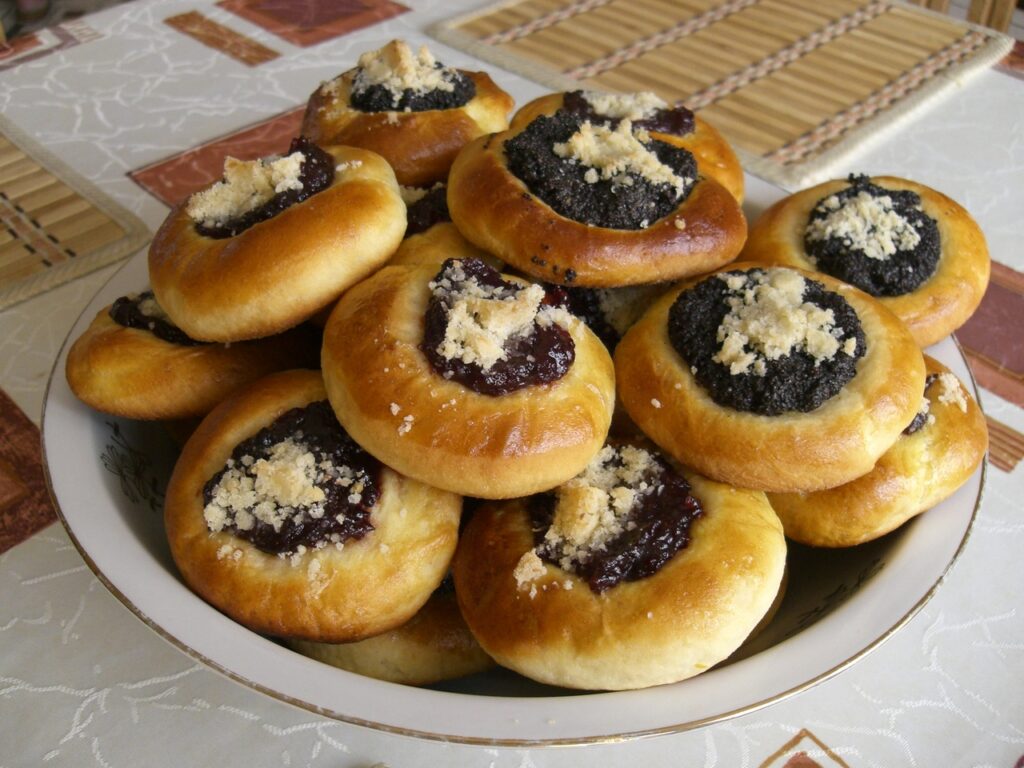
Kolachkes, found across Eastern European holiday traditions, are filled cookies made with a tender, buttery dough and a fruit or cheese center. The dough often incorporates cream cheese or sour cream, which enhances its softness and allows it to bake into a gently flaky texture. Fillings vary widely, from apricot and raspberry preserves to nut pastes or sweetened cheese mixtures, reflecting cultural and regional influences. The cookies hold their shape well in the oven and develop lightly browned edges that contrast with the bright, glossy centers. Their adaptability and familiar textures make them popular at celebrations.
8. Cuccidati
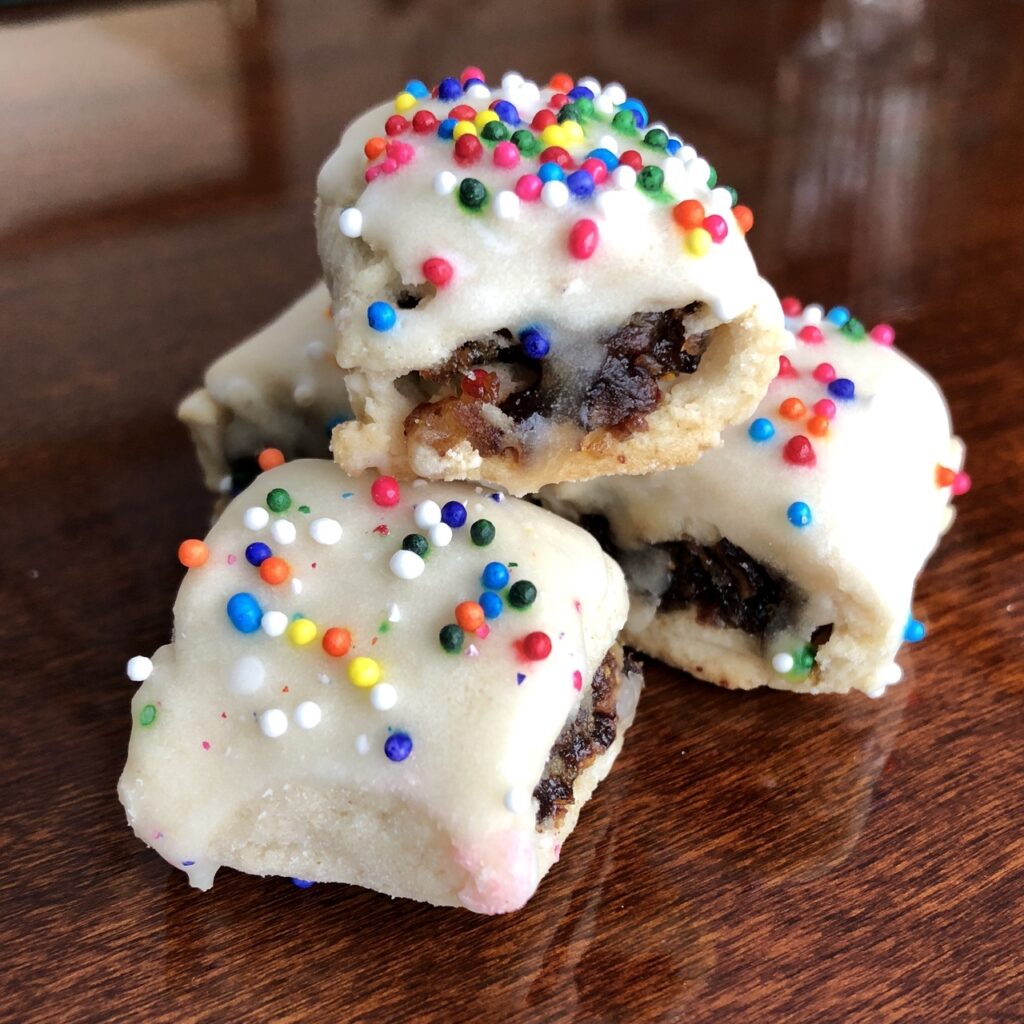
Cuccidati are Sicilian fig cookies filled with a mixture of dried figs, nuts, citrus zest, and warm spices, all wrapped in a soft pastry. The filling often includes touches of honey or jam, which bind ingredients and produce a rich, concentrated flavor profile that deepens during baking. The pastry itself is mildly sweet, allowing the filling to remain the star. Once assembled, the cookies are often topped with a thin icing and colorful sprinkles, a hallmark of many Italian festive treats. They are particularly popular during Christmas and are often prepared in large batches for family gatherings.
9. Polvorones
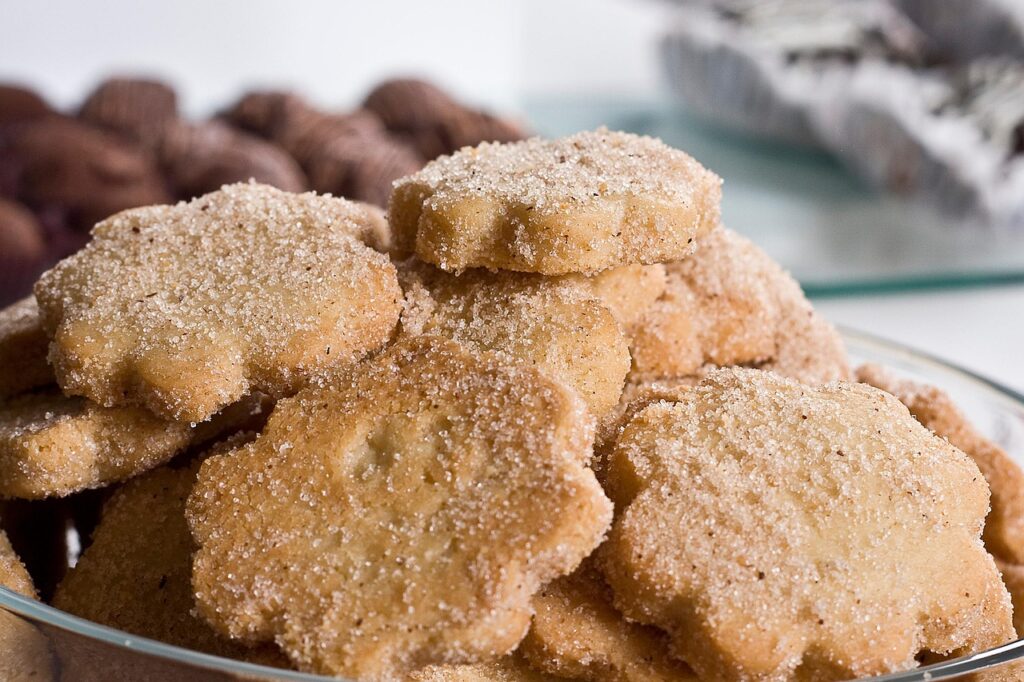
Polvorones are crumbly Spanish shortbread cookies made with flour, sugar, and a high proportion of fat, often from butter or lard. Their name refers to their powdery, delicate texture, which causes them to break apart easily when eaten. Toasting the flour before mixing is a traditional method that adds a nutty aroma and contributes to the cookie’s signature consistency. Some versions incorporate ground almonds or spices such as cinnamon. Polvorones are molded by hand and sometimes dusted with powdered sugar after baking. Their crumbly nature makes them a staple in Spanish holiday assortments and a familiar treat across Spanish-speaking cultures.
10. Swedish Butter Cookies
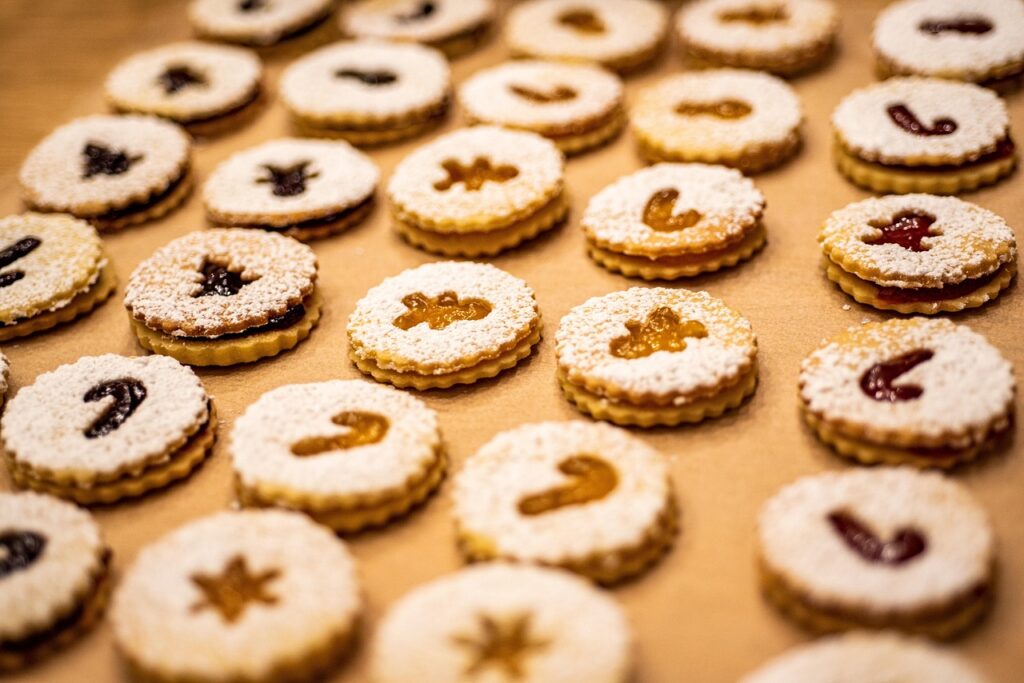
Swedish butter cookies are known for their simplicity, relying on butter, sugar, and flour to create a crisp, tender texture that highlights the richness of the butter itself. These cookies are often shaped using a cookie press or rolled into small balls and flattened lightly before baking. Variations may include vanilla, almond extract, or pearl sugar toppings, each adding subtle differences in flavor and texture. Because they bake quickly and store well, they are ideal for holiday tins and gifting. Their understated profile allows them to complement more elaborate cookies on a dessert table.
11. Alfajores
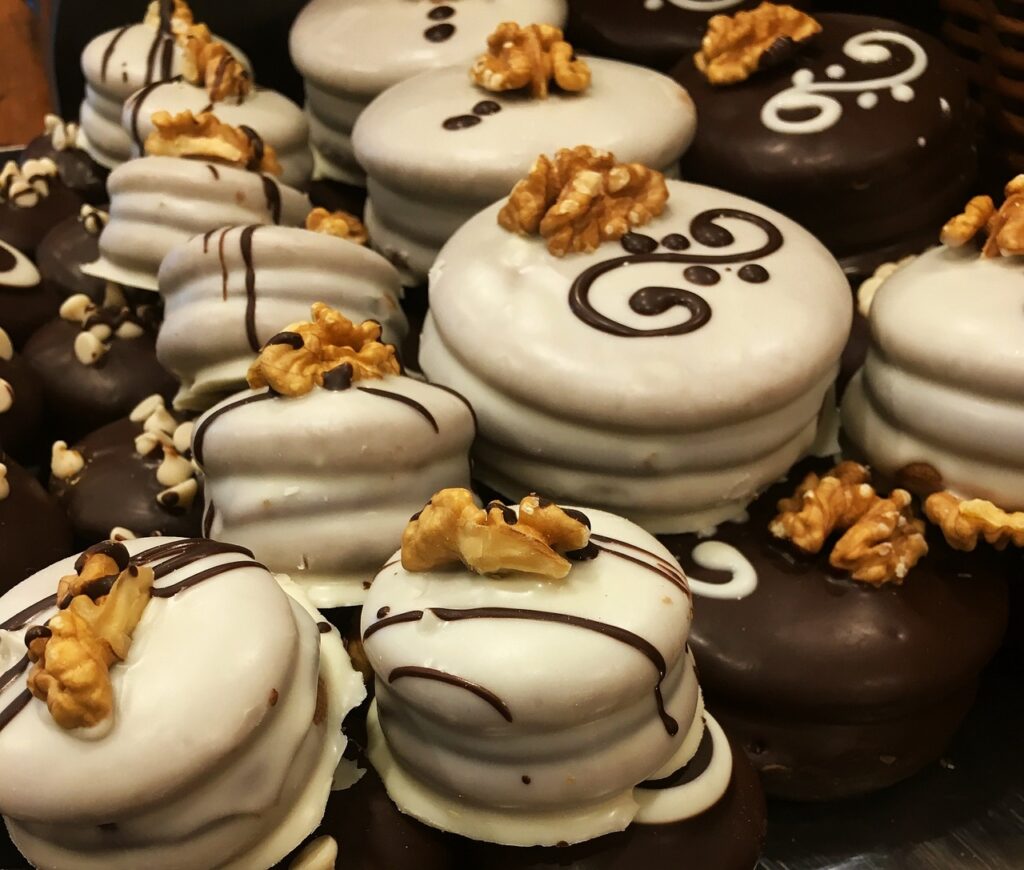
Alfajores are South American sandwich cookies made from delicate cornstarch-based rounds filled with dulce de leche. The cornstarch contributes to a soft, crumbly texture that contrasts with the thick caramel-like filling. Some variations roll the edges in shredded coconut, while others dip the cookies in chocolate. The quality of the dulce de leche is key, as its slow-cooked sweetness provides the dominant flavor. Alfajores are widely enjoyed in countries such as Argentina, Peru, and Uruguay, where they appear during holidays and throughout the year. Their combination of tender cookies and rich filling makes them a favorite across many regions.