10 Wild Market Eats Every Street Food Lover Should Try

Street food has always reflected the character of a place, offering dishes that are quick to prepare, full of flavor, and shaped by local traditions. Markets across the world rely on ingredients that cook fast, travel well, and appeal to crowds looking for something memorable. From crisp fried snacks to steamy handheld bites, these foods show how diverse and inventive global street cooking can be. Exploring them reveals how culture, technique, and community come together in the most delicious ways.
1. Bhel Puri
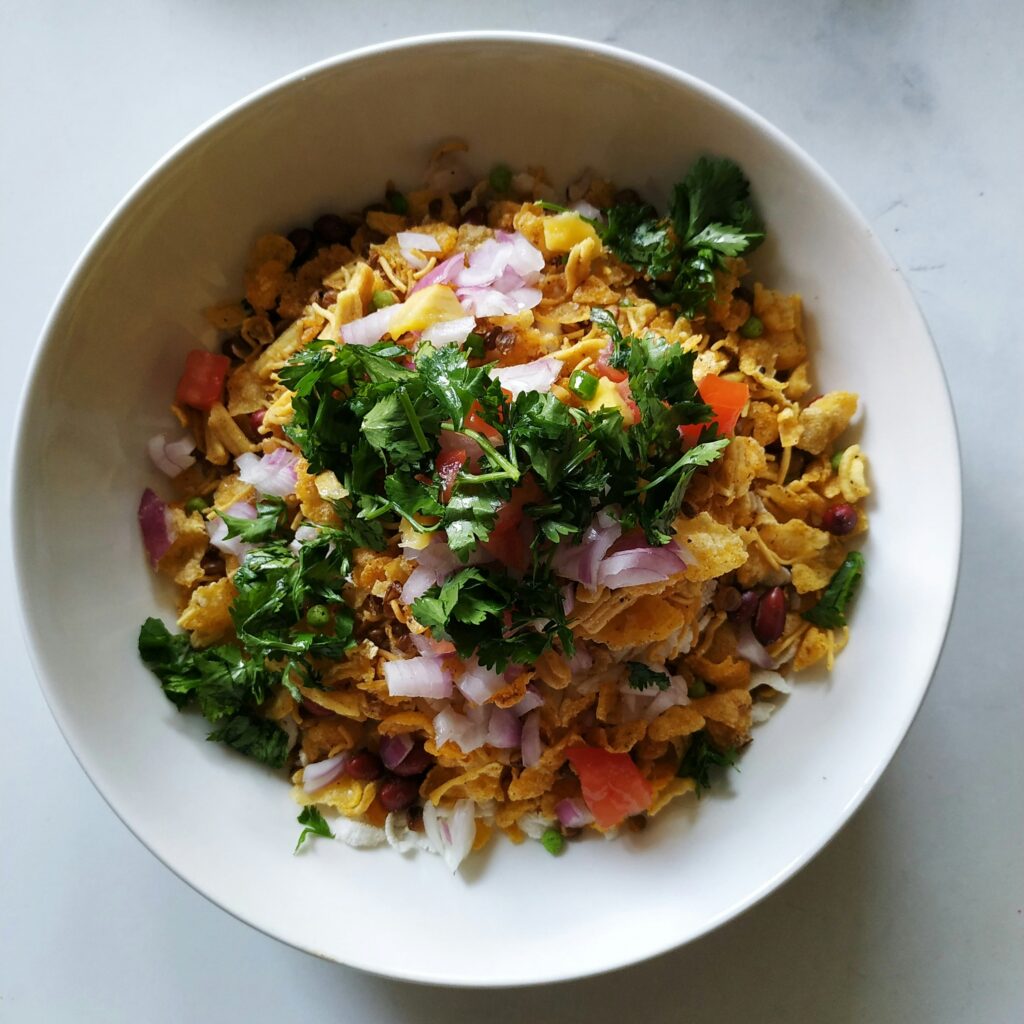
Bhel puri captures the energy of South Asian street markets because it brings together crisp textures, bright acidity, and layered aromatics in a single bowl. The base of puffed rice provides lightness, while finely chopped onions, tomatoes, cilantro, and green chilies introduce fresh, sharp notes. Tamarind chutney adds a sweet tang, and mint chutney contributes herbal cooling that balances the heat. Sev, a thin fried noodle, reinforces crunch and prevents the mixture from becoming soggy too quickly. Vendors often mix each portion to order so the ingredients maintain their texture until the moment they are eaten.
2. Jhalmuri
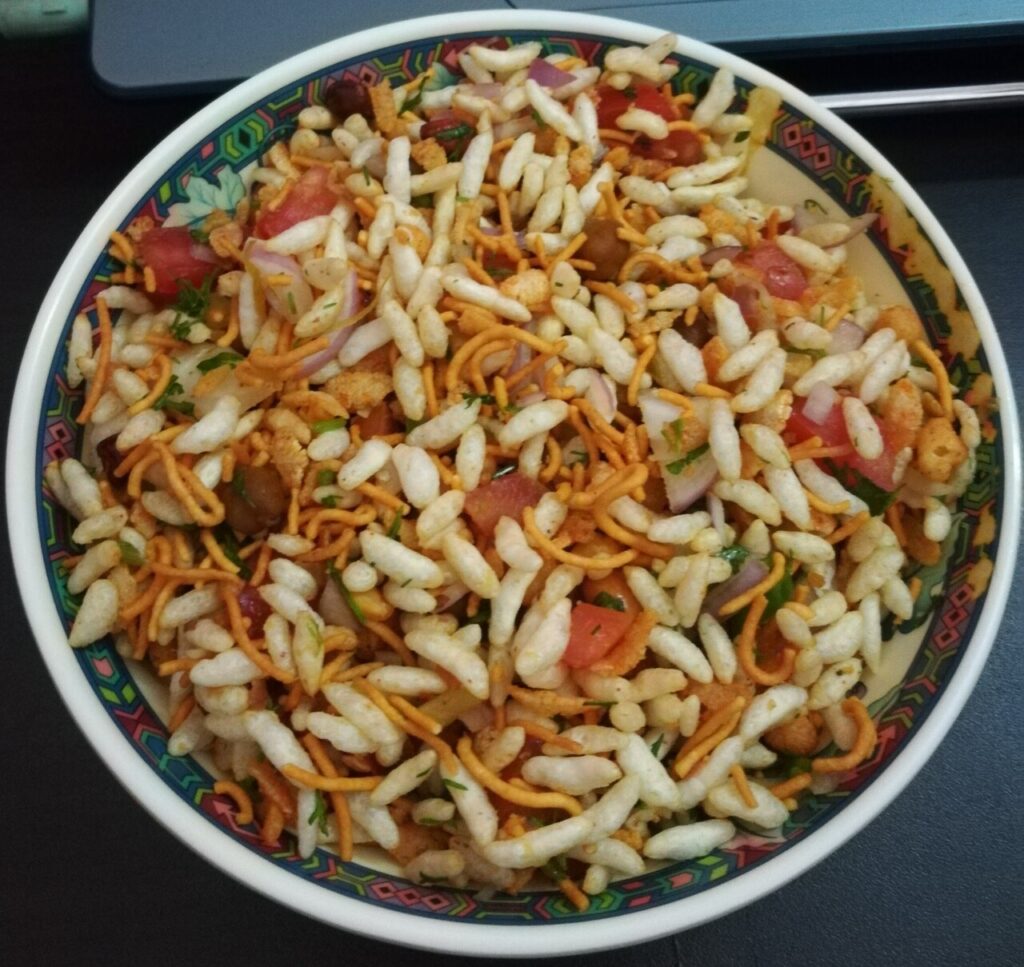
Jhalmuri is a portable snack from Bengal that demonstrates how simple ingredients can create bold flavor when balanced correctly. It combines puffed rice with mustard oil, which provides a sharp, aromatic base, along with chopped onions, chilies, tomatoes, and roasted nuts for added depth and crunch. Unlike bhel puri, jhalmuri typically avoids sweet chutneys and relies instead on savory spice mixes that include chaat masala or Bengali spice blends. The mustard oil is essential, giving a signature pungency and tying together the dry and fresh components. It’s a preparation and strong flavor that makes it a staple in busy markets and railway stations.
3. Bao
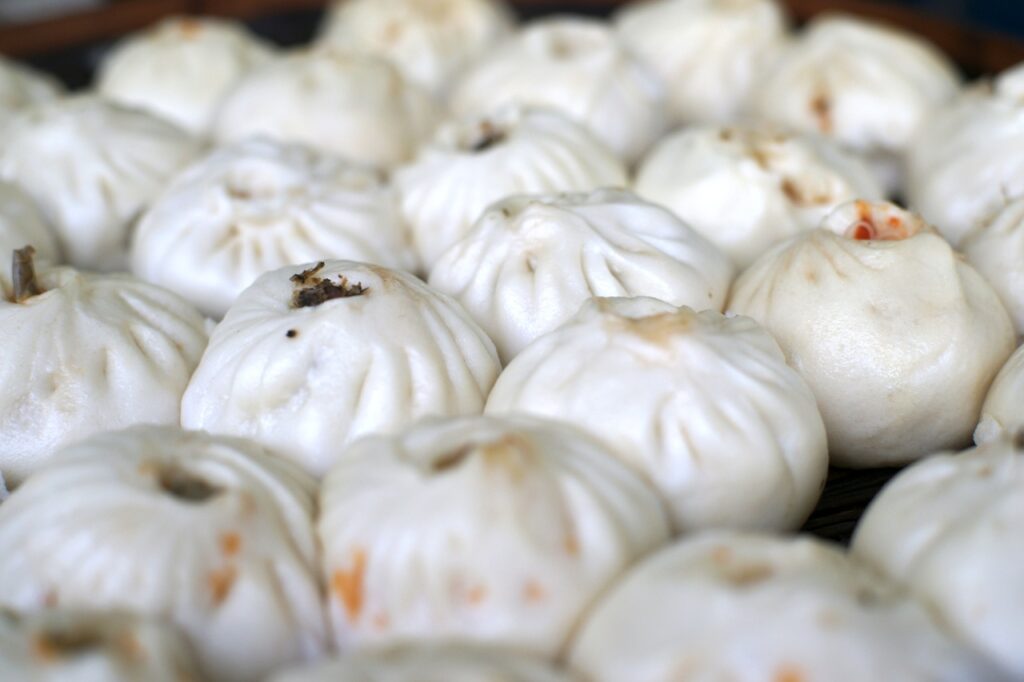
Bao represents a versatile category of filled steamed buns that have long been central to Chinese street and market food. The dough is made from wheat flour and yeast, giving a pillowy texture once steamed. Fillings vary widely and may include vegetables like mushrooms, cabbage, or tofu seasoned with soy sauce and garlic. Steaming preserves moisture and gives the bao its distinctive fluffiness while keeping the vegetables tender. Bao is easy to transport and eat without utensils, which is why it appears frequently in markets and night stalls. Bao offers a balanced combination of carbohydrates and savory fillings, making it a satisfying street food.
4. Arancini
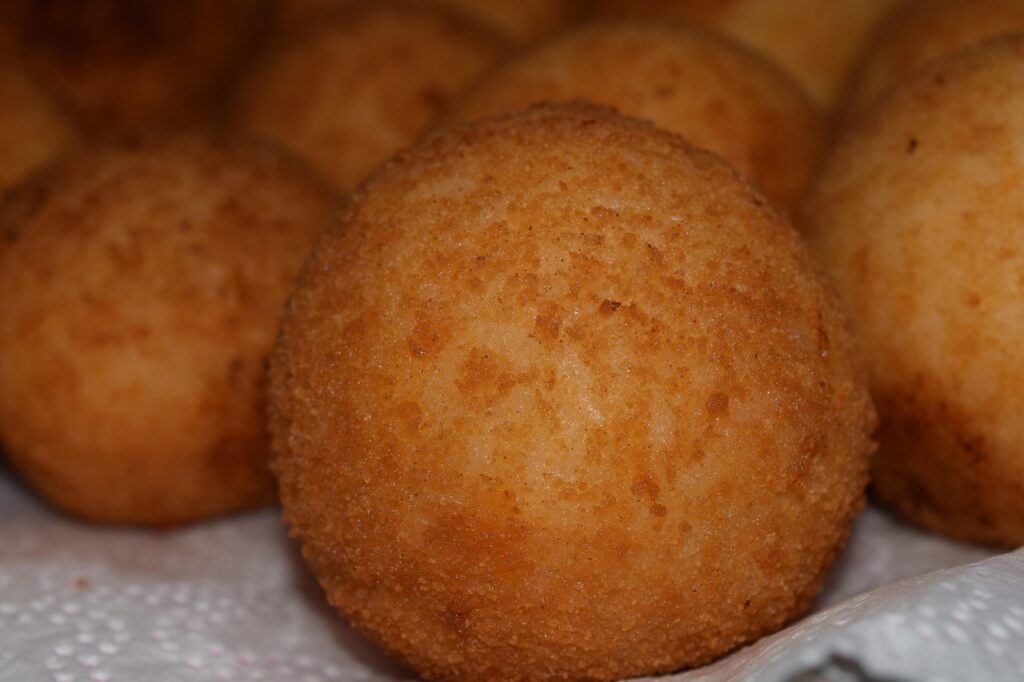
Arancini originate from Sicily and showcase how leftover risotto can be transformed into a handheld snack with structure and flavor. The rice is shaped around fillings such as cheese or vegetables, rolled in breadcrumbs, and deep-fried until the exterior forms a crisp shell. The interior remains soft and creamy due to the starch in the rice, creating a contrast that enhances each bite. Arancini are often sold in markets because they reheat well and maintain their texture without becoming overly oily. The method demonstrates economical cooking practices that evolved into a celebrated street food tradition.
5. Falafel
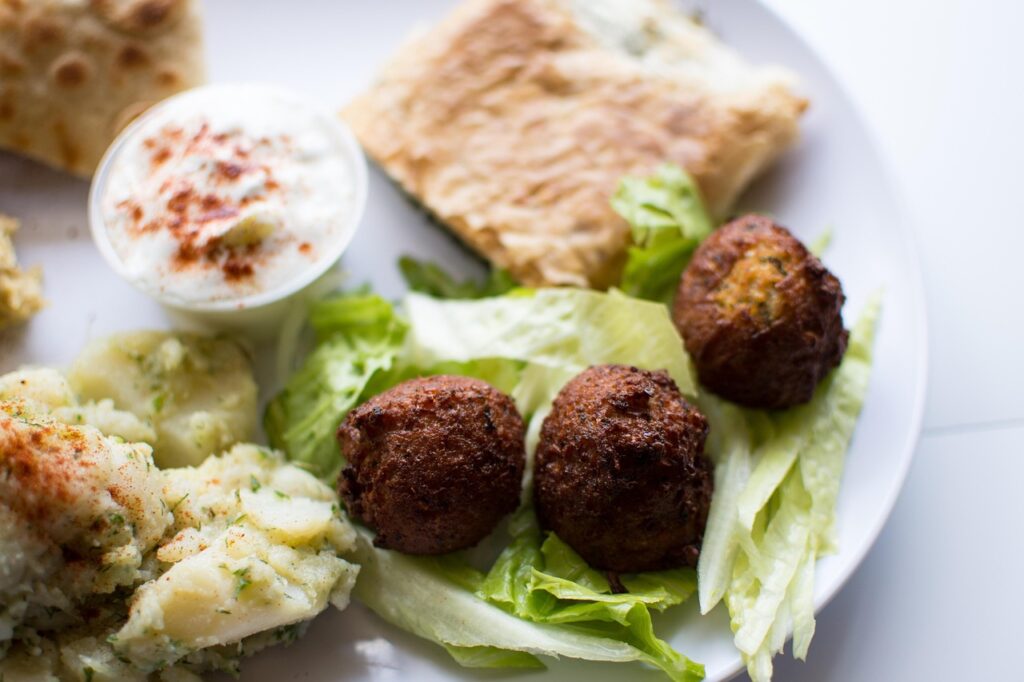
Falafel is a plant-based street food that delivers high protein content through ground chickpeas or fava beans seasoned with herbs and spices. The mixture is shaped into balls or patties and deep fried, creating a crisp exterior that encloses a moist, herb-scented interior. The frying process activates aromatics like garlic, cilantro, and cumin, enhancing their intensity. Served alone or in flatbread with vegetables and sauces, falafel adapts easily to market environments because it is inexpensive to prepare and cooks quickly in hot oil. It remains a staple in Middle Eastern street food culture.
6. Churros
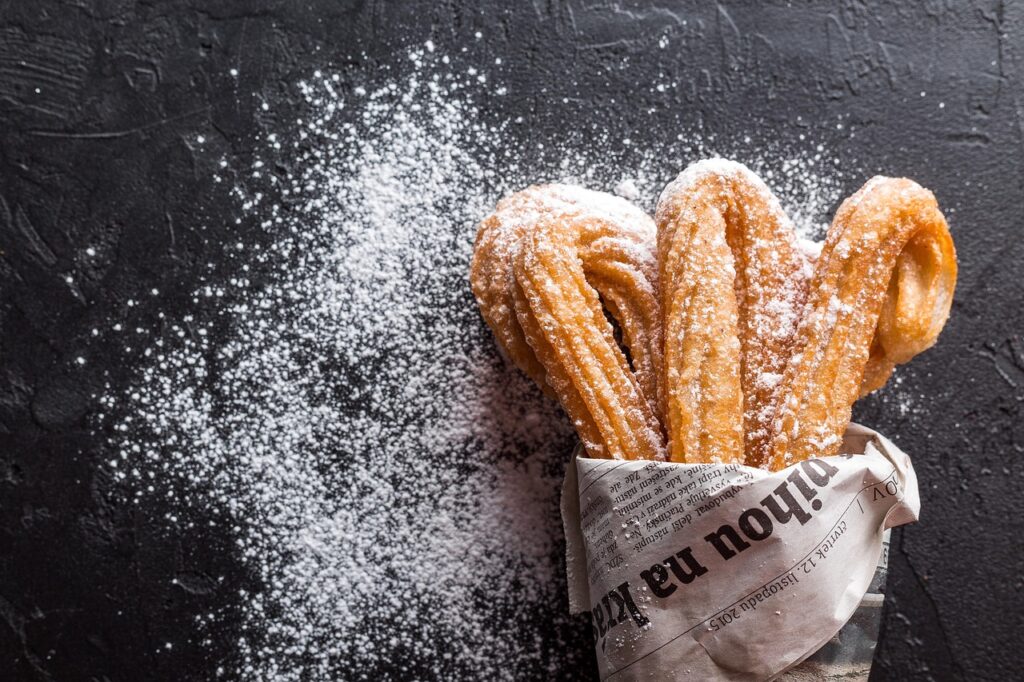
Churros are elongated fried dough pastries that exemplify how a basic dough can become a market treat with the right technique. The dough, often similar to pâte à choux, is piped through a star-shaped nozzle into hot oil, which creates ridges that promote even browning. Once fried, the churros are rolled in a mixture of sugar and sometimes cinnamon, giving them a crisp exterior with a lightly sweet finish. In many markets, churros are served with chocolate dipping sauce or dulce de leche, which adds richness. Their simple ingredient list and fast frying time make them ideal for high-turnover environments where crowds expect quick service.
7. Pad Thai
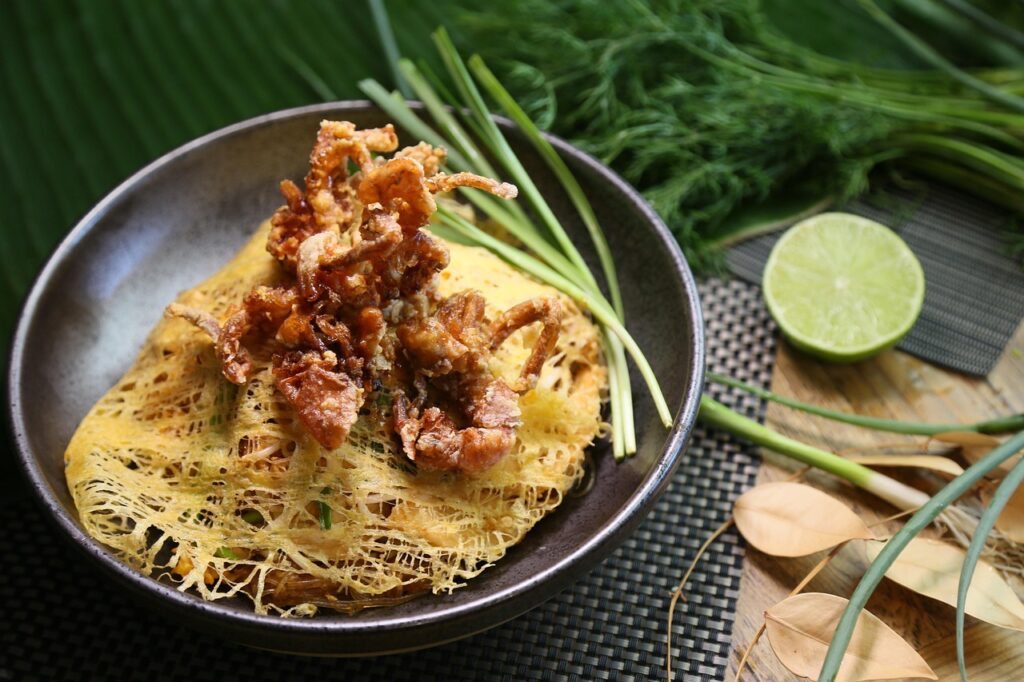
Pad Thai has become one of the most recognizable Thai street foods due to its balance of sweet, salty, sour, and savory elements. The dish uses rice noodles stir-fried with tamarind, fish sauce alternatives for vegetarian versions, palm sugar, eggs, tofu, and bean sprouts. Quick cooking over high heat produces caramelization around the noodles and maintains the crunch of fresh vegetables. Lime wedges and crushed peanuts added at the end allow for personal adjustment of acidity and texture. Pad Thai performs well in market settings because all components cook rapidly, and vendors can prepare individual servings to order.
8. Tacos
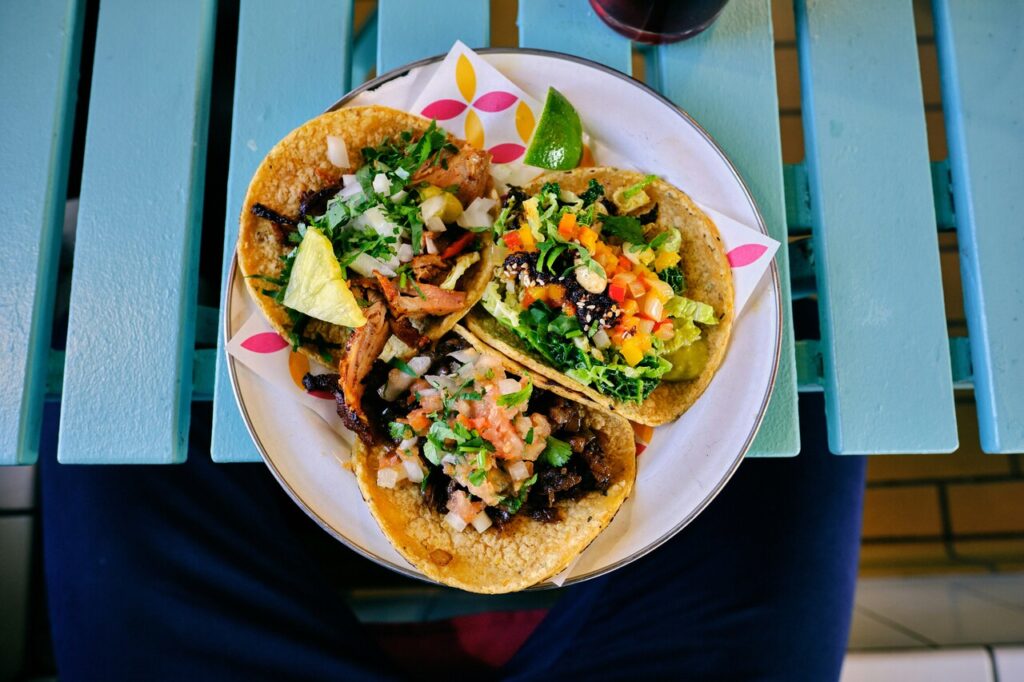
Tacos illustrate how street food can be both efficient and highly customizable. A taco begins with a small tortilla, usually corn-based, that serves as a neutral foundation for various fillings. Vegetarian options often include grilled vegetables, cheese, or mushrooms seasoned with garlic and lime. Because tortillas warm quickly and fillings can be prepared in advance, tacos lend themselves to fast assembly, which is essential in busy markets. Garnishes like onions, cilantro, and salsas add brightness and allow customers to tailor each bite. Tacos highlight regional diversity and represent one of the most flexible formats in street food culture.
9. Takoyaki
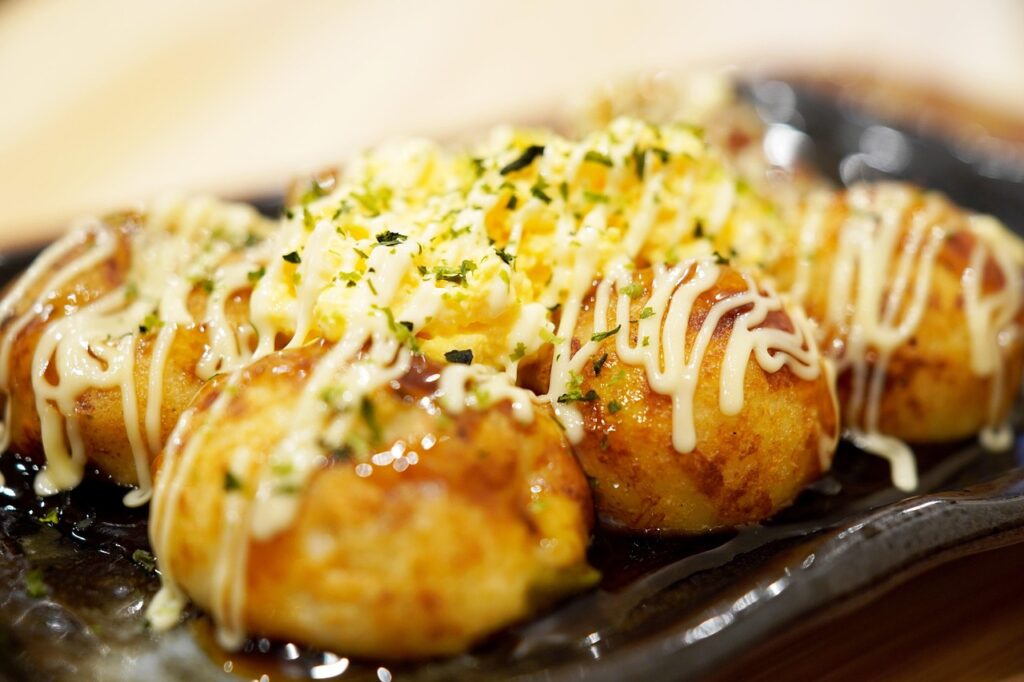
Takoyaki are Japanese batter-based spheres cooked in molded pans that create a crisp shell around a soft, custard-like center. Although traditionally filled with octopus, market variations include vegetable-based fillings to accommodate different dietary preferences. The batter gains flavor from dashi and seasonings, while the specialized pan allows uniform browning. Once cooked, takoyaki are brushed with savory sauce, sprinkled with dried seaweed, and topped with bonito flakes or plant-based alternatives. Their round shape and bite-sized portions make them easy to serve quickly, which suits crowded festival and market environments.
10. Langos
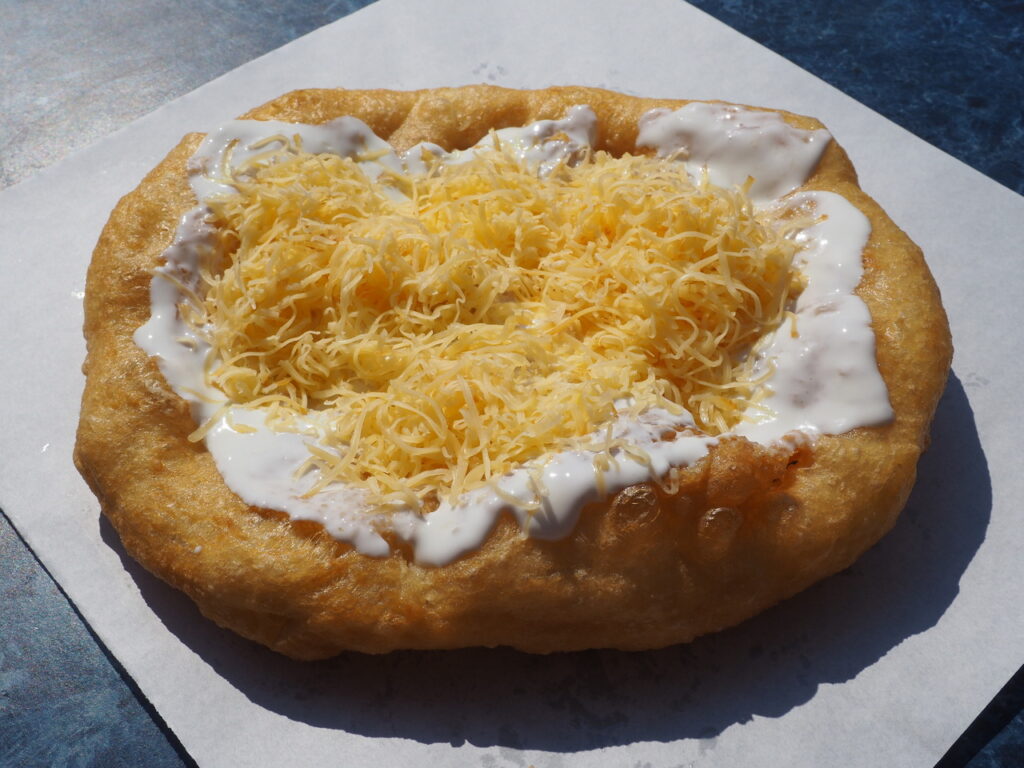
Langos is a Hungarian fried flatbread that becomes a canvas for savory toppings. The dough, made from flour, yeast, salt, and water or milk, is stretched thin and fried until golden and slightly crisp at the edges. Traditional toppings include garlic-infused oil, sour cream, and cheese, which melt slightly into the warm surface. The flatbread maintains a soft interior despite the frying process, providing a satisfying contrast in texture. Langos is popular at markets and fairs because it is filling, inexpensive, and easy to customize. Its simplicity and strong flavors have helped it gain recognition beyond Central Europe.