Why High-End Restaurants Are Replacing Human Chefs With Cheap Robots

High-end restaurants are increasingly experimenting with robotic cooking systems as labor shortages, rising wages, and demand for consistency reshape kitchen operations. Automation can handle repetitive cooking and prep tasks with precision, allowing restaurants to control costs and reduce waste. Yet machines still struggle with creativity, sensory judgment, and guest connection that define great dining. The future of upscale kitchens appears less about replacing chefs and more about blending human skill with technological efficiency.
The Automation Trend in Restaurants
Automation in restaurants has been building for years, but it has accelerated in the past decade as kitchen technology has matured and labor pressures increased. Robots are no longer novelties or experimental gadgets. They’re being incorporated into real kitchen workflows to handle tasks that are repetitive, precise, or physically demanding. In fast-paced commercial environments, consistency and efficiency are prized, and automation can deliver both in ways that human labor sometimes struggles to match. High-end restaurants, which compete on quality and guest experience, have begun testing robotic cooking and prep systems as part of broader operational strategies rather than gimmicks.
COVID-19 acted as a catalyst for this shift. When dining rooms were closed, staff shortages deepened, and labor costs rose, many operators looked to technology to fill gaps and reduce vulnerability to workforce fluctuation. The result is a growing interest in robotic kitchen systems that can work long hours without fatigue, do not require benefits or breaks, and can scale output predictably. For some high-end concepts, automation also offers a way to differentiate the dining experience or streamline back-of-house production so chefs can focus more on creativity than repetitive basics. While automation has been adopted unevenly, its presence signals a broader structural change in how restaurants approach labor, quality control, and cost stability.
Robots vs Human Chefs
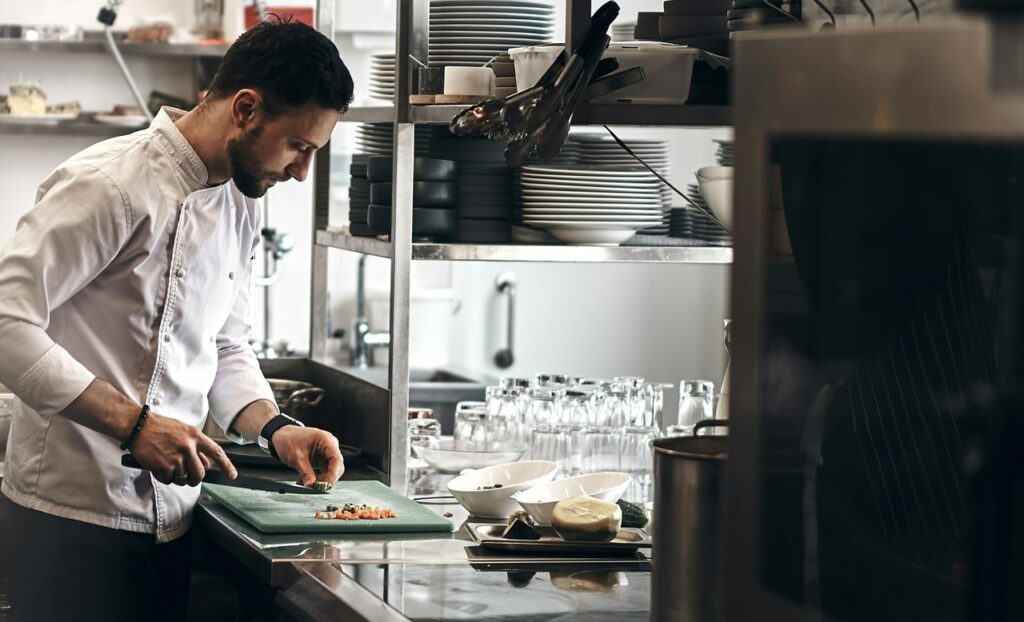
Robots perform certain kitchen tasks notably well because they are engineered to execute exact motions and repeat them without variation. Tasks like stirring large pots, flipping burgers, cutting vegetables to precise dimensions, or maintaining consistent cooking temperatures are ideal for mechanization. When robots are programmed precisely, they can produce hundreds of each dish with uniform results. For operations where consistency matters, this predictability reduces waste, minimizes errors, and helps maintain a reliable guest experience across shifts and locations. However, robotics has limits.
Humans still outperform machines in areas that require intuition, creativity, judgment, and sensory evaluation. While robots can replicate a cooking sequence defined by algorithms, they do not taste or adjust flavor in real time. They cannot innovate a new dish on the fly or respond to subtle signals a human cook detects, such as changes in aroma or texture that fall outside a programmed range. In fine dining or experimental kitchens, chefs often rely on sensory cues and improvisation, which remain difficult to automate.
Cost Pressures Driving Change
Labor costs are among the largest expenses in restaurant operations, representing wages, benefits, turnover costs, and training investments. In markets with rising minimum wages and competitive labor demands in hospitality, restaurants can face serious financial pressures just to fill shifts. When robots are introduced to handle repetitive work, the immediate appeal is economic: one upfront capital investment can replace ongoing payroll expenditures. That equation becomes compelling when turnover is high, shifts are hard to fill, or work becomes seasonal. Consistency reduces the guesswork that can lead to trim waste or leftover inventory.
The financial argument also includes predictable output and reduced waste. Robots can cook to exact standards repeatedly, which limits overproduction and underproduction, two major sources of food waste. While the initial investment in technology can be significant, hotels and restaurants model return on investment over years rather than months. In some cases, automation can allow businesses to expand service hours or menus without proportionally increasing labor costs, making it easier to adapt to customer demand without excessive staffing. These economic drivers have made automation an attractive option for restaurants seeking operational stability in an uncertain labor market.
Types of Kitchen Robots
Kitchen robots vary widely in complexity and function, but they generally fall into three broad categories. One category includes robotic cooks that execute defined cooking processes, such as stirring, flipping, or frying under programmed conditions. These units often resemble industrial arms or countertop appliances and can function as dedicated stations. Another category focuses on prep automation, such as machines that chop vegetables, portion proteins, or mix ingredients uniformly. These systems remove menial tasks from human hands, freeing chefs to focus on higher-level work. In each case, the goal is to reduce variation and extend labor capacity.
A third group consists of systems that handle fully automated recipe execution. These combine robotics, sensors, and integrated software to follow recipes precisely without continuous human input. They can manage timing, temperature, and portion control with minimal oversight. Importantly, these robots do not all look like humanoid butlers; many are custom-designed industrial mechanisms optimized for specific kitchen tasks. While more advanced systems incorporate artificial intelligence to learn and adapt, most restaurant automation today still relies on structured programming and sensor feedback rather than open-ended machine learning.
Technology in Practice
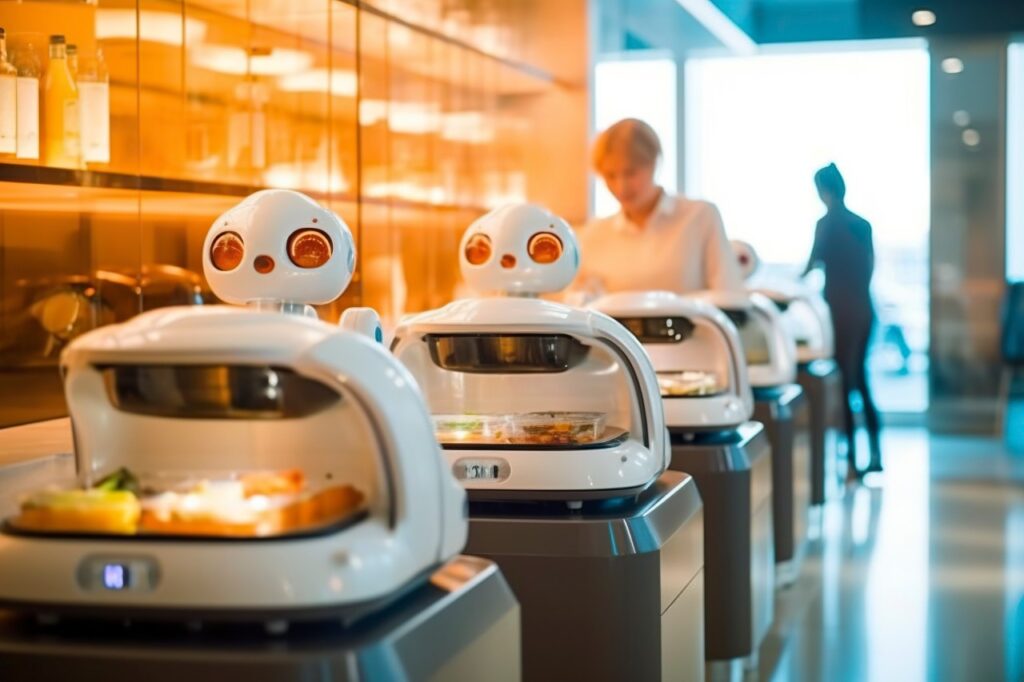
Integrating robots into kitchen workflows is not like simply plugging in a new appliance. Successful automation often requires redesigning kitchen spaces, retraining staff, and recalibrating menu preparation techniques. Sensors and artificial intelligence are increasingly used to monitor heat, timing, and execution, making robotic operations more reliable. Precision controls can ensure that a dish comes off the line with consistent texture and apt doneness, which enhances both quality control and throughput predictability. Safety and sanitation advantages also contribute to automation’s appeal.
Robots can be programmed to maintain hygienic protocols consistently, reducing human contact with food surfaces and potentially lowering contamination risks. In busy kitchens where multiple cooks may handle the same tools and stations, automation can reduce cross-contamination errors. In practice, this means fewer mistakes, lower food safety risk, and simpler compliance with health standards. Integrating technology requires investment in infrastructure and training, but the long-term result can be a more streamlined, consistent, and predictable kitchen operation. Automated systems also allow kitchens to monitor processes more accurately through data tracking and alerts.
Culinary Creativity and Control
A frequent question about automation is whether robots can ever “be creative.” At present, robots excel at following codified recipes but lack the intuitive judgment that defines culinary creativity. Human chefs make adjustments based on sensory feedback, experience, and experimentation. They blend flavors, adjust seasoning based on taste and context, and innovate new presentations and combinations that machines cannot invent independently. Robots do not taste or conceive new dishes; they execute defined sequences with precision. Creativity still depends on human intuition and cultural understanding.
That said, automation can extend human creativity by removing burdensome, repetitive tasks. Chefs can focus more on designing menus, curating flavors, and interacting with guests when robots handle repetitive chopping, stirring, or monitoring. Recipe libraries stored in software ensure consistency, while humans provide oversight and fine-tuning. The interaction between chef and machine becomes a collaborative process, where robots enhance efficiency while human creativity remains central. This hybrid approach, where humans define the art, machines do the repetition, reflects the balance many kitchens are adopting as they integrate automation.
Customer Expectations
Customer perception is another factor shaping robotics in high-end dining. Some diners view robot-made food as innovative and exciting, adding a novelty layer to the dining experience. Others prefer the authenticity and personal touch of a human chef. Restaurants that emphasize theater or tech integration can market automation as part of the experience, inviting guests to witness precision cooking in action. In fast-casual environments, guests may appreciate consistent quality delivered with speed, making automation feel like an enhancement rather than a replacement. Acceptance often depends on how well technology blends with hospitality rather than overshadowing it.
Taste, consistency, and novelty interact in interesting ways. Robots can deliver consistent dishes that taste the same time after time, which appeals to diners who value reliability. Novelty also plays a role for some; a robot chef signals cutting-edge dining and sparks conversation. Yet others may feel that human emotion and creativity are lost if machines dominate the kitchen. Restaurants are experimenting with different blends of technology and human touch to find the balance that aligns with their brand and audience expectations. This ongoing negotiation influences how automation is perceived and adopted in various culinary segments.
Workforce and Career Impact

The rise of automation raises questions about workforce transformation. Rather than eliminating jobs outright, some experts see automation reshaping roles within the kitchen. Chefs may transition from manual labor to roles focused on supervision, quality control, and innovation. The human workforce can develop skills in managing and programming machines, integrating technology with culinary tasks that demand judgment and creativity. Rather than seeing robots as replacements, kitchens can treat them as tools that elevate human capacity. Training programs increasingly emphasize technical literacy alongside traditional cooking skills.
Skills that robots can’t replace include sensory evaluation, intuitive adjustments, creative menu development, and guest interaction. Training programs that embrace technology alongside traditional culinary skills may help future chefs navigate hybrid kitchens. Collaboration between humans and machines requires new competencies, such as interpreting data outputs from sensors, refining automated processes, and ensuring that machines uphold standards without stifling creative expression. The workforce of tomorrow may blend technical understanding with culinary artistry, keeping humans at the heart of food while leveraging machines to amplify productivity.
Ethics and Future Outlook
Ethical concerns about automation often center on job displacement and the social value of skilled labor. While automation can improve efficiency and reduce costs, it also raises questions about how workers are compensated and how communities adapt when traditional roles change. Restaurants adopting robotics must consider the balance between innovation and social responsibility, ensuring that human expertise is valued even as tasks evolve. Workers displaced from routine tasks may pursue higher-level roles, but this transition requires training, opportunity, and foresight. Support systems and reskilling programs become essential to make these shifts sustainable.
Looking ahead, the next decade will likely see continued experimentation with automation in restaurants. Robots may become more affordable, adaptable, and capable, particularly as artificial intelligence and machine learning advance. Yet it is unlikely that robots will completely replace human chefs in high-end kitchens where creativity, sensory evaluation, and personal interaction remain essential. Instead, the future will likely involve collaboration between humans and machines. The challenge and opportunity for the industry lie in shaping this balance in ways that preserve culinary craftsmanship while embracing technological efficiency.
References
- Everything robots need to know about cooking actions – frontiers.org
- Robots in the Kitchen and at the Table – asme.org
- Cooking with Robots – acm.org