The Real Reason Chinese Food in America Looks Nothing Like Actual Chinese Food

What ends up in a takeout box tells a much bigger story than most people realize. The gap between Chinese food in America and food commonly eaten in China was shaped by history, exclusion, business pressure, and constant reinvention.
It started with immigrants cooking for survival, not culinary purity
Chinese food in America began taking shape in the mid-19th century, when large numbers of Chinese immigrants, many from Guangdong province, arrived during the Gold Rush and later worked on the transcontinental railroad. They brought Cantonese food traditions with them, but they did not arrive with access to the same ingredients, customers, or social standing they had at home. Cooking became both a livelihood and a point of negotiation with an unfamiliar country.
Early Chinese-run eateries often served fellow Chinese workers first, but as anti-Chinese hostility intensified, restaurants became one of the few businesses immigrants could operate. Historians have noted that restaurants offered economic opportunity in a period when Chinese laborers were pushed out of many trades. That meant menus had to appeal to non-Chinese diners who often knew little about regional Chinese cooking and expected meals to fit American ideas about what a restaurant should provide.
This is the first real reason the food changed. Immigrant cooks were not trying to reproduce a museum version of home cooking under ideal conditions. They were trying to make a living in a hostile environment, with limited ingredients and an urgent need to attract customers who preferred sweeter sauces, larger portions, and familiar textures.
Exclusion laws and racism pushed Chinese restaurants into a new role

The Chinese Exclusion Act of 1882 sharply restricted immigration and intensified the isolation of Chinese communities in the United States. At the same time, anti-Chinese stereotypes were widespread, and Chinese neighborhoods were often treated as both threatening and exotic. Restaurants became one of the few public spaces where white Americans would encounter Chinese culture, but that encounter was filtered through prejudice and curiosity rather than understanding.
According to historians of immigration and food culture, restaurant work also became unusually important because merchants sometimes received legal advantages over laborers under exclusion-era rules. In practice, that helped make restaurants central to Chinese American economic life. Food businesses multiplied, but they had to perform a careful balancing act: appear Chinese enough to be intriguing, yet familiar enough not to scare customers away.
This pressure shaped menus dramatically. Dishes were often renamed, simplified, sweetened, thickened, or deep-fried to match mainstream American tastes. Chop suey is the classic example. Whether rooted loosely in Cantonese cooking or largely improvised in America, it became wildly popular because it felt adventurous but not too foreign. The dish’s success showed restaurant owners exactly what the market rewarded.
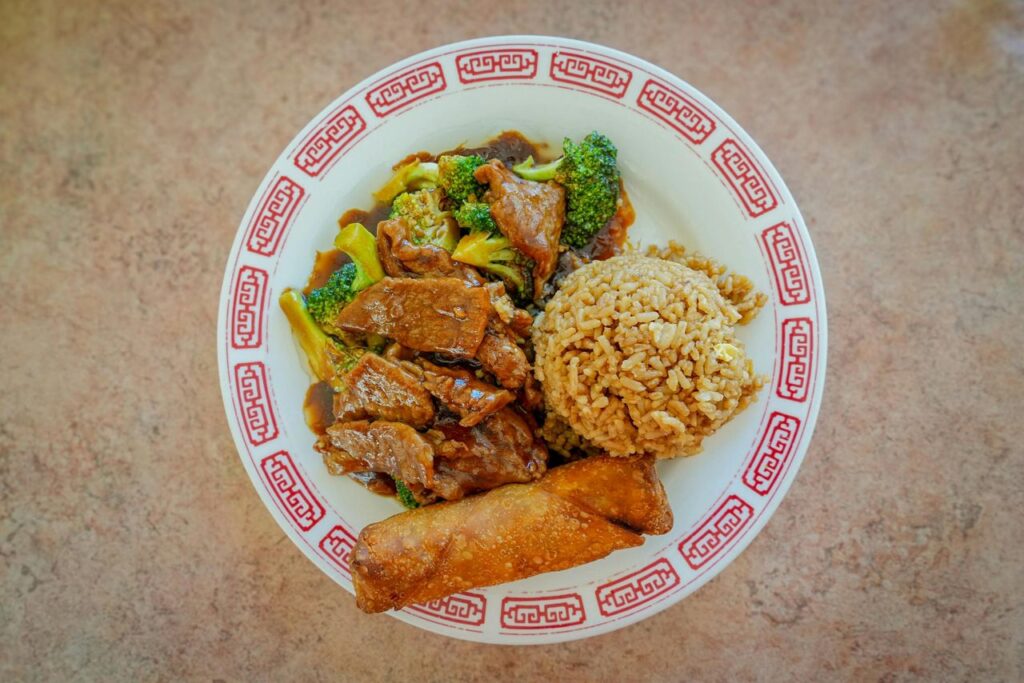
Much of what Americans now think of as Chinese food reflects practical substitution. Traditional leafy greens, live seafood systems, preserved vegetables, and region-specific seasonings were often hard to source, especially in the early decades. Cooks used what was available: broccoli instead of Chinese greens, carrots and onions in greater quantity, boneless meats, cornstarch-thickened sauces, and heavy use of sugar to create immediate flavor impact.
Economics mattered just as much as taste. Restaurants needed dishes that could be prepared quickly, sold cheaply, and delivered consistently. Deep frying and glossy sauces solved several problems at once. They made lower-cost cuts more appealing, held heat well for takeout, and created a rich flavor profile that diners came to expect. This is one reason dishes such as sweet and sour chicken, General Tso’s chicken, crab rangoon, and orange chicken became staples, even though some are rare or unknown in China.
The American restaurant system also rewarded standardization. Menus had to work in small towns, suburbs, and cities across the country. As Chinese American restaurateurs opened businesses far from coastal enclaves, they often streamlined offerings around dependable crowd-pleasers. The result was not a direct translation of Chinese cuisine, but a highly efficient restaurant cuisine built for the American market.
China is not one cuisine, and America flattened that complexity
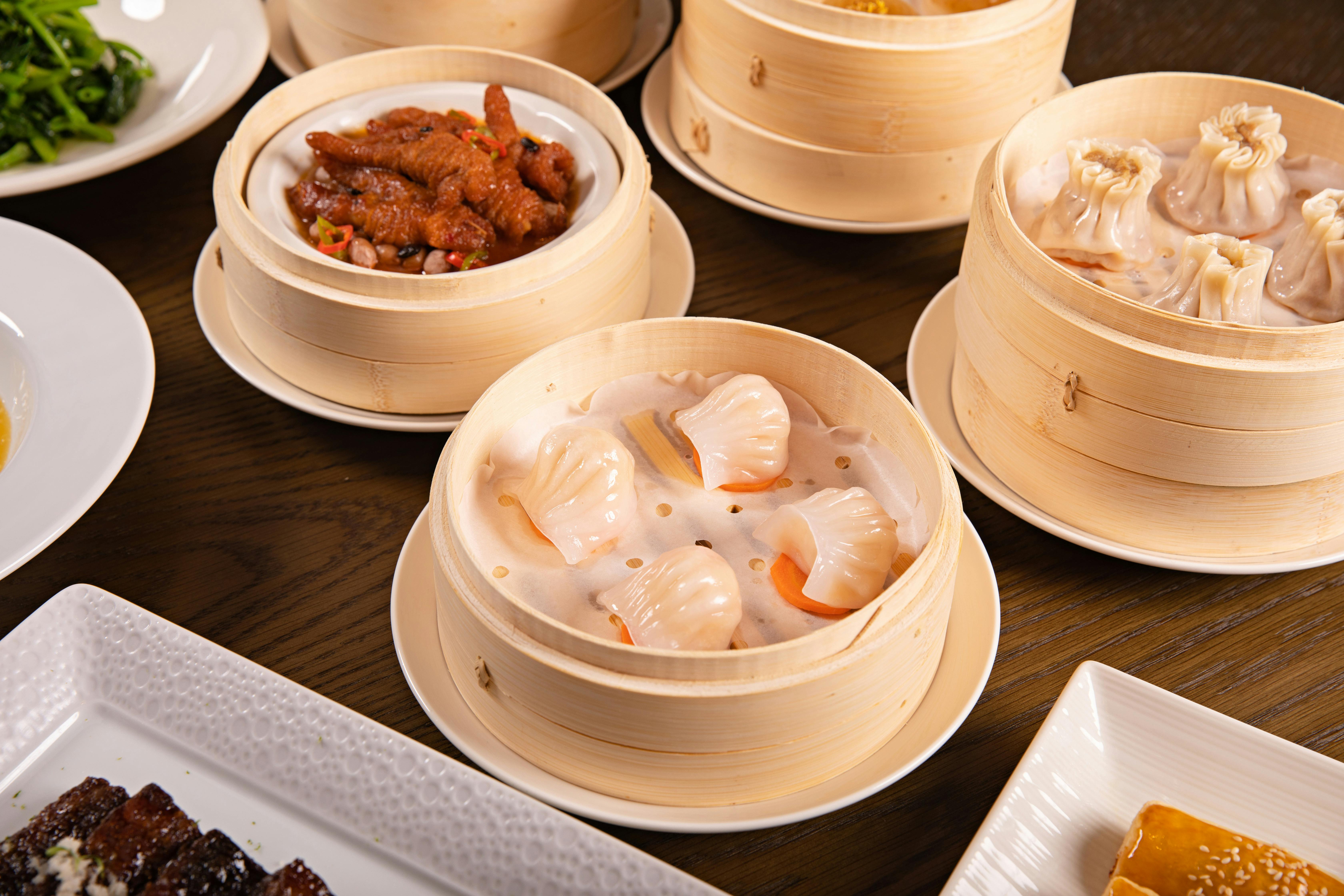
Another major reason for the disconnect is that many Americans talk about “Chinese food” as if China has a single unified cuisine. In reality, China contains enormously varied food traditions shaped by geography, religion, climate, language, and local agriculture. Sichuan cooking emphasizes chile heat and numbing peppercorn. Jiangnan cuisine can be delicate and slightly sweet. Hunan, Shandong, Fujian, Yunnan, Xinjiang, and Cantonese traditions all have distinct techniques and flavor structures.
For decades, however, most Americans had limited exposure to that range. The earliest large immigrant waves to the United States were disproportionately Cantonese, so one regional style became the foundation. Then even that foundation was modified heavily for U.S. diners. What survived in mainstream American Chinese restaurants was not a broad survey of China, but a narrow and adapted slice of one migration story.
That changed somewhat after U.S. immigration law was reformed in 1965. New arrivals from Taiwan, Hong Kong, and later mainland China expanded what Americans could eat. Over time, restaurants specializing in Sichuan, Xi’an, Hunan, hot pot, hand-pulled noodles, and regional seafood gained visibility. Even so, the older American Chinese menu remains dominant because it is deeply familiar, commercially successful, and woven into everyday life.
American Chinese food is different, but it is still real and historically authentic
The mistake is assuming that because American Chinese food differs from everyday meals in China, it must be fake. In fact, it is real in the way all immigrant cuisines are real. It records adaptation under pressure. It reflects what communities did to survive, what ingredients they could access, and how they built businesses in a society that often excluded them while consuming their food.
Food scholars and chefs increasingly frame dishes like chop suey, egg foo young, and General Tso’s chicken as Chinese American creations rather than failed copies of something else. That distinction matters. These dishes tell the story of labor migration, family entrepreneurship, cross-cultural exchange, and the pressures of assimilation. They are not the whole story of Chinese cuisine, but they are a legitimate chapter within it.
Today, the best way to understand the difference is not to rank one version as more valid than the other. The better approach is to see two related but distinct traditions: the vast regional cuisines of China, and the evolving cuisine created by Chinese immigrants in America. One did not replace the other. History made them diverge.