How Open Concept Kitchens Turn Restaurants Into Echo Chambers


Step into a modern restaurant and the first thing you notice may not be the aroma of food, but the charged atmosphere humming through the room. Flames rise behind the counter, knives tap steadily against cutting boards, and chefs move with practiced precision just steps from your table. Open concept kitchens are designed to feel transparent and engaging, transforming cooking into performance. Guests can watch sauces being whisked and plates assembled in real time, creating a sense of trust and immediacy. The setting feels immersive and alive, as though you have been granted access to the creative heart of the restaurant rather than seated at a distance from it.
As the evening progresses, another force begins to shape the experience in ways that are less visible but deeply felt. The steady sizzle of pans blends with clattering dishes, rapid-fire instructions, background music, and the rising volume of nearby conversations. What starts as energetic ambiance can slowly build into a continuous layer of noise that fills every corner of the space. With no walls to absorb or contain it, sound travels freely between kitchen and dining room, reflecting off hard surfaces and amplifying itself. The open kitchen may captivate the eye, yet it can quietly turn the entire restaurant into a lively but overwhelming echo chamber.
The Allure of the Open Kitchen

Transparency became a powerful selling point the moment restaurants began removing the wall between kitchen and dining room. Suddenly, guests were no longer separated from the action. They could watch chefs sear steaks, torch desserts, and call out orders in real time. The open kitchen suggested confidence and honesty, as if the restaurant had nothing to hide. Seeing ingredients handled and plates assembled just steps away created a sense of freshness and care. For many diners, that visibility translates into trust. The meal feels more authentic when the process is on display, turning dinner into an experience rather than simply a service delivered from behind closed doors.
Design movements strengthened this appeal. Industrial interiors filled with exposed brick, polished concrete, steel shelving, and high ceilings naturally complemented open layouts. Restaurateurs leaned into the visual drama, believing that movement, flame, and coordinated teamwork would energize the room. The kitchen became a stage, and chefs became performers within it. Yet while removing barriers opened sightlines and invited engagement, it also removed a critical buffer. Walls once contained heat and noise, and without them, every clang of cookware and shouted instruction now flows directly into the dining space, reshaping the atmosphere in ways that go far beyond aesthetics.
The Science Behind Restaurant Noise
Sound follows physical laws whether designers account for them or not. In a traditional restaurant layout, enclosed kitchen walls and swinging doors act as partial sound barriers, blocking and absorbing much of the clatter produced by cookware, ventilation systems, and staff communication. When those barriers are removed, noise travels without resistance from prep stations to dining tables. Hard finishes commonly used in contemporary interiors such as tile floors, glass partitions, concrete walls, and stainless steel counters reflect sound waves instead of softening them. Each reflection preserves energy, causing overall volume levels to rise steadily as service intensifies.
Acoustic studies explain that when sound waves repeatedly rebound off rigid surfaces, reverberation time increases, meaning noise lingers longer before fading. In open concept restaurants, tall ceilings and wide, unobstructed floor plans allow sound to circulate freely across the space. Conversations overlap with the hiss of steam wands and the strike of metal pans, forming a continuous background hum. As more guests arrive, the combined sound pressure builds, often surpassing recommended comfort thresholds for dining environments. What feels lively at first can gradually evolve into sustained acoustic strain that makes relaxed conversation increasingly difficult.
How Open Layouts Create Echo Chambers
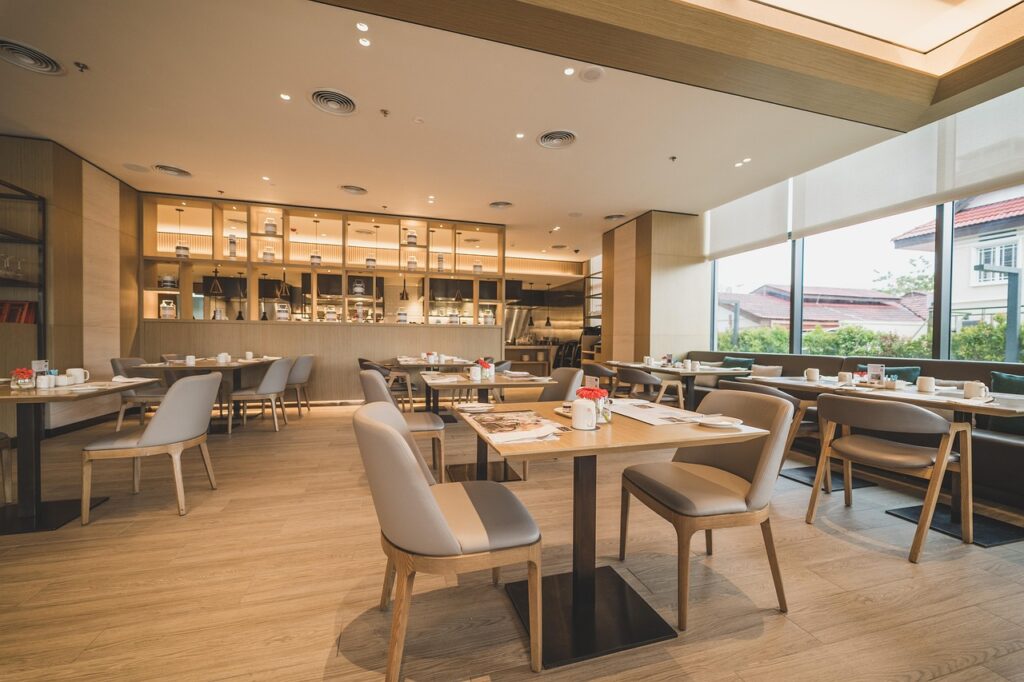
An open dining room connected directly to a working kitchen creates what acousticians describe as a continuous sound field. Orders are called across the line, pans strike hot burners, blenders pulse, and plates meet countertops with sharp clarity. With no solid partitions to interrupt the path of sound, these kitchen noises spill freely into the dining area. They blend with background music, scraping chairs, clinking glasses, and the steady rhythm of conversation. Each layer adds to the next, gradually lifting the overall noise floor until what began as energetic atmosphere becomes a constant, competing wall of sound that fills the entire space.
As the volume climbs, human behavior quietly amplifies the problem. Diners instinctively raise their voices to be heard, a response known as the Lombard effect, where speech grows louder in noisy settings. That increase triggers others to speak up as well, creating a cycle that pushes sound levels higher with every exchange. In rooms dominated by glass, metal, and concrete, reflections multiply and reverberation stretches out each burst of noise. With few soft materials to absorb it, the space effectively functions as an echo chamber. The lively buzz that once felt exciting can shift into acoustic strain that makes relaxed conversation surprisingly difficult.
The Hidden Impact on Diners and Staff
Noise does far more than create mild irritation; it triggers measurable physical responses in the body. Research in environmental psychology shows that sustained elevated sound levels can raise heart rate, increase blood pressure, and stimulate the release of stress hormones such as cortisol. In restaurant settings, diners may not immediately identify noise as the source of discomfort, yet they often report feeling drained or tense by the end of a meal. Studies in hospitality settings link excessive background noise to shorter dining times, lower satisfaction scores, and a reduced likelihood of repeat visits. What is marketed as vibrant energy can quietly undermine comfort.
For restaurant staff, the impact is even more pronounced because exposure lasts for entire shifts rather than a single meal. Line cooks, servers, and bartenders must communicate clearly over constant clatter, raised voices, and mechanical sounds from equipment. Prolonged high-decibel environments contribute to vocal strain, mental fatigue, and reduced concentration. Misheard orders and repeated clarifications slow service and increase the potential for mistakes. Over weeks and months, persistent acoustic stress can contribute to burnout, reduced morale, and higher turnover rates, ultimately affecting both workplace wellbeing and the consistency of the dining experience.
Designing Restaurants That Sound as Good as They Look

Good acoustics do not require abandoning open kitchens or sacrificing visual drama; they require thoughtful balance from the earliest design stage. Sound-absorbing materials can dramatically reduce reverberation without altering the overall concept. Upholstered banquettes, padded chair seats, fabric wall panels, and heavy curtains all help capture sound waves before they bounce repeatedly across hard surfaces. Textured finishes such as wood slats or acoustic plaster break up reflections and shorten echo time. Even strategically placed greenery can diffuse sound slightly, softening the sharp edges created by glass, tile, and steel that dominate many contemporary restaurant interiors.
Ceiling treatments often make the greatest difference because sound naturally rises and spreads overhead. Suspended baffles, acoustic clouds, and discreet sound-absorbing tiles can be integrated into lighting plans so they blend with the décor. Adjusting speaker placement and lowering music during peak hours also prevents unnecessary amplification of background noise. Partial glass partitions between kitchen and dining room maintain visibility while limiting direct sound transfer. When restaurateurs treat acoustics as seriously as lighting and layout, they create environments that feel energetic yet comfortable, allowing conversation and flavor to remain central to the experience.