10 Reasons Chicago Deep Dish Is Just a Casserole for Tourists

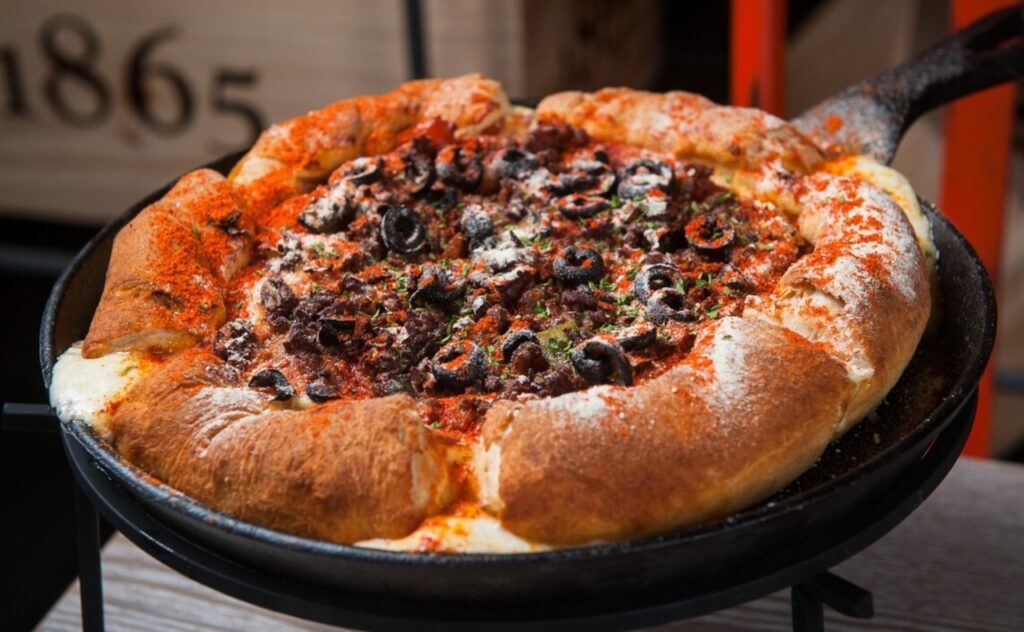
Few foods spark debate quite like Chicago deep dish. To some, it is the ultimate expression of comfort, a towering slice packed with cheese, sauce, and a sturdy crust. To others, it barely fits their definition of pizza at all.
Its height alone changes expectations. Instead of a thin round you can fold and eat on the go, deep dish arrives thick, layered, and unapologetically heavy. The structure invites comparison to pies and casseroles rather than street style slices.
But labels often say more about expectations than ingredients. When you look closely at how deep dish is built, baked, and served, the reasons behind the controversy become clearer and far more interesting.
1. It’s Built in Layers, Not Tossed
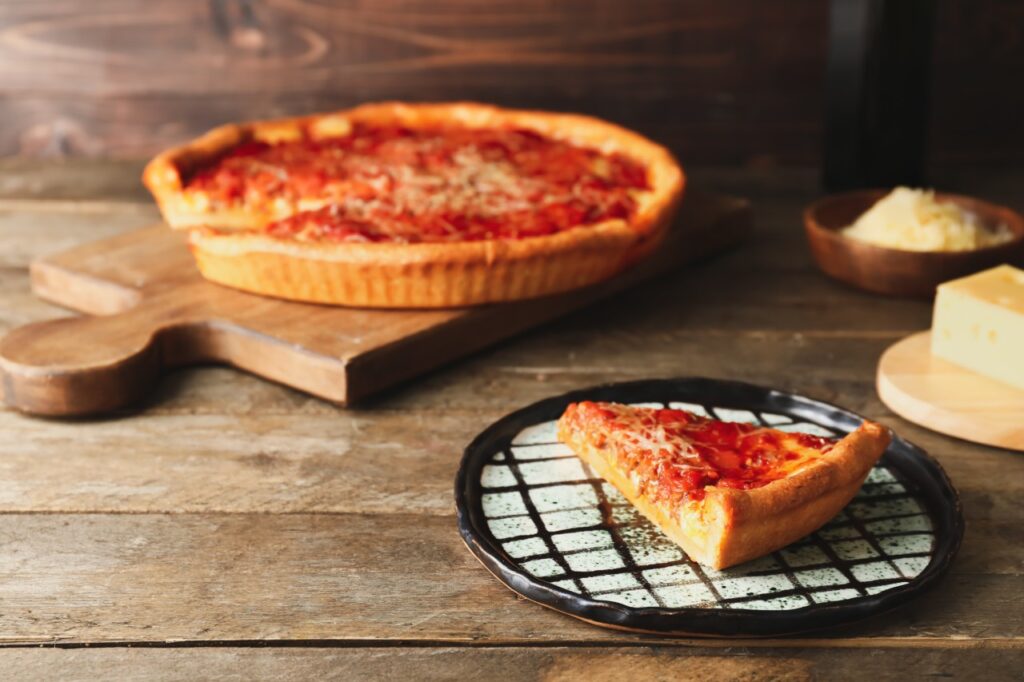
The first surprise of Chicago deep dish is how it comes together. Instead of stretching dough flat and scattering toppings across the surface, the dough is pressed up the sides of a deep pan, forming walls that hold everything inside. The structure resembles a pie shell more than a typical pizza base.
Cheese goes in first, directly against the dough. Toppings follow, and crushed tomatoes are spooned over the top. This reversed order protects the crust from excess moisture during the long bake.
Visually and structurally, the result looks layered and enclosed. Because ingredients are stacked vertically rather than spread thinly, critics compare it to a baked casserole, where components are arranged in tiers and cooked together in one vessel.
2. The Crust Is Thick and Buttery
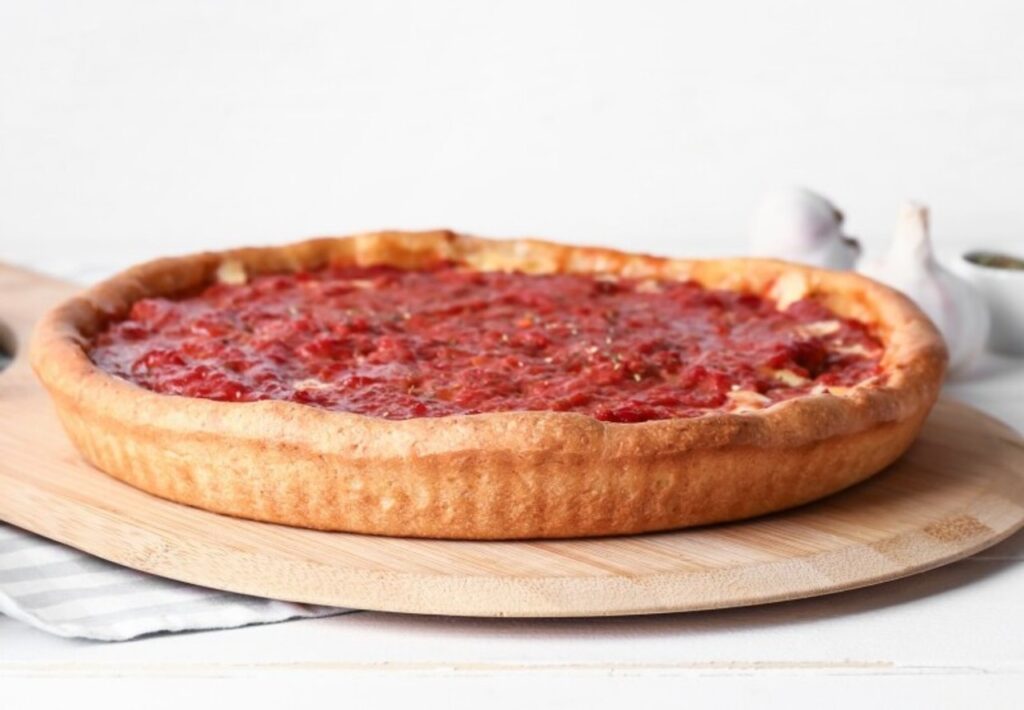
Texture defines much of the debate. Chicago deep dish dough is thicker and sturdier than many other regional pizza styles. It often includes oil or butter, which gives the crust a tender, almost pastry like quality rather than a chewy, elastic bite.
That richness serves a purpose. The crust must support substantial fillings and withstand a longer baking time without becoming soggy. Its firmness allows it to act as a structural base, much like the bottom of a savory pie.
Because it behaves less like foldable bread and more like a supportive shell, critics argue it leans toward casserole territory. The crust functions as containment rather than a flexible platform.
3. The Sauce Sits on Top
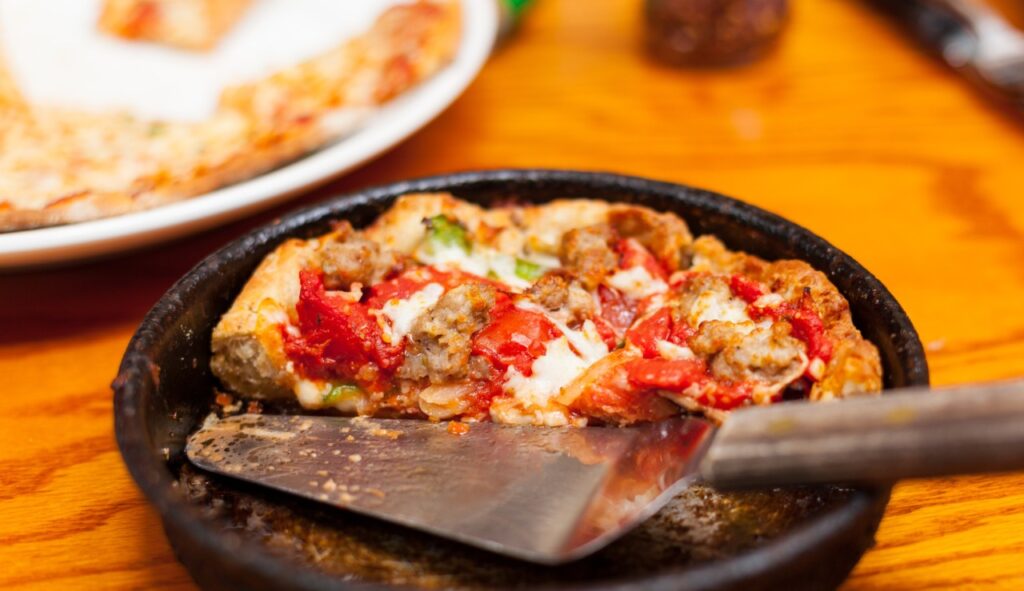
One of the most noticeable differences is the placement of the sauce. In deep dish, crushed tomatoes crown the pie, resting above cheese and toppings instead of beneath them. This inversion changes both appearance and perception.
The top layer looks bright and spoonable, with visible chunks of tomato. Unlike the browned cheese surface of many pizzas, deep dish finishes with a red, rustic cap that feels more like baked pasta or lasagna.
This presentation shapes expectation. When the sauce dominates the surface rather than the cheese, the dish visually distances itself from what many people imagine when they picture a classic slice.
4. It Requires a Knife and Fork
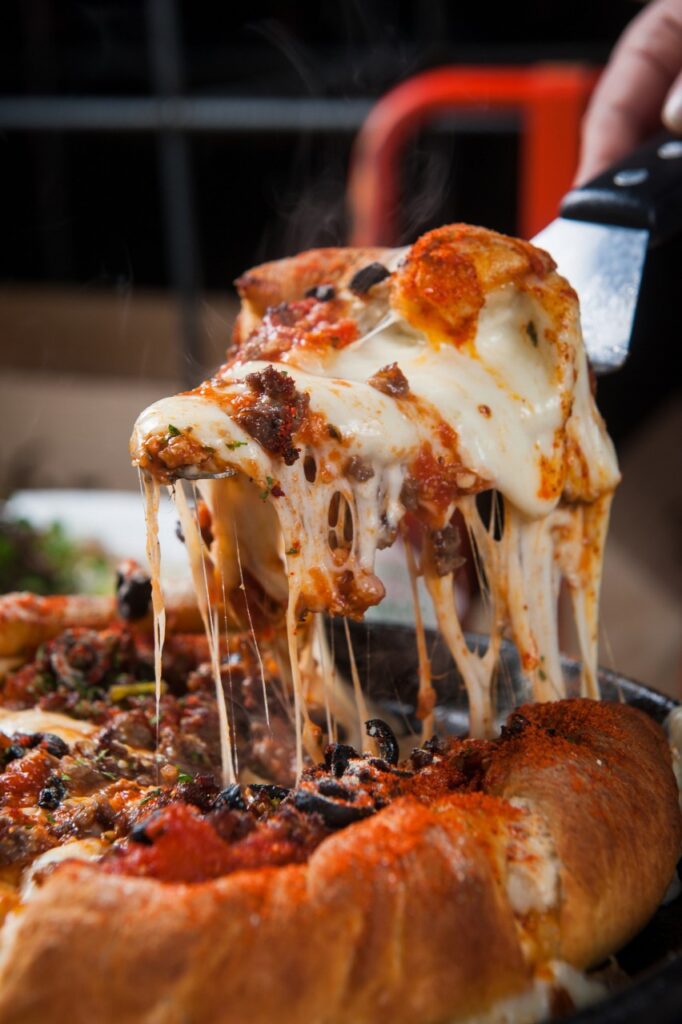
The way a food is eaten shapes how it is perceived. Thin crust pizza is designed for the hand. It can be lifted, folded slightly, and eaten on the move without much effort. The structure supports that casual style.
Deep dish behaves differently. Its slices are tall, layered, and heavy, often several inches thick. The combined weight of crust, cheese, and sauce makes it difficult to hold steady without the layers sliding apart.
As a result, many diners instinctively reach for utensils. Cutting through the stacked layers feels closer to serving a slice of pie than grabbing street food. That shift in eating style reinforces the idea that it resembles a plated casserole more than a traditional slice.
5. It Takes Much Longer to Bake
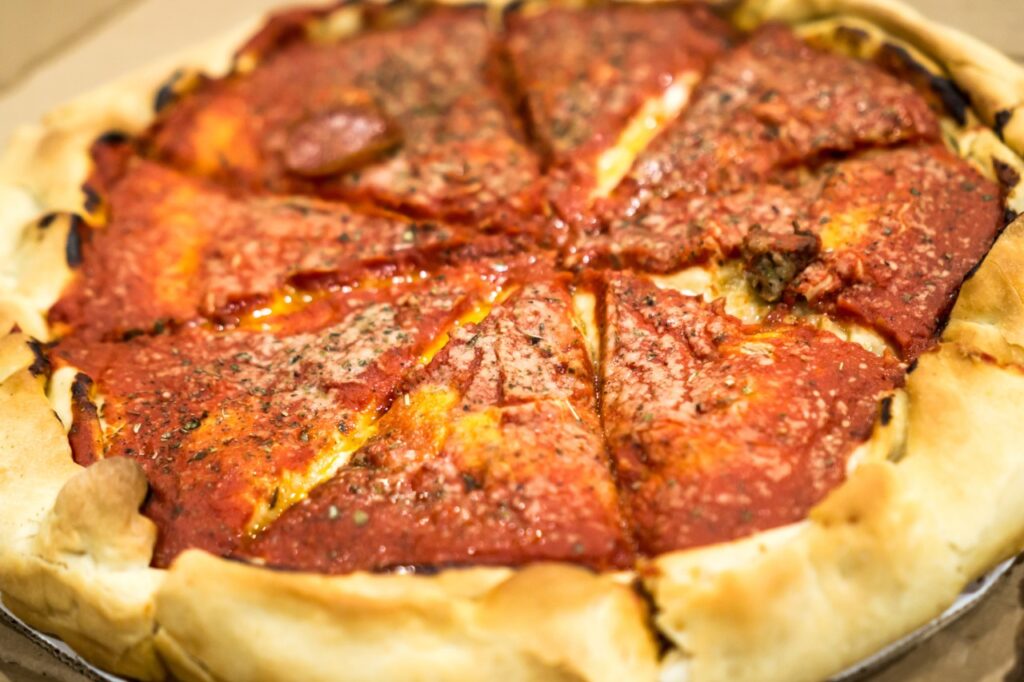
Speed often defines pizza. Many traditional styles bake in just a few minutes, especially in high heat ovens. The quick exposure creates char, bubbles, and crisp edges without extended cooking.
Deep dish requires patience. Its thickness and density demand a longer bake, often 30 to 45 minutes, to ensure the crust cooks through and the layers heat evenly from bottom to top.
This extended oven time aligns more closely with casseroles or savory pies than with fast baked flatbreads. The slower cooking process produces a fully baked interior rather than a quickly fired surface, shaping both texture and perception.
6. It’s Extremely Filling
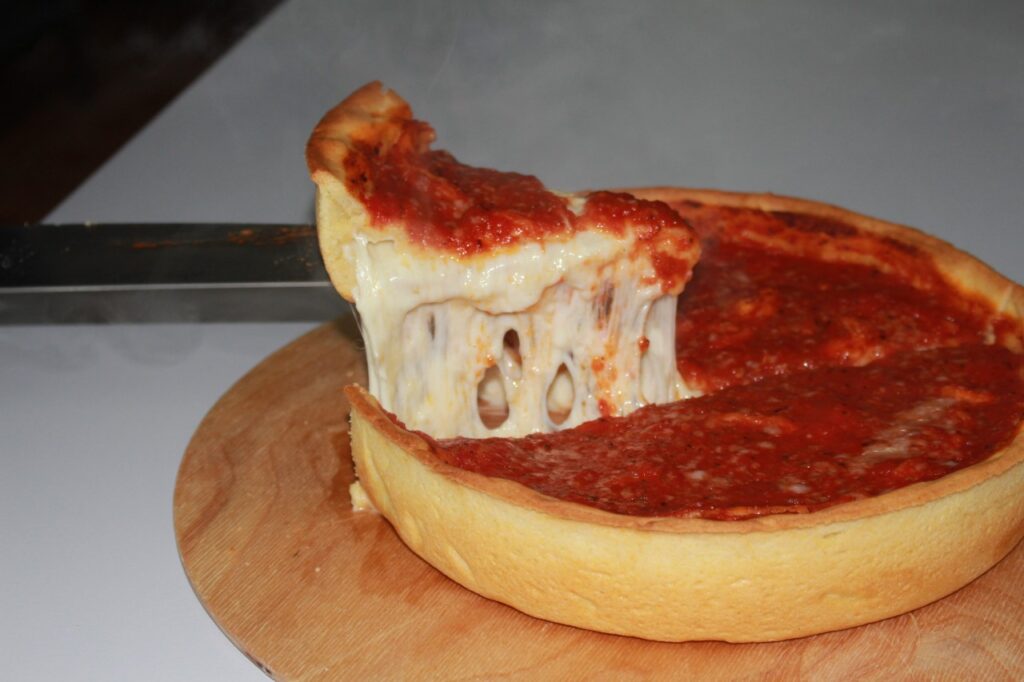
Portion size plays a powerful role in how a dish is classified. Deep dish is intentionally substantial. One slice contains thick dough, a generous layer of cheese, toppings, and a full covering of tomatoes.
The density makes even a single piece feel like a complete meal. Unlike lighter styles that encourage sharing several slices, deep dish satisfies quickly because of its volume and richness.
This heaviness shifts expectations. Instead of functioning as a casual snack or shareable plate, it feels more like a main course. That sense of fullness is one reason critics compare it to a baked entrée rather than a light pizza.
7. It Was Popularized for Visitors
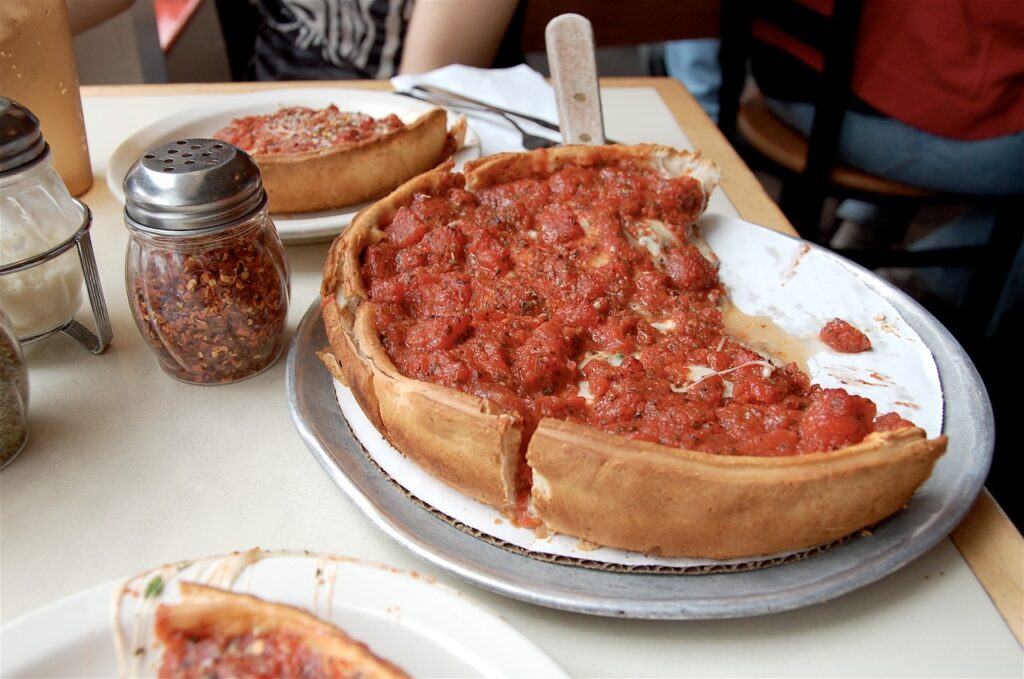
Chicago has a long tradition of thin-crust tavern-style pizza, often cut into squares and shared in neighborhood bars. Many locals grew up eating that version regularly.
Deep dish gained broader fame through restaurants that promoted it as a signature attraction. Its dramatic height and layered interior made it memorable for visitors seeking something uniquely tied to the city.
Because of this visibility, some residents view it as a special occasion dish rather than everyday fare. The perception that it was elevated through tourism marketing contributes to the argument that it stands apart from daily pizza culture.
8. The Cheese Layer Is Massive
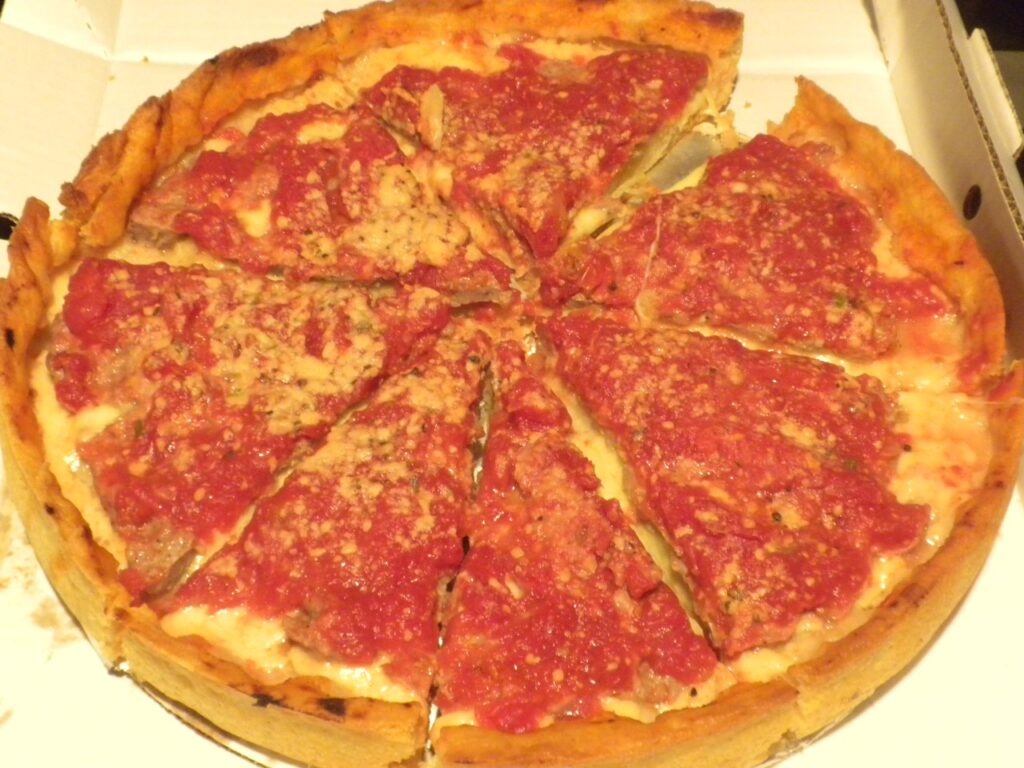
Cheese in deep dish is not just a topping, it is a structural component. A thick layer of low moisture mozzarella is placed directly against the dough to protect it from tomato juices during the long bake.
This substantial layer creates a dense, molten center that stretches and settles between crust and sauce. The texture can feel layered and heavy rather than airy.
When cheese becomes a defining interior mass instead of a surface accent, the dish takes on a different character. The sheer volume contributes to the comparison with baked pasta or casseroles.
9. The Pan Defines the Shape
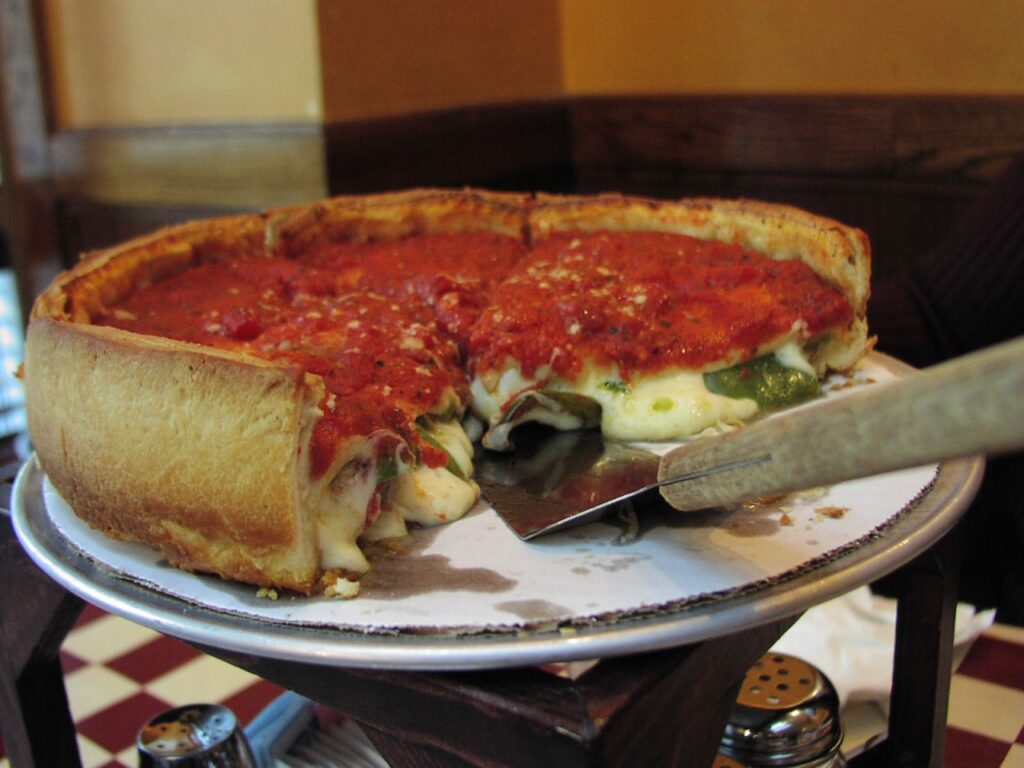
Deep dish owes much of its identity to the pan it is baked in. High sided metal pans shape the dough into vertical walls, giving the finished product height and containment.
Unlike flat pizzas baked directly on a stone, this style depends on its vessel for structure. The pan supports the filling and ensures the layers remain intact during the long bake.
Because the form comes from a baking dish rather than free stretched dough, the final result resembles a savory pie. That reliance on a container strengthens the casserole comparison in the eyes of critics.
10. It Defies Pizza Expectations
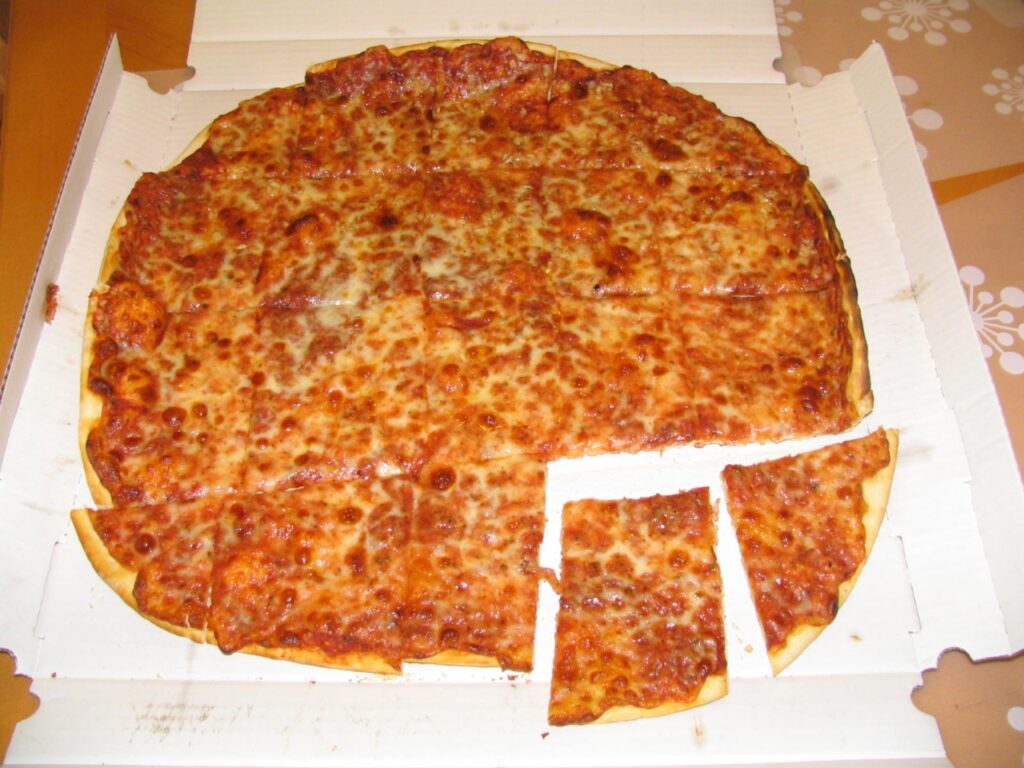
For many diners, pizza means a flat crust with visible toppings and browned cheese on top. The image is familiar and widely shared across regions.
Deep dish challenges that expectation. The cheese sits beneath the toppings, the sauce crowns the surface, and the slice rises high above the plate. The eating pace is slower and more deliberate.
When a dish breaks established visual and structural norms, debate follows. Deep dish still contains the core elements of pizza, yet its format feels different enough that some prefer to label it something else entirely.