11 Chicken Broth Recipes That Don’t Actually Taste Like Chicken

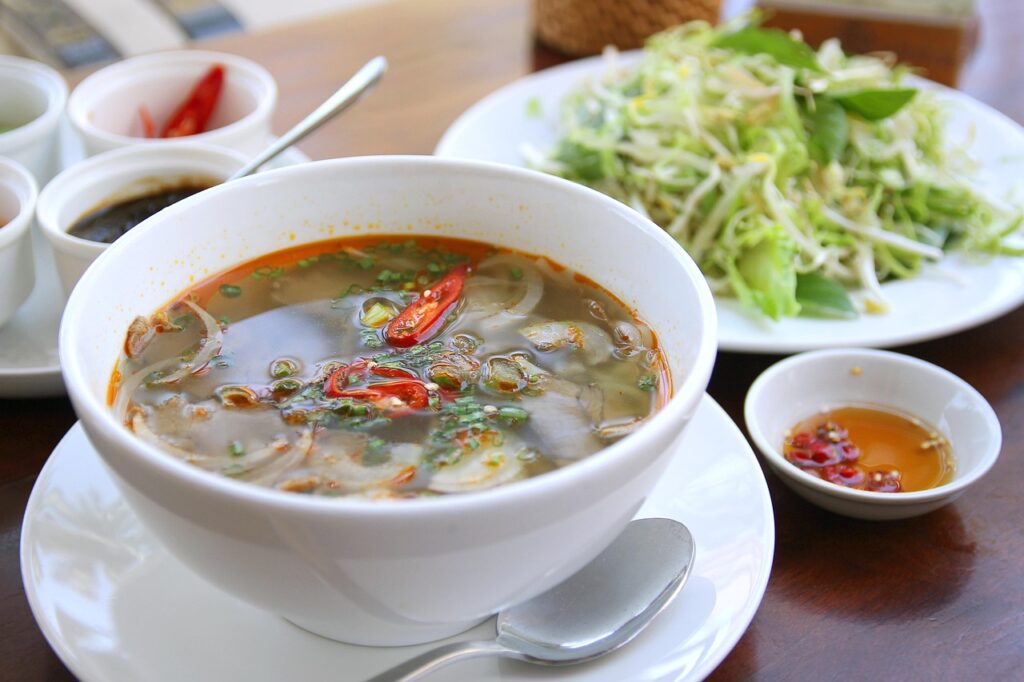
Chicken broth is often used for depth rather than identity, which is why many recipes that rely on it do not actually taste like chicken. In soups built around vegetables, grains, legumes, spices, or acidity, the broth quietly supports structure while stronger ingredients take over the flavor. Tomatoes, lentils, citrus, herbs, and starches quickly absorb and redirect the base, reshaping the final taste. These dishes show how chicken broth can enhance body and balance without announcing itself, resulting in soups that feel rich, complete, and satisfying while remaining firmly non-chicken in character.
1. Classic Tomato Basil Soup
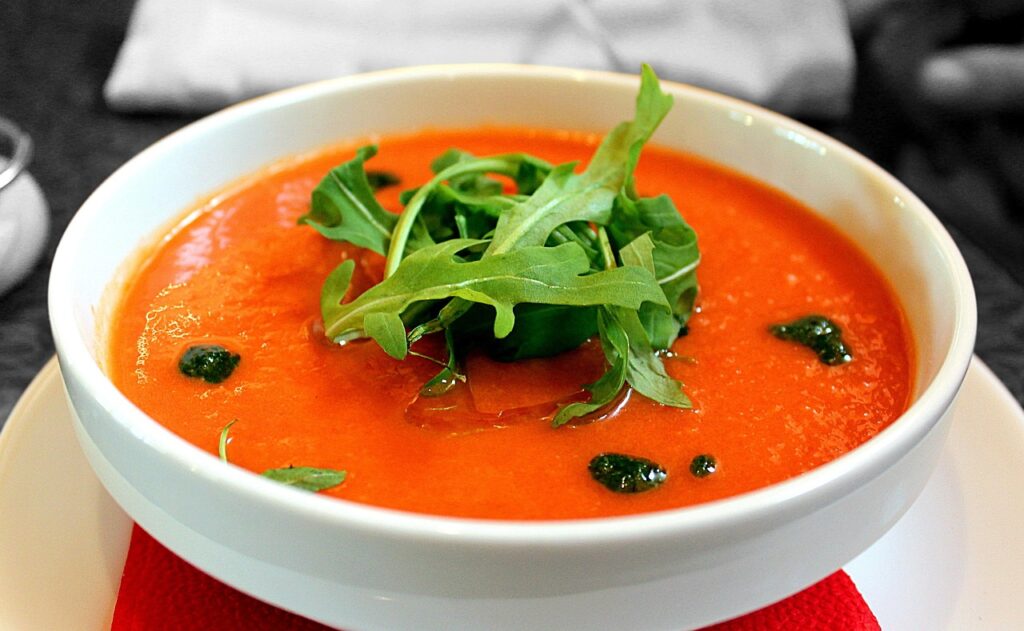
Tomato basil soup is one of the clearest examples of how chicken broth can disappear completely into the background. The dominant flavor comes from tomatoes, whether fresh, canned, or slow roasted, which carry natural acidity and sweetness that quickly take over the palate. Basil adds an aromatic, herbal lift that reinforces the tomato profile rather than the broth beneath it. Chicken broth is used here for body and depth, not for flavor identity. It rounds out the soup, preventing it from tasting watery, but it does not announce itself. Once the soup is simmered and blended, the result tastes unmistakably vegetal and tomato-forward.
2. Creamy Mushroom Soup
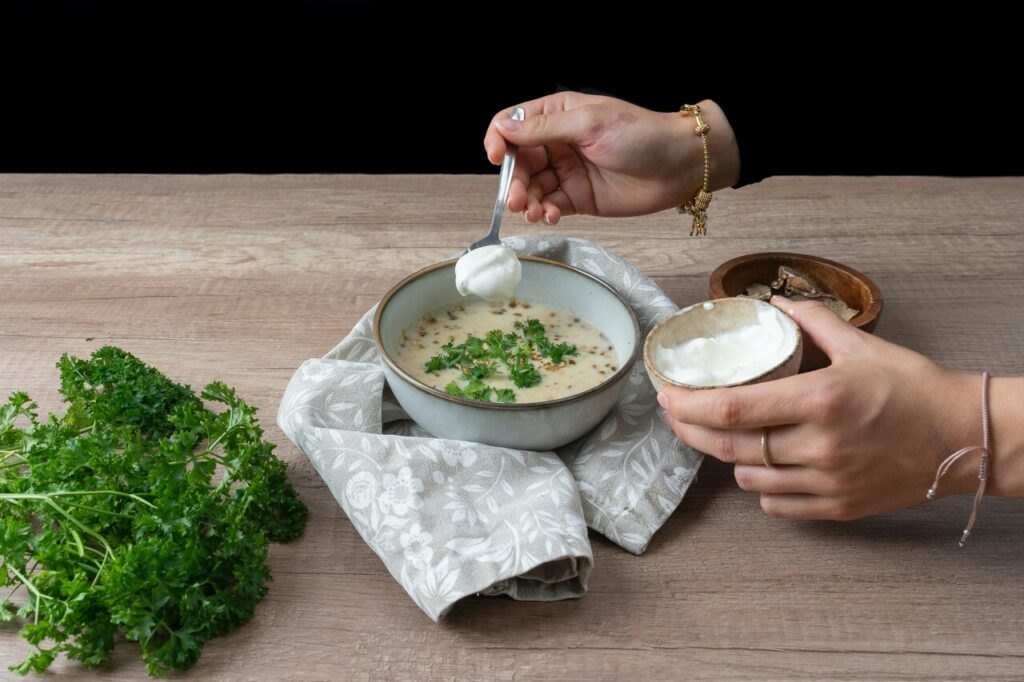
Mushroom soup naturally overwhelms chicken broth because mushrooms are rich in glutamates, the compounds responsible for deep savory flavor. When mushrooms are sautéed properly, they release moisture and concentrate into something earthy and intense. Cream or milk further softens any underlying broth notes, while onions, garlic, and herbs build complexity. Chicken broth functions as a supporting liquid, adding balance without asserting itself. After blending, the soup tastes unmistakably like mushrooms, not poultry. This is why mushroom soup often tastes just as satisfying when made with vegetable stock or chicken stock interchangeably.
3. Vegetable Barley Soup
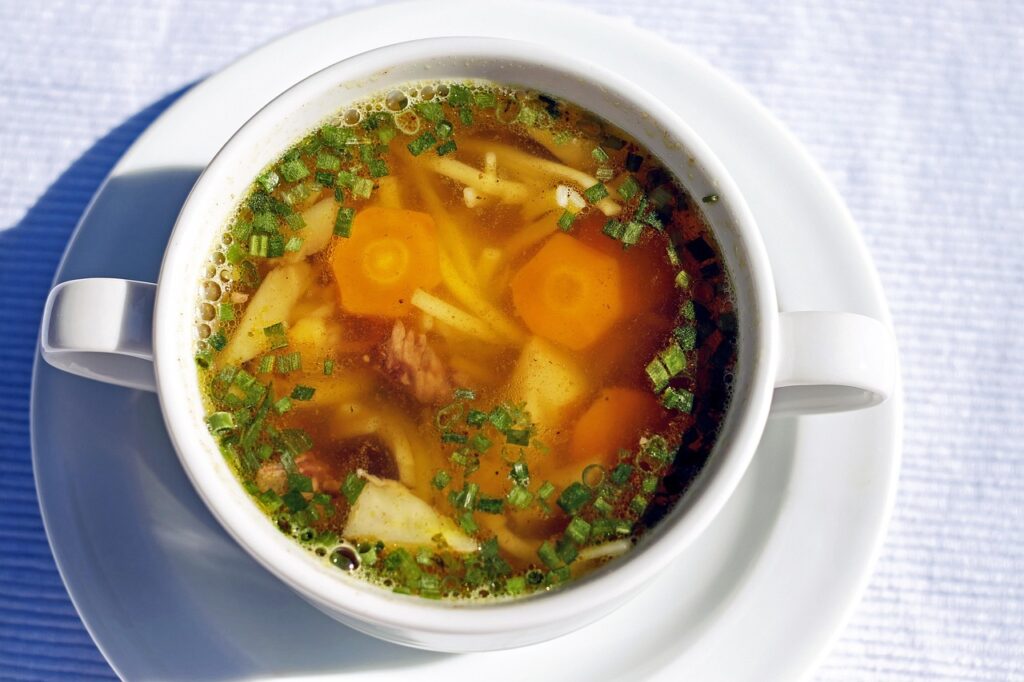
Vegetable barley soup relies on grains and vegetables to shape its identity. Barley absorbs liquid as it cooks, taking on flavors from carrots, celery, onions, and herbs rather than the broth itself. As the soup simmers, starch from the barley thickens the base, muting any distinct chicken notes. The vegetables release their own sweetness and earthiness, creating a layered profile that feels hearty and plant-driven. Chicken broth adds background richness, but it never takes center stage. The finished soup tastes grainy, vegetal, and comforting rather than meaty. This makes it a reliable option for those who want depth without a chicken flavor.
4. French Onion Soup
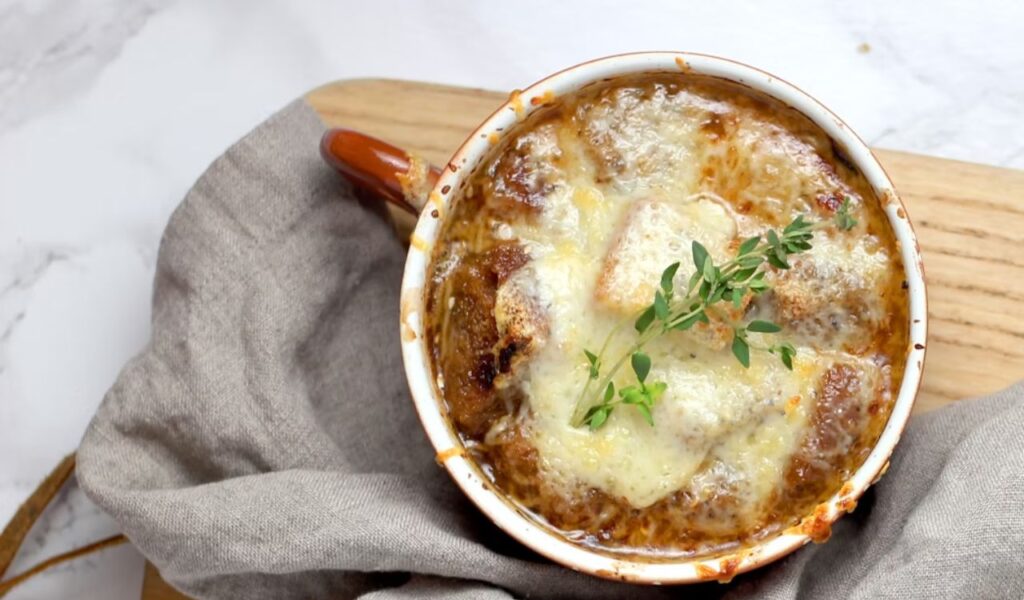
French onion soup proves that technique can overpower ingredients. The long, slow caramelization of onions produces sweetness, bitterness, and complexity that dominate the dish. By the time broth is added, the onions have already defined the flavor direction. Melted cheese and toasted bread further mask any subtle poultry notes. Chicken broth contributes salt and body, but the soup tastes like onions first and last. Even when beef broth is replaced with chicken broth, the difference is often subtle. The soup’s identity remains rooted in caramelized onion flavor rather than the liquid base and the taste of chicken.
5. Creamy Potato Leek Soup

Potato leek soup is built on softness and restraint, which naturally subdues strong broth flavors. Potatoes act as sponges, absorbing liquid while dulling sharp edges. Leeks bring mild sweetness and onion-like aroma without intensity. Cream or butter smooths everything further, creating a unified flavor. Chicken broth here functions as a quiet foundation, adding savory depth without defining taste. Once blended, the soup becomes silky and mild, with vegetables clearly leading over the flavour of the meat. The result is comforting and neutral, making it difficult to identify chicken as an ingredient by flavor alone.
6. Thai Coconut Curry Soup
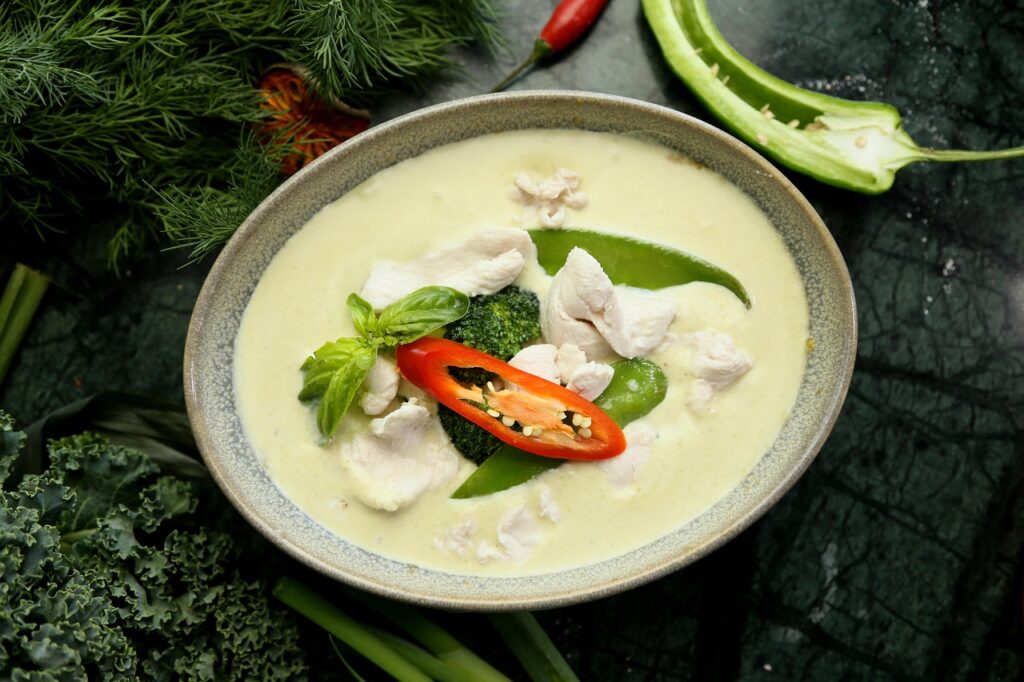
This soup overwhelms chicken broth almost immediately. Coconut milk brings richness and sweetness, while curry paste delivers spice, heat, and aromatic complexity. Ingredients like lemongrass, ginger, lime, and chilies dominate the flavor profile from the first sip. Chicken broth is used primarily to thin the coconut milk and carry spices evenly. Its flavor is completely overshadowed by the bold Southeast Asian ingredients. Even without meat, the soup tastes vibrant and layered rather than poultry-based. The broth’s role is functional, not expressive, making it essentially invisible on the palate.
7. Italian Wedding Soup
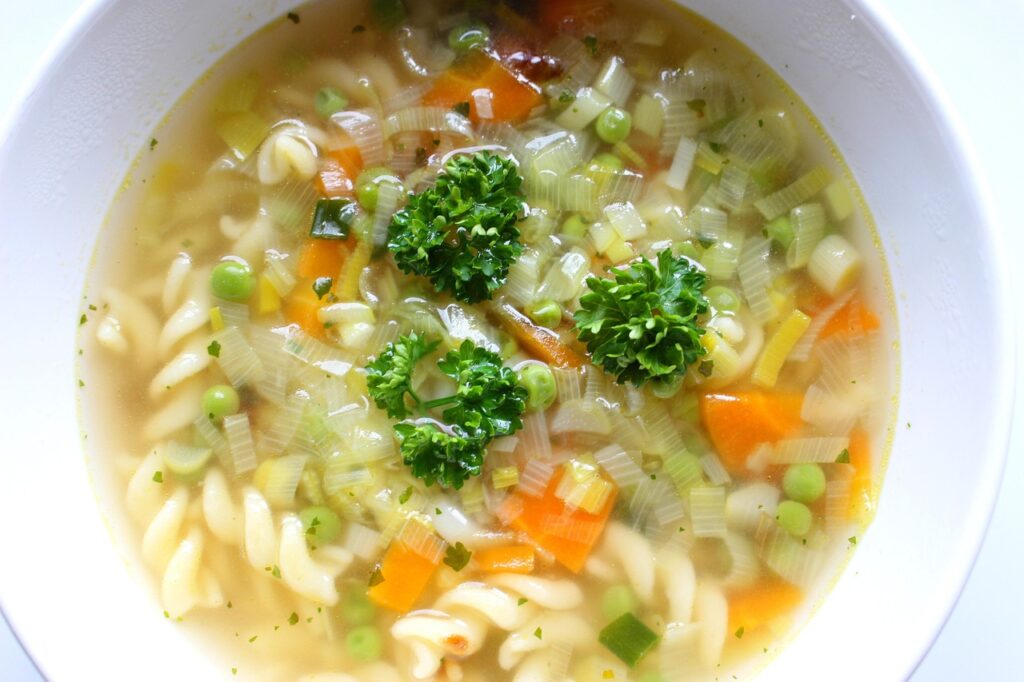
When Italian wedding soup leans heavily on greens and pasta, chicken broth fades into the background. Leafy greens like escarole or spinach contribute bitterness and freshness, while tiny pasta shapes add texture and starch. Garlic and herbs define the aroma more than the broth itself. As the pasta cooks, it absorbs liquid and softens flavor distinctions. The soup tastes balanced and savory, but not distinctly chicken-driven. Broth provides continuity between ingredients, not dominance. This version often tastes closer to a vegetable soup with pasta than a traditional chicken soup. The longer it simmers, the more unified the flavors become. By the time it is served, the broth’s role is structural rather than recognizable.
8. Lemon Orzo Soup
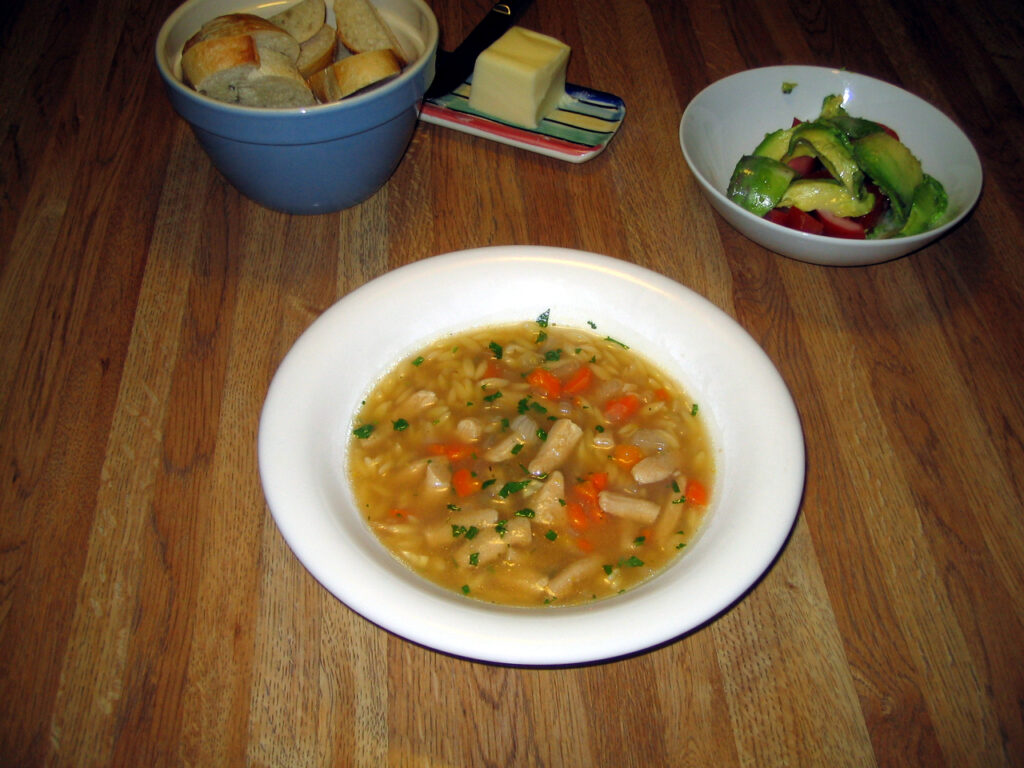
Lemon orzo soup uses acidity as its defining feature. Fresh lemon juice brightens the entire dish, lifting flavors and masking subtle notes beneath. Orzo thickens the soup slightly as it cooks, absorbing liquid and dulling sharp broth edges. Herbs like dill or parsley add freshness that further distances the soup from poultry flavors. Chicken broth provides salt and structure but quickly becomes secondary. The finished soup tastes citrusy, light, and grain-focused. Chicken is rarely the flavor people remember from this dish. The balance leans toward freshness rather than depth. This makes the soup feel clean and refreshing instead of meaty.
9. Minestrone
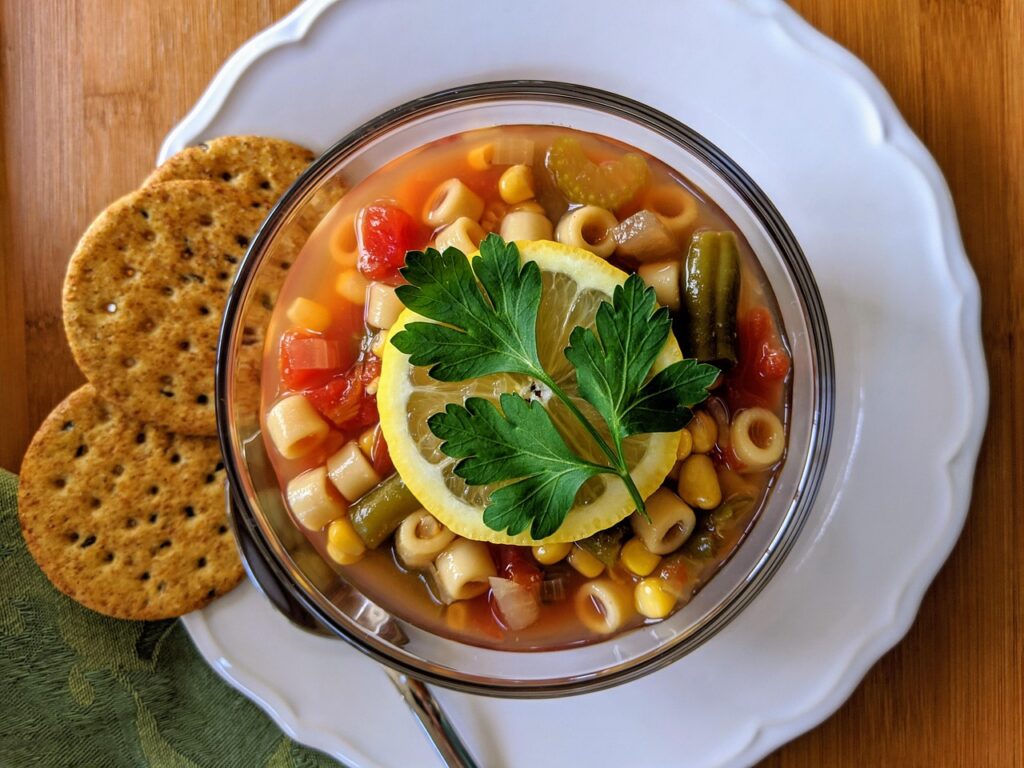
Minestrone is a soup built on abundance rather than clarity. Beans, vegetables, tomatoes, and herbs all contribute competing flavors that blend into something cohesive but not specific. Tomatoes add acidity, beans add starch, and vegetables contribute sweetness and bitterness. Chicken broth serves as a neutral carrier for all of this complexity. Once simmered, no single ingredient dominates, especially not the broth. The soup tastes deeply savory and vegetable-rich. This is why minestrone works just as well with vegetable stock as chicken stock. Its identity comes from variety, not the liquid base. The broth simply supports the overall harmony.
10. Egg Drop Soup
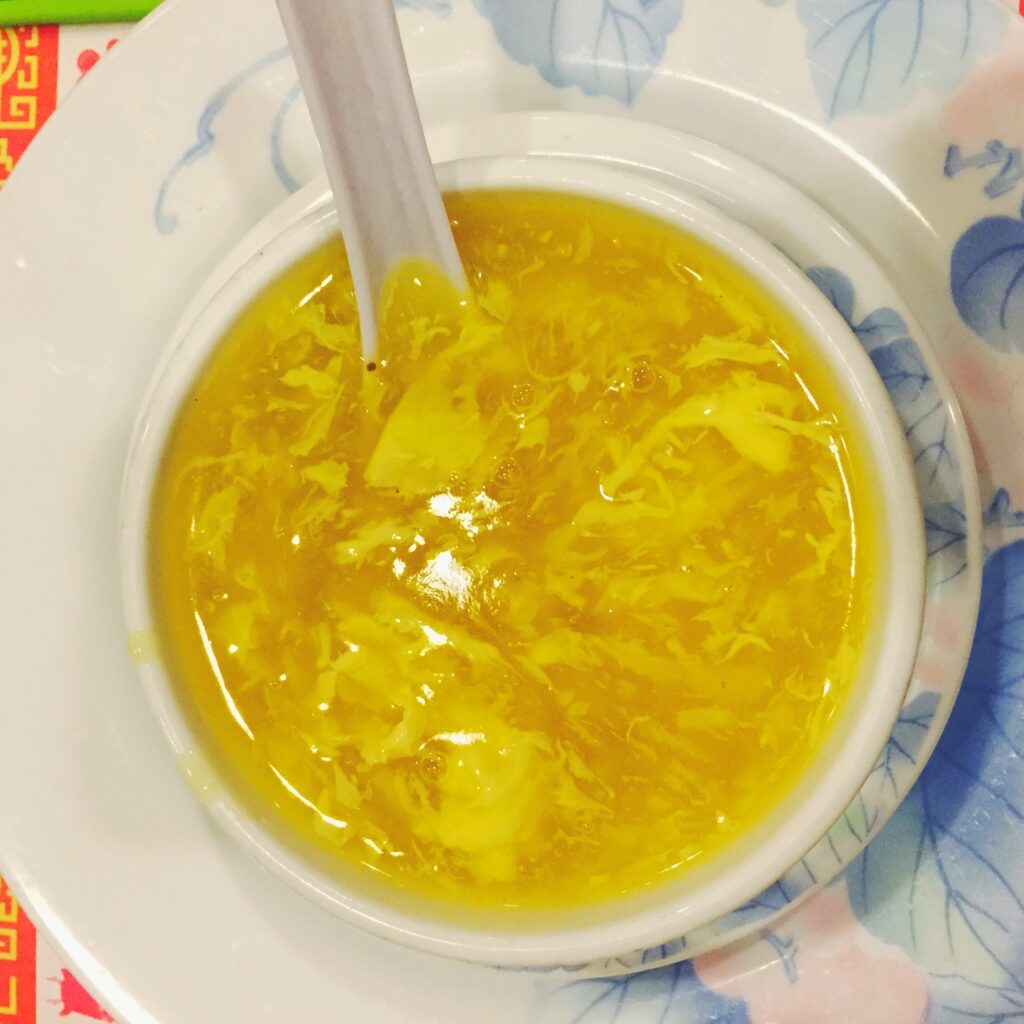
Egg drop soup relies on texture and seasoning rather than broth character. Beaten eggs form delicate ribbons that create richness and mouthfeel. Sesame oil, white pepper, and sometimes ginger define the aroma more than the liquid base. The broth is intentionally light so the eggs can stand out. Chicken broth is used because it is mild and unobtrusive. Once seasoned, the soup tastes more like egg and spice than poultry. The simplicity of the recipe ensures the broth stays in the background where it belongs. Even subtle seasoning changes have more impact than the stock itself. The result is clean, comforting, and neutral.
11. Spiced Lentil Soup
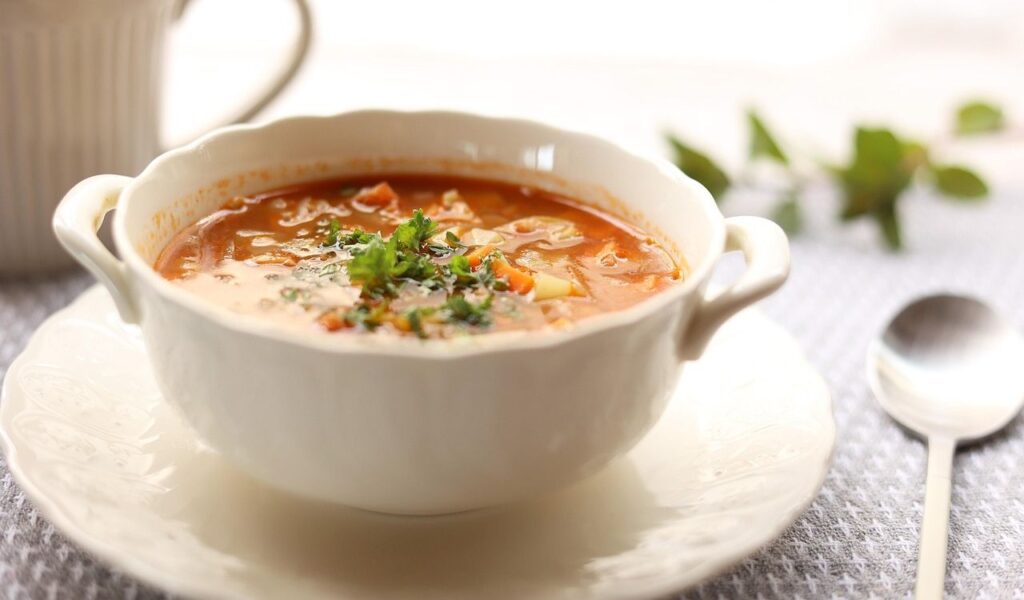
Lentil soup quickly absorbs and transforms whatever liquid it is cooked in. Lentils release starch and earthy flavor as they simmer, thickening the soup and muting broth notes. Spices such as cumin, coriander, or paprika further steer the flavor profile away from chicken. Aromatics like onion and garlic deepen the base without adding meatiness. Chicken broth adds richness but loses its identity during cooking. The finished soup tastes hearty, spiced, and legume-forward. It feels filling and complex without tasting remotely like chicken. As the soup rests, the lentils continue to dominate the flavor.