11 Greek Recipes That Bring Mediterranean Flavor Home

Greek cooking is rooted in simplicity, balance, and a deep respect for its ingredients. It relies on olive oil instead of heavy sauces, herbs instead of excess seasoning, and time-tested techniques that let natural flavors shine. What makes Greek food so inviting is how effortlessly it feels both nourishing and satisfying. Meals are built around vegetables, grains, legumes, seafood, and prepared meats, creating dishes that feel hearty without being heavy. These recipes bring the warmth of the Mediterranean into the home kitchen, offering bright flavors, comforting textures, and a sense of shared tradition that suits just as well a busy weeknight as it does a relaxed family table.
1. Moussaka

Moussaka is often the dish people picture when they think of Greek home cooking, and for good reason. It layers simple ingredients into something deeply satisfying. Sliced eggplant forms the base, soaking up olive oil and developing a soft, almost meaty texture when cooked. Ground meat, usually lamb or beef, is simmered with onions, tomatoes, and warm spices like cinnamon or allspice, creating a savory filling that is rich without being heavy. The dish is finished with a thick béchamel sauce that bakes into a lightly golden topping. What makes moussaka special is balance. Each layer plays a role, and no single element overwhelms the others.
2. Souvlaki
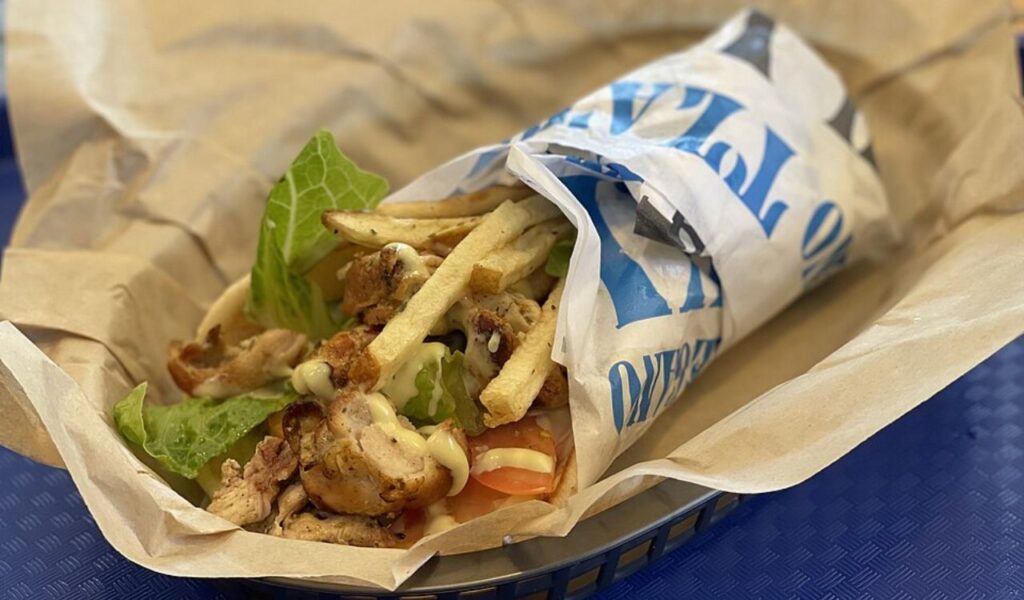
Souvlaki brings Greek street food straight into the home kitchen. Small pieces of meat are marinated in olive oil, lemon juice, garlic, and herbs, then grilled quickly over high heat. The marinade tenderizes the meat while adding brightness and aroma. Pork is traditional, but chicken and lamb are equally popular. The beauty of souvlaki lies in its simplicity. Proper marinating and hot cooking create juicy meat with lightly charred edges. Served with warm pita, tomatoes, onions, and tzatziki, it becomes a complete meal that feels fresh and satisfying. Souvlaki shows how Greek cooking relies on technique and quality ingredients rather than complicated preparation.
3. Spanakopita
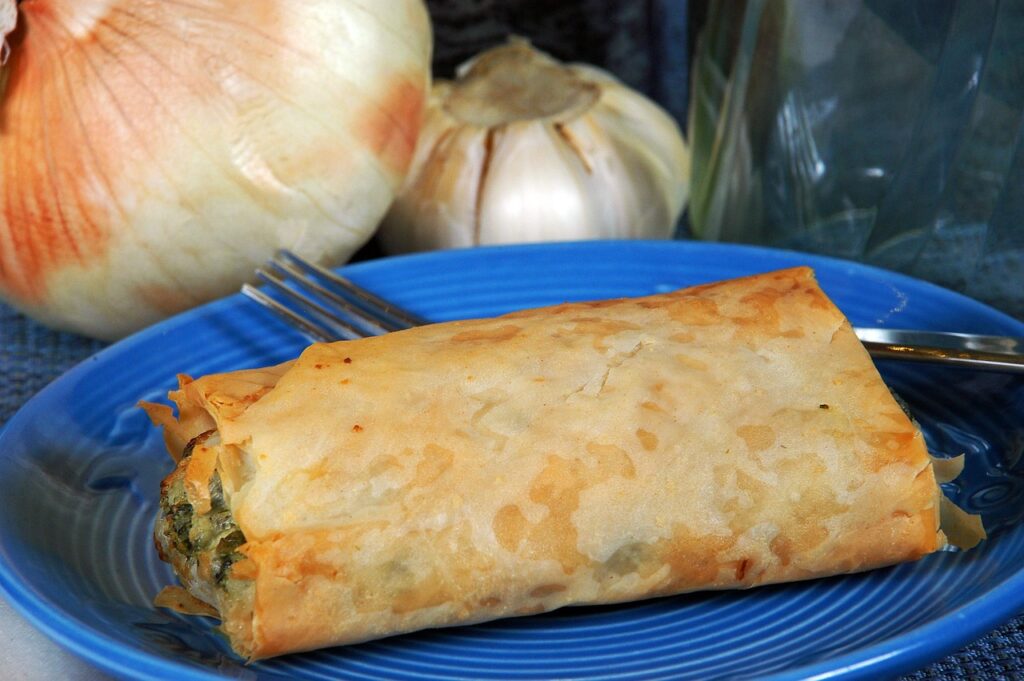
Spanakopita is a perfect example of how Greek cuisine transforms vegetables into something craveable. Spinach is sautéed gently to remove excess moisture, then mixed with feta cheese, herbs, and eggs for structure. This filling is wrapped in layers of phyllo dough brushed with olive oil or butter. When baked, the phyllo becomes crisp and flaky, contrasting beautifully with the soft, savory interior. The flavor is rich but clean, with the feta adding saltiness and the herbs providing freshness. Spanakopita works equally well as a main dish or a side, and it holds up nicely for gatherings, making it a staple in many Greek homes.
4. Greek Salad
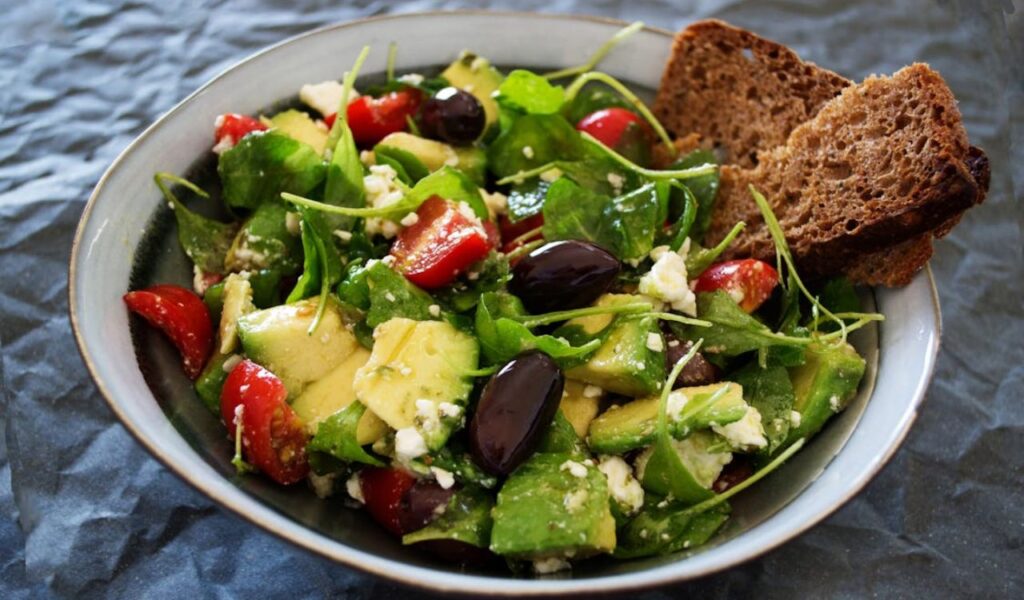
Greek salad proves that restraint can be powerful. It uses raw ingredients at their peak, including tomatoes, cucumbers, red onions, olives, and feta. There is no lettuce in the traditional version because the vegetables themselves provide crunch and freshness. Olive oil, oregano, and a splash of vinegar bring everything together without masking natural flavors. The feta is usually served in a large slab rather than crumbled, allowing diners to break off pieces as they eat. This salad is refreshing, filling, and deeply satisfying, especially alongside grilled meats or bread. It captures the Mediterranean approach to eating, where freshness and balance come first.
5. Dolmades
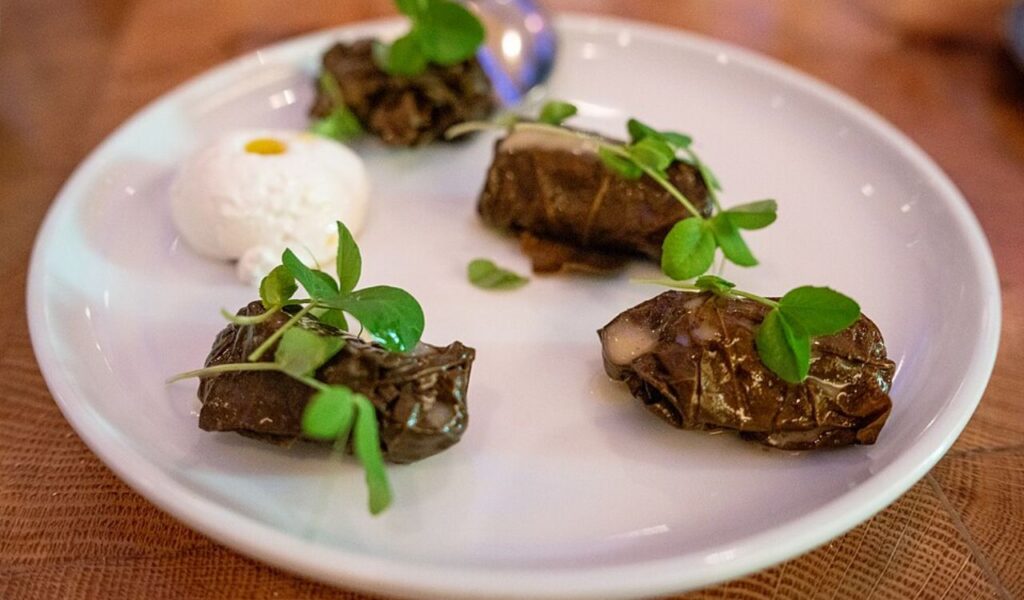
Dolmades are stuffed grape leaves filled with rice, herbs, and sometimes ground meat. They require patience to prepare, but the results are worth it. The filling is seasoned with dill, mint, lemon, and olive oil, creating a bright, aromatic flavor. The grape leaves add a slightly tangy note that balances the richness of the filling. Dolmades are gently simmered until tender, allowing the flavors to meld. They are often served at room temperature, making them ideal for shared meals. This dish reflects Greek hospitality, as it is rarely made in small quantities and is meant to be enjoyed slowly.
6. Pastitsio
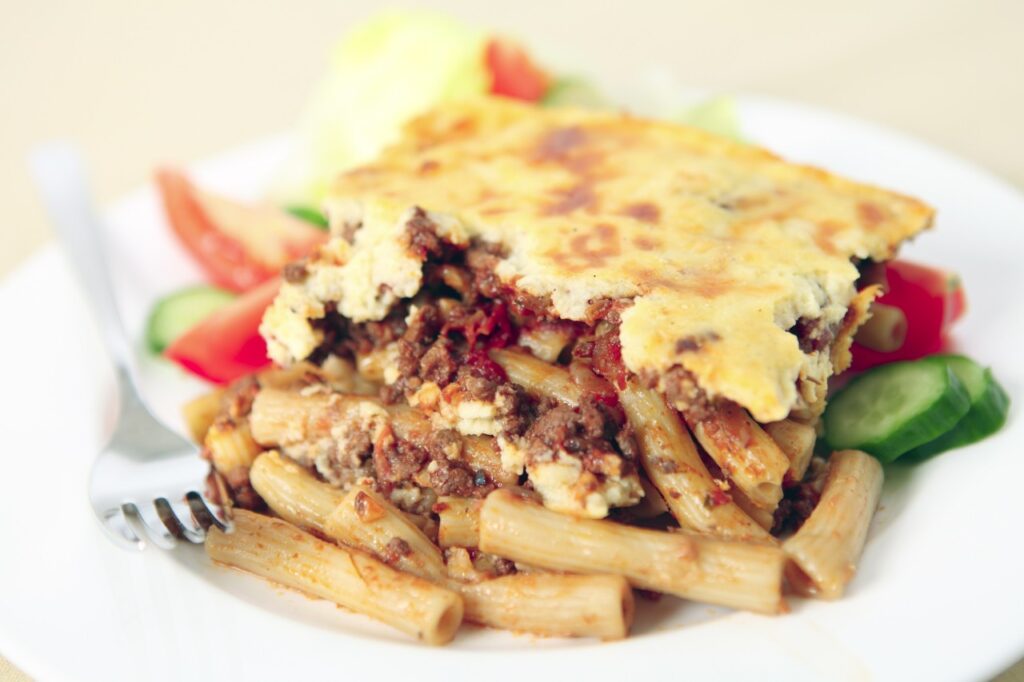
Pastitsio is sometimes described as Greek baked pasta, but it has a character all its own. Long tubular pasta forms the base, topped with a spiced meat sauce similar to the one used in moussaka. The dish is finished with a thick béchamel that sets into a firm, creamy layer when baked. Cinnamon or nutmeg adds warmth without making the dish sweet. Pastitsio is hearty, comforting, and designed to feed a crowd. It slices cleanly once cooled, making it practical for gatherings and leftovers. This dish shows how Greek cooking blends Mediterranean ingredients with influences from neighboring cuisines.
7. Tzatziki

Tzatziki is more than just a sauce. It is a cooling element that balances many Greek dishes. Thick yogurt is mixed with grated cucumber, garlic, olive oil, and lemon juice. The key is removing excess moisture from the cucumber so the sauce stays thick and creamy. The result is fresh, tangy, and lightly garlicky. Tzatziki pairs especially well with grilled meats and warm bread, cutting through richness and adding contrast. It is simple to make but requires attention to texture and balance, which is why homemade versions often taste far better than store-bought ones. It also works beautifully as a dip for vegetables or a spread in wraps and sandwiches.
8. Fasolada
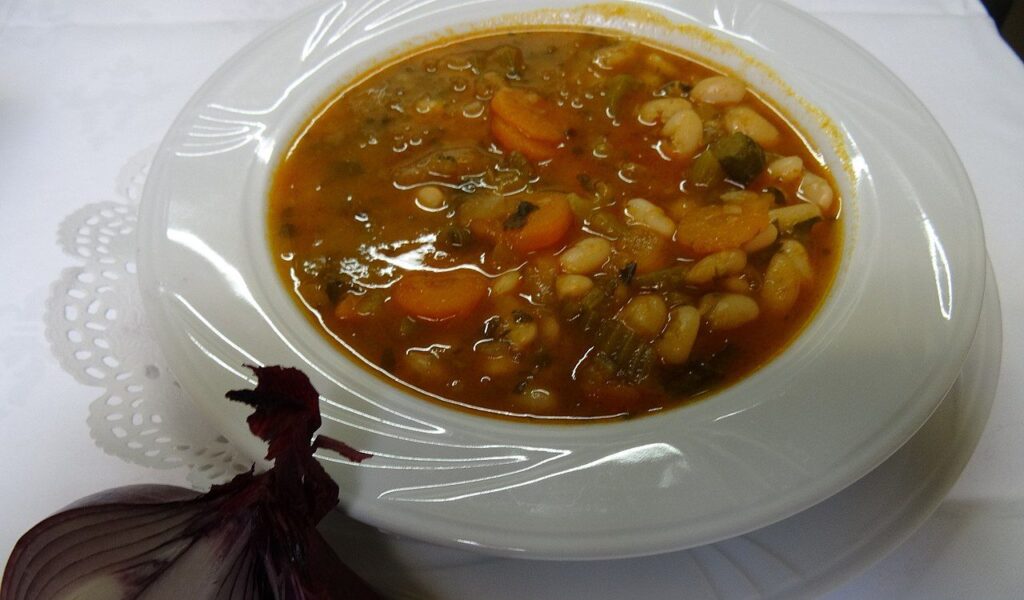
Fasolada is a humble bean soup that holds deep cultural importance in Greece. White beans are simmered with tomatoes, onions, carrots, celery, and olive oil until tender and flavorful. The soup is thick and nourishing, designed to be filling without relying on meat. Olive oil plays a central role, adding richness and mouthfeel. Fasolada is often served with bread and olives, making it a complete meal. It reflects the Greek tradition of simple, plant-forward cooking that focuses on nourishment and comfort, especially during cooler months. Many families prepare large batches because it store well and improve in flavor over time.
9. Keftedes
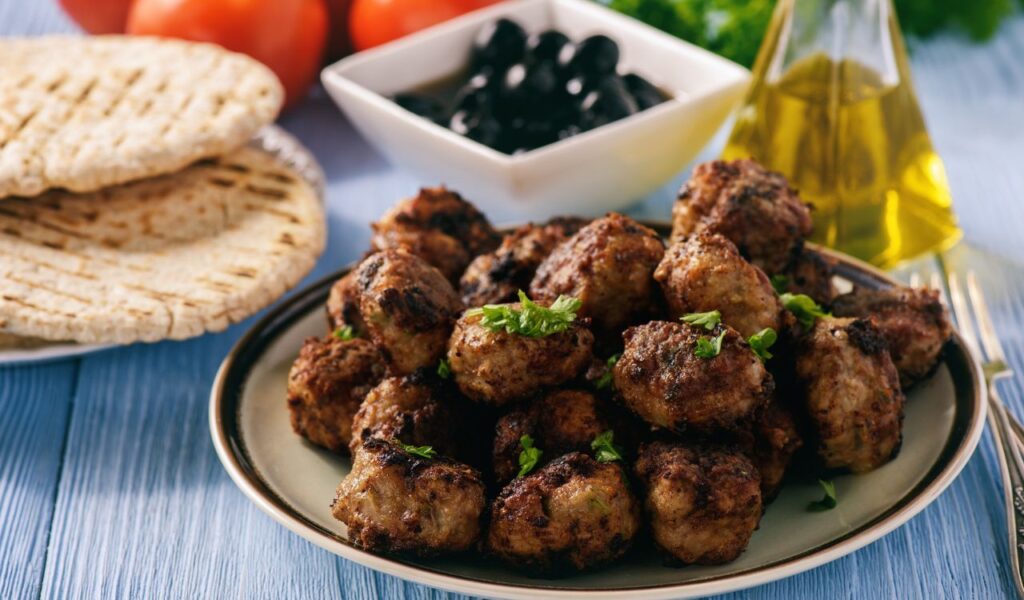
Keftedes are Greek meatballs that emphasize herbs and aromatics. Ground meat is mixed with onion, garlic, parsley, mint, and breadcrumbs, then fried until golden. The herbs set keftedes apart from other meatballs, giving them a fresh, almost bright flavor. They are crisp on the outside and tender inside when done properly. Keftedes are often served as part of a larger spread, alongside salads, sauces, and bread. They work equally well as an appetizer or main dish and are especially popular at family gatherings. Leftovers are commonly enjoyed cold or tucked into pita with sauce. Their versatility and bold seasoning make them a reliable favorite across generations.
10. Horiatiko Bread
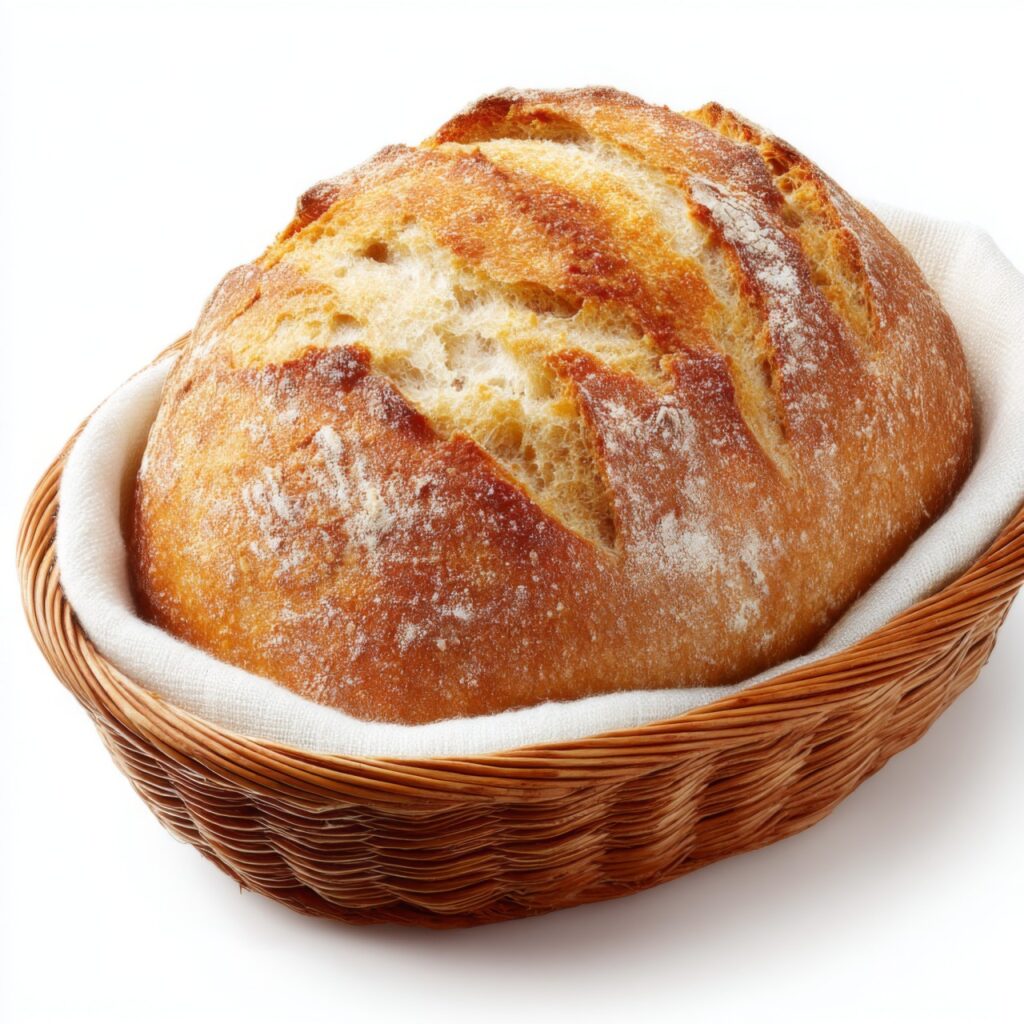
Traditional Greek meals are rarely complete without bread, and rustic village-style loaves play an important role. These breads are often dense, chewy, and designed to soak up olive oil, sauces, and juices. Made with simple ingredients, they rely on fermentation and proper baking for flavor. The crust is usually firm, while the interior remains moist and sturdy. Bread is treated as a companion to the meal rather than a separate course. It highlights how Greek cuisine values practicality and texture as much as taste. Even a simple slice dipped in olive oil can feel deeply satisfying. Served warm and shared at the table, it reinforces the communal nature of Greek dining.
11. Galaktoboureko
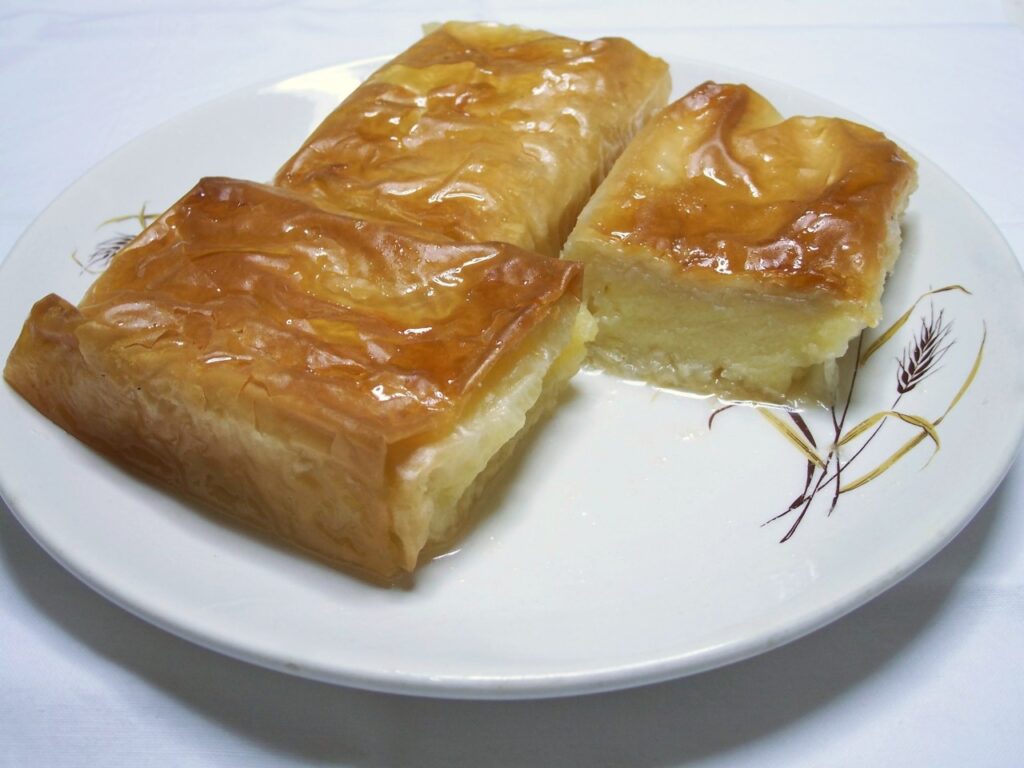
Galaktoboureko brings Greek desserts into the spotlight. It combines crisp phyllo layers with a creamy custard made from milk and semolina. Once baked, the dessert is soaked in a citrus-scented syrup that adds sweetness without making it soggy. The contrast between crunchy phyllo and soft custard is what makes it memorable. Lemon or orange zest keeps the dessert bright and balanced. Galaktoboureko is rich but not overwhelming, making it a fitting end to a meal. It reflects the Greek approach to sweets, where texture and aroma matter just as much as sweetness. This dessert is often reserved for celebrations, where it is shared in generous slices.