Preparing creamy Spanish garlic scrambled eggs

Few egg dishes feel as comforting as soft scrambled eggs scented with garlic and olive oil. Done properly, the Spanish approach delivers richness, aroma, and a delicate custardy texture instead of dry curds.
What makes Spanish garlic scrambled eggs distinctive
Spanish-style scrambled eggs are less about heavy cream and more about technique, olive oil, and restraint. In many Spanish home kitchens, eggs are treated with the same respect given to tortillas, revueltos, and simple tapas: few ingredients, excellent produce, and careful heat control. Garlic plays a supporting role rather than overwhelming the eggs, adding sweetness and fragrance when cooked gently. The result is savory, silky, and deeply satisfying.
A close cousin to revueltos, this style often borrows the Spanish instinct for soft-set eggs. Rather than cooking until firm, the eggs are pulled from the pan while still glossy. Residual heat finishes the job, preserving tenderness. That matters because eggs continue to tighten quickly after leaving the stove, and even 30 seconds too long can turn a creamy scramble chalky.
Olive oil is central to the flavor profile. Extra virgin olive oil gives body, fruitiness, and a faint peppery note that butter alone cannot replicate. Many cooks use a combination of olive oil and a little butter for balance, but the Spanish character comes primarily from the oil. Add in thinly sliced garlic, and the aroma becomes unmistakably Mediterranean.
Texture is the defining benchmark. Large, dry curds suggest rushed cooking or excessive heat. Creamy Spanish garlic scrambled eggs should look softly folded, moist, and almost spoonable. In restaurants known for strong egg cookery, chefs often describe ideal scrambled eggs as just underdone in the pan and perfect on the plate. That principle is especially useful here.
Choosing the right ingredients for flavor and texture

Because the ingredient list is short, quality matters immediately. Start with fresh eggs, ideally large and recently purchased, since fresher eggs hold a tighter structure and richer flavor. Free-range eggs often bring a deeper yolk color, though color alone does not guarantee taste. For two servings, 4 to 6 eggs create a good ratio of creaminess to substance.
Garlic should be firm, not sprouted, and sliced or very finely minced rather than crushed into a paste. Thin slices cook more evenly and are easier to control in olive oil. If garlic burns, it becomes bitter fast, which can dominate the entire dish. Spanish cooks often prefer a pale golden garlic note, mellow and aromatic, instead of dark and aggressive.
Extra virgin olive oil is the most important supporting ingredient. A Spanish varietal such as arbequina gives a softer, fruitier profile, while picual offers more intensity. Salt should be fine enough to dissolve quickly, and black pepper is optional rather than essential. Some cooks add a tablespoon of milk or cream, but many traditionalists skip dairy so the egg flavor remains direct and clean.
Optional additions should stay restrained. Chopped flat-leaf parsley, a few shavings of Manchego, or sautéed piquillo peppers can work well without distracting from the base. Crusty bread is almost mandatory for serving, especially toasted country-style slices rubbed lightly with tomato or drizzled with more olive oil. The plate is simple, so every component should earn its place.
The step-by-step method for a creamy finish
Begin by beating the eggs thoroughly in a bowl with a pinch of salt. You want the whites and yolks fully combined, with no streaks remaining. Letting the mixture sit for 2 to 3 minutes can help the proteins relax slightly and the salt distribute evenly. This small step supports a more uniform, tender scramble.
Place a nonstick or well-seasoned skillet over low to medium-low heat and add olive oil. Once the oil is warm, add the garlic and cook slowly until fragrant and just turning pale gold. This usually takes less than a minute, depending on thickness and heat level. If the garlic starts browning quickly, remove the pan from the heat at once and lower the temperature.
Pour in the eggs and wait a few seconds before stirring. Then use a spatula to draw the eggs gently across the pan in long, slow motions. The goal is to create soft folds, not tiny crumbles. Professional kitchens often alternate between heat and no heat during scrambled eggs, and that method works beautifully here because it prevents overcooking.
When the eggs are mostly set but still visibly loose, take the pan off the heat. Stir once or twice more to finish with residual warmth, then serve immediately. If desired, add a final teaspoon of olive oil for shine and depth. The eggs should settle softly onto the plate, creamy enough to spread over toast but structured enough to hold their folds.
Common mistakes and how to avoid them
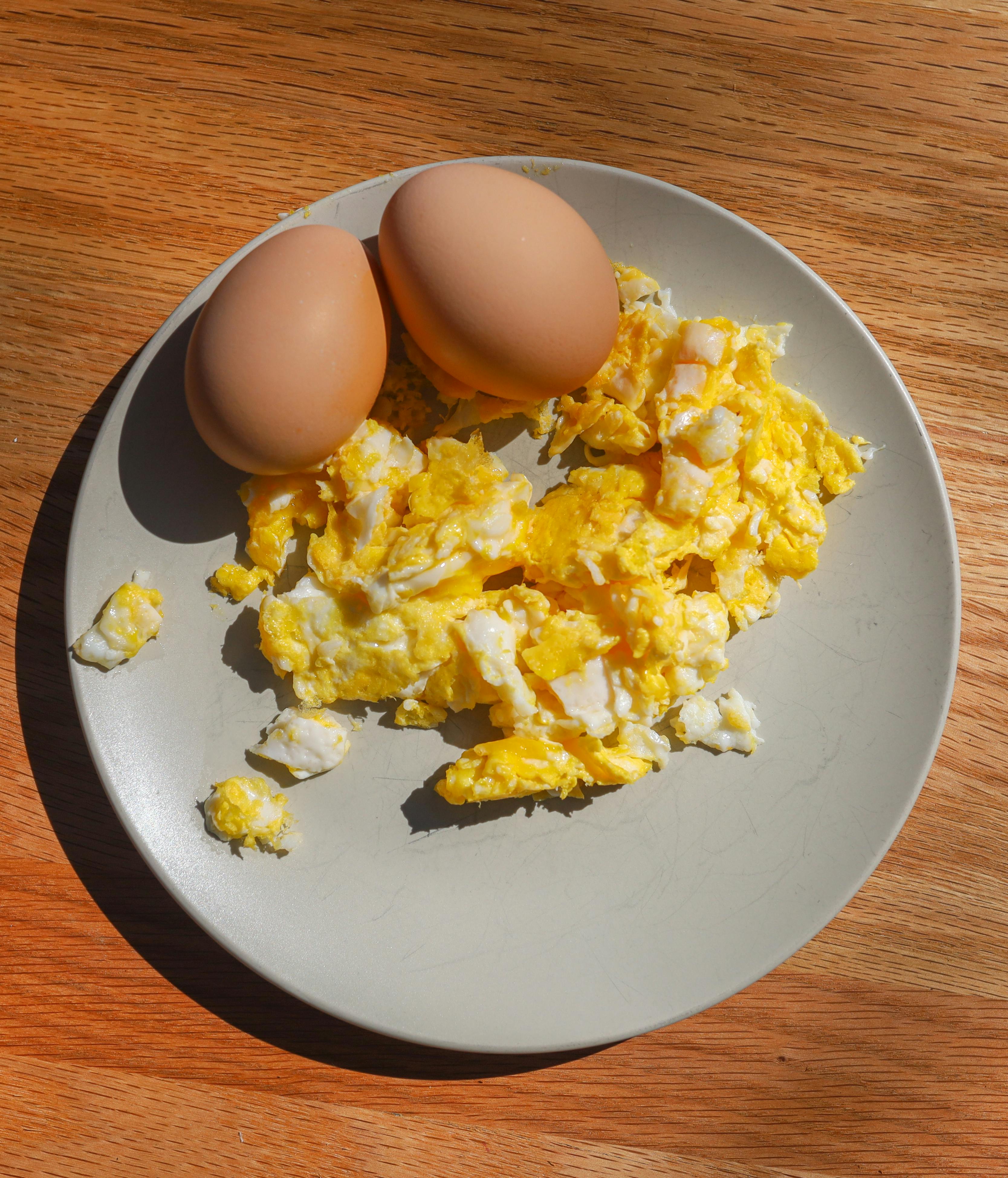
The biggest mistake is using heat that is too high. Eggs are mostly water and protein, and high temperatures force those proteins to contract quickly, squeezing out moisture. That is why scrambled eggs go from tender to rubbery in moments. A lower flame gives you a wider margin for control and a creamier final texture.
Burning the garlic is the next common problem. Garlic contains sugars and sulfur compounds that turn harsh when overcooked. If you smell bitterness instead of sweetness, the pan is too hot. A practical solution is to infuse the oil first, then remove the garlic temporarily if you are working with a pan that holds heat aggressively.
Another error is over-stirring. Constant rapid movement breaks the eggs into small, dry particles rather than lush folds. Gentle, deliberate strokes produce better curds and a more attractive plate. In culinary schools and professional brunch kitchens alike, cooks are taught that scrambled eggs need attention, but not panic.
Delaying service also hurts the result. Soft eggs continue cooking from retained heat, especially in a hot pan or warmed plate. That means timing matters: toast ready, plates ready, garnishes ready. Creamy Spanish garlic scrambled eggs are at their peak within the first minute after cooking, which is one reason they feel so vivid and restaurant-like when served immediately.
Serving ideas, variations, and practical kitchen tips
The classic serving style is simple: spoon the eggs over toasted bread and finish with olive oil and parsley. This makes an excellent breakfast, but it also works as a light lunch or tapas-style supper. In Spain, egg dishes often move easily across dayparts, especially when paired with good bread, olives, or sliced tomatoes.
For a fuller plate, add sautéed mushrooms, jamón, or blistered padrón peppers. Potatoes can turn the dish into something heartier, especially if you fold in a few pre-cooked slices just before the eggs finish. Even then, keep proportion in mind. The eggs and garlic should remain the focus, not a backdrop to too many competing flavors.
If you want extra richness without losing Spanish character, stir in a small knob of butter off the heat or finish with a spoonful of soft goat cheese. For brightness, a few drops of sherry vinegar can sharpen the flavor surprisingly well. Smoked paprika is another option, though use it lightly so it supports rather than dominates the garlic.
From a practical standpoint, use the smallest pan that comfortably holds the eggs in a shallow layer. A pan that is too large can cook them too fast. Warm plates slightly, but never make them hot. With fresh eggs, patient heat, and quick serving, creamy Spanish garlic scrambled eggs become a dish that feels both humble and expertly made.