The Untold Story of Why American Cheese Has Its Own Category That No Other Country Recognizes

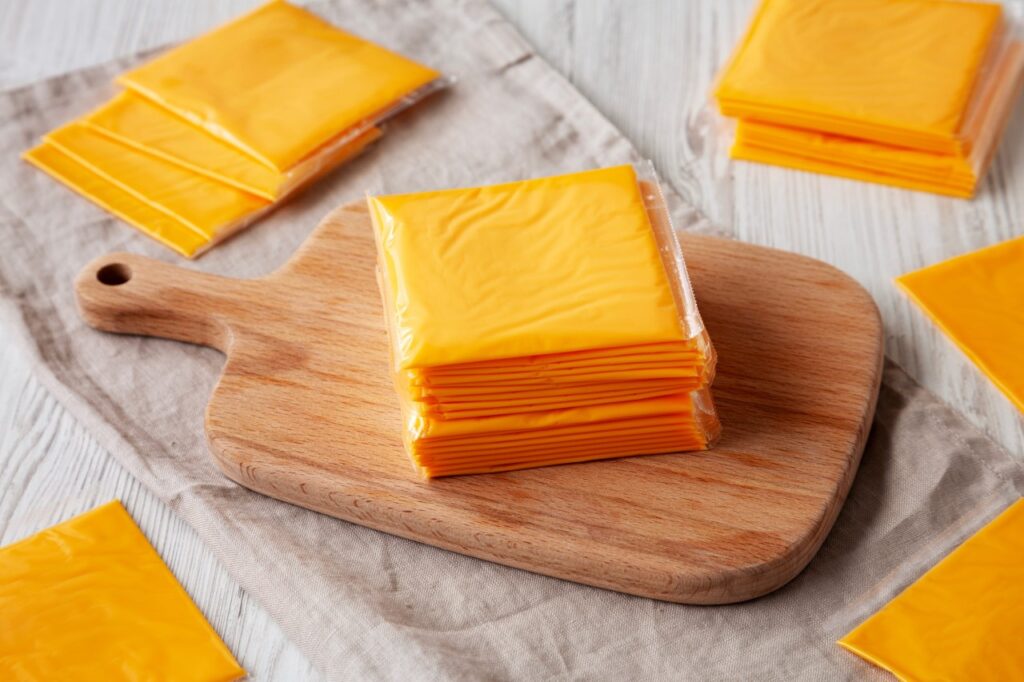
It’s a familiar sight in grocery stores and on burgers across the country, a smooth, neatly wrapped slice labeled as American cheese that feels instantly recognizable. It melts evenly, delivers a consistent taste, and fits effortlessly into everyday meals without requiring much thought. Yet behind that simplicity lies a carefully engineered story shaped by science, industrial progress, and changing consumer needs over time. Unlike traditional cheeses that developed through regional practices and natural aging, this version was intentionally created to address specific challenges, making it one of the most distinct and purpose-driven food categories found in the modern grocery aisle today.
What makes it even more intriguing is that this category exists almost entirely within the United States, shaped by its unique food system and regulatory approach. While processed cheese products are available in many parts of the world, the way American cheese is defined, labeled, and widely accepted sets it apart from international standards and expectations. Its rise reflects a broader shift toward convenience, consistency, and large-scale efficiency factors that have significantly influenced how food is produced and consumed. Understanding its origins reveals not just how it was made, but why it continues to stand apart in both identity and perception.
A Category Shaped by Innovation

What sets American cheese apart begins with a shift away from tradition and toward carefully controlled innovation built for modern food demands. Unlike conventional cheeses that rely on aging, natural variation, and regional methods, this product was developed to solve practical problems such as inconsistency, spoilage, and limited shelf life. By blending cheeses and adding stabilizing ingredients, manufacturers created a product that behaved predictably from one batch to the next. That consistency was not incidental but deliberately engineered to meet the needs of a rapidly expanding food system where reliability, safety, and convenience mattered alongside flavor.
Over time, this method of production created something more distinct than a simple variation of traditional cheese. It was not designed to replace older cheese-making traditions, but to serve a separate function by offering uniform texture, dependable melting, and easier storage. That practical identity gave it a place of its own in the American market and helped define it as a separate category rather than a regional style. This distinction is what ultimately made it stand out globally, since few other countries accepted the same degree of processing within their definition of cheese, shaping how it is viewed and classified today.
When Convenience Took the Lead
The rise of American cheese closely follows a broader shift toward convenience that reshaped how food was produced, distributed, and consumed across the country. As urban populations grew and daily routines became more structured and time-sensitive, there was increasing demand for foods that required minimal preparation while delivering consistent results. American cheese fits this need by offering a product that melts evenly, requires no aging, and can be sliced, wrapped, and stored with precision. Its predictability made it especially appealing in a system where efficiency and reliability were becoming essential parts of everyday life.
This convenience quickly extended beyond home kitchens into large-scale food service environments where consistency was critical. Restaurants, schools, and institutional kitchens relied on products that reduced preparation time and minimized variation between servings. American cheese provided a dependable solution, ensuring the same texture and melt across different locations and uses. Its ability to perform reliably in high-volume settings helped drive widespread adoption, reinforcing the idea that ease, speed, and uniformity could hold equal importance to tradition in shaping modern food preferences and consumption habits.
The Fine Line Between Cheese and Product

One of the most debated aspects of American cheese lies in how it is defined and understood within the broader category of cheese. While it begins with real cheese as a base, the addition of emulsifiers, stabilizers, and other ingredients changes its structure in noticeable ways. These elements allow it to melt smoothly and consistently, avoiding the separation or uneven texture often seen in natural cheeses. This engineered behavior is precisely what makes it useful in many applications, but it also places it outside the boundaries of what many traditional definitions consider to be true cheese.
This difference has led to clear regulatory distinctions, particularly in how the product is labeled and marketed across different regions. In many countries, it cannot legally be referred to simply as “cheese” and must instead be classified under terms that reflect its processed nature. These rules highlight a clear divide between traditional cheese-making and modified products, even when their origins overlap. The ongoing discussion around this classification reflects a broader question about authenticity, raising important points about how much a food can be altered before it is recognized as something entirely separate.
Why It Remains Uniquely American
The concept of American cheese is deeply rooted in the specific economic and cultural conditions that shaped the United States during a period of rapid industrial growth. Large-scale production systems, advances in food processing, and a strong emphasis on standardization created an environment where consistency and efficiency were highly valued. Instead of focusing on regional variation or traditional methods, the goal was to produce a reliable product that could be distributed widely and perform the same way every time. This approach aligned with a growing demand for foods that were accessible, affordable, and easy to use across diverse settings.
In contrast, many other countries continued to define cheese through long-standing traditions tied to geography, craftsmanship, and strict production methods. These definitions often emphasized origin, aging processes, and natural variation, leaving little room for products that were significantly altered through processing. As a result, while processed cheese products can be found around the world, the distinct category recognized in the United States remains largely unmatched elsewhere. It reflects a different philosophy of food production, shaped by industrial priorities and consumer expectations that favored uniformity and convenience over tradition.
The Legacy of Processed Simplicity

The lasting impact of American cheese lies in how it quietly reshaped expectations around what food could be in a modern, fast-moving society. Rather than relying on time, aging, and natural variation, it showed that consistency, shelf stability, and ease of use could be intentionally designed into a product. This marked a significant shift in food production, where control and predictability became just as valuable as flavor. The same principles soon extended beyond cheese, influencing a wide range of packaged foods that prioritized uniform results, longer storage, and simplified preparation for both households and large-scale use.
Today, its presence continues to reflect those original priorities in a wide variety of everyday settings. It remains a reliable option in environments where consistency matters, from home kitchens to large food service operations that depend on predictable outcomes. Its smooth melting, long shelf life, and ease of handling keep it relevant in modern cooking routines. Even as discussions around authenticity and classification continue, their influence is clearly visible in how many foods are now designed. It stands as an example of how practicality and innovation can shape lasting changes in how people produce, select, and consume food.