Why Ethiopian food never got the same love as Thai


Some cuisines travel on taste alone. Others arrive with the full force of policy, branding, migration, and timing behind them.
Thai food had a global launch strategy, while Ethiopian food spread more organically
One of the clearest reasons Thai food achieved broad international popularity is that Thailand treated cuisine as a national export. Beginning in the early 2000s, the Thai government backed restaurant expansion abroad through a strategy often described as “Global Thai,” helping standardize menus, support restaurateurs, and turn dishes like pad thai, green curry, and tom yum into global shorthand for the country itself. That kind of coordinated promotion matters because it reduces risk for diners, investors, and landlords at the same time.
Ethiopian food never had an equivalent worldwide rollout. Its international growth was driven more by migration, diaspora entrepreneurship, and local community demand than by a state-backed effort to seed restaurants in major cities. As a result, Ethiopian cuisine built passionate pockets of influence rather than a uniform global footprint. You could find exceptional Ethiopian meals in Washington, D.C., London, Toronto, or parts of the Middle East, but not the same repeatable format in suburban strips and airport zones across continents.
That difference shaped familiarity. Thai cuisine became something many people encountered early and often, whether in a business district lunch spot, a delivery app, or a college town takeout restaurant. Ethiopian food, by contrast, often remained a “discovery” cuisine, praised intensely by those who knew it but less likely to become an everyday default.
Branding also played a role. Thai restaurants around the world converged around a recognizable set of dishes and flavor cues. Ethiopian menus are rich and varied, but to newcomers they were often introduced through a smaller, less standardized set of dishes, making the cuisine feel more niche than it really is.
Restaurant economics favored Thai food in ways that Ethiopian operators often could not match

Thai food proved unusually adaptable to the restaurant formats that expanded fastest in the late 20th and early 21st centuries. Many popular dishes could be prepared quickly, portioned individually, packed for takeout, and delivered without losing all their appeal. Noodle dishes, stir-fries, curries, and rice plates fit neatly into lunch specials and weeknight ordering habits. That made Thai restaurants attractive not just to adventurous eaters, but to busy office workers and families looking for convenience.
Ethiopian food operates on a different dining logic. Its most iconic presentation centers on shared platters, injera spread across a large tray, and multiple stews, vegetables, and meats served communally. That is one of the cuisine’s greatest strengths because it creates hospitality, ceremony, and abundance. But it also makes the food harder to squeeze into the highly individualized, speed-oriented business model that helped Thai food proliferate.
There are practical issues too. Injera is essential, distinctive, and technically demanding. Traditional injera made from teff requires fermentation, consistency, and ingredient sourcing that can be more complicated and costly than the starch base of many globally popular cuisines. In places where teff was hard to import or expensive, operators had to compromise, blend flours, or absorb higher costs. Thai restaurants also face ingredient challenges, but many learned to localize substitutions more easily without undermining the structure of the meal.
Service expectations matter as well. Thai food can be sold as quick lunch, casual dinner, takeout, or upscale dining with relative ease. Ethiopian restaurants often succeed best when they can teach the dining ritual, explain dishes, and encourage group ordering. That extra friction does not make the cuisine weaker. It simply means the commercial conditions that reward convenience and standardization tended to favor Thai.
Familiarity, perception, and the politics of “approachable” flavors shaped public response
People often claim that “good food always wins,” but that overlooks how consumers decide what feels accessible. Thai cuisine entered many markets at a moment when diners were becoming comfortable with a flavor spectrum that included sweetness, acidity, moderate heat, noodles, rice bowls, and coconut-based curries. Those elements felt exciting without seeming radically unfamiliar. Even when dishes were bold, they still had bridges to things many diners already knew.
Ethiopian food asks for a somewhat different kind of openness. The sour tang of injera is central to the experience, not a side note. Eating with the hands from a shared platter can be joyful and intimate, but for first-time diners raised on individualized plates and utensils, it can also feel unfamiliar. The cuisine’s depth comes from slow-cooked stews, layered berbere spice, clarified butter, lentils, greens, and fermentation. For many diners, those pleasures become lifelong favorites only after someone first explains them.
Media exposure compounded the gap. Thai food appeared for decades in travel writing, cooking shows, city guides, and lifestyle coverage as vibrant, sexy, colorful, and easy to crave from a distance. It photographed well in neat bowls and glossy plates. Ethiopian food, despite being visually rich and deeply social, was less often framed for mainstream food media in the same way, especially in earlier eras when coverage tended to flatten African cuisines into broad stereotypes rather than treating them as sophisticated culinary traditions.
Race and geography cannot be ignored here. Southeast Asian cuisines entered Western food conversations through a mix of tourism, migration, and geopolitics that often rendered them “exotic but desirable.” African cuisines, including Ethiopian, were too often burdened by reductive narratives about famine, instability, or underdevelopment. Those distortions affected restaurant traffic more than people like to admit.
Diaspora patterns and city geography helped Ethiopian food become beloved, but locally concentrated
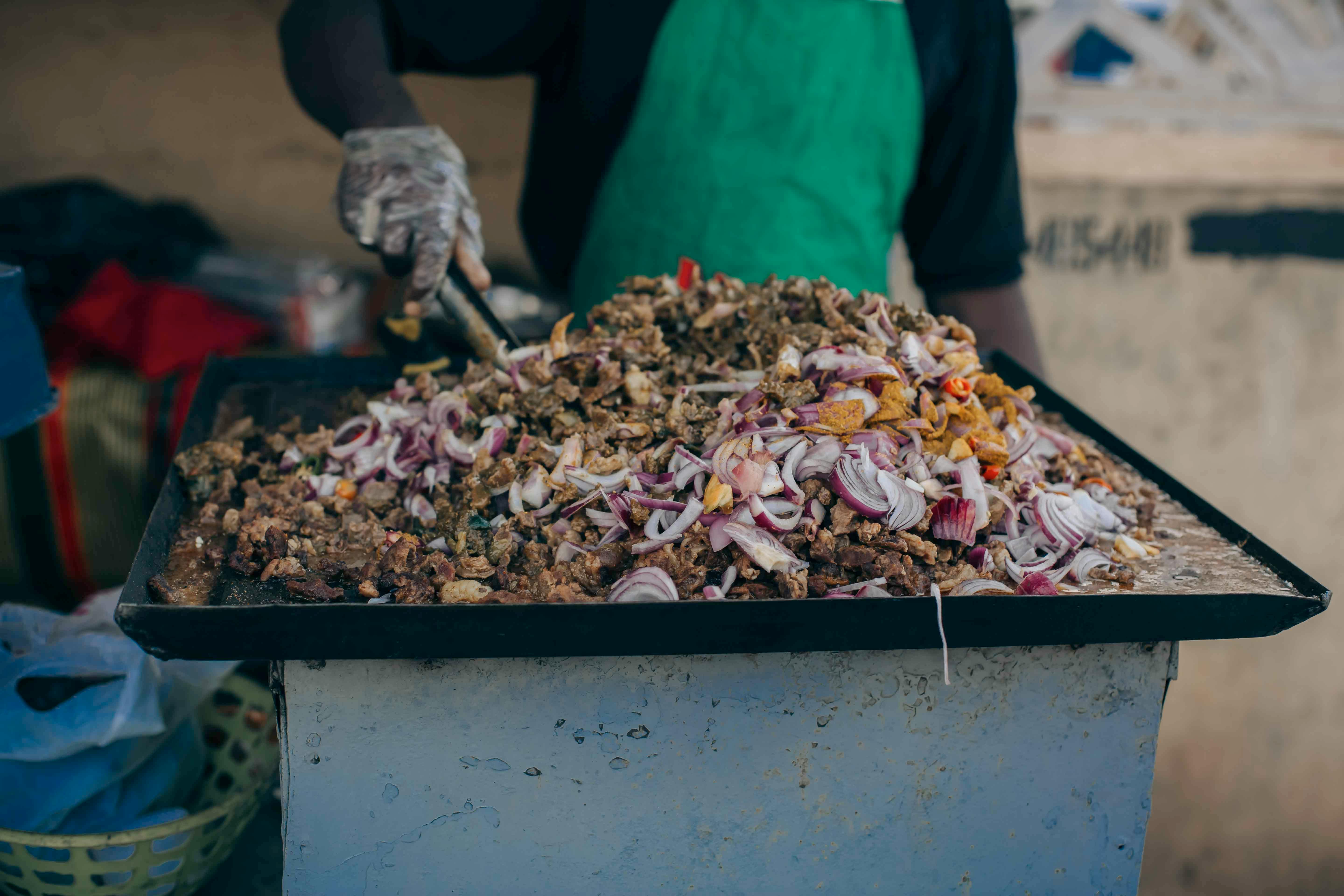
If you want proof that Ethiopian food can inspire deep loyalty, look at cities where sizable Ethiopian and Eritrean communities established durable restaurant cultures. Washington, D.C. is the classic example. Neighborhoods and suburbs around the capital became home to some of the strongest Ethiopian dining scenes outside Ethiopia, supported by immigration patterns shaped by politics, war, asylum, education, and government-related employment. In those places, the cuisine was not a novelty. It was community infrastructure.
But concentration cuts both ways. Thai restaurants spread with remarkable breadth, reaching small cities, suburbs, tourist districts, food courts, and shopping corridors. Ethiopian restaurants more often clustered where there was diaspora density, enough demand for specific ingredients, and a customer base willing to sustain a more specialized model. That produced excellence, but not omnipresence. A cuisine can be adored in key metros and still remain absent from much of the broader market.
This matters because many people “discover” cuisines only when they become geographically unavoidable. Once a cuisine is present in enough neighborhoods, diners stop treating it as a cultural event and start treating it as dinner. Thai food crossed that threshold in many countries. Ethiopian food usually did not.
There is also a labor and knowledge dimension. Diaspora-owned Ethiopian restaurants often carry a heavy burden: preserving culinary integrity, educating customers, and representing a whole culture at once. Thai operators benefited from stronger menu recognition globally, so customers often arrived already knowing what they wanted. Ethiopian restaurateurs have frequently had to do more interpretive work before the meal even begins.
Ethiopian food is better positioned now than ever, but global fame still requires infrastructure
The story is not that Ethiopian food failed. It is that it excelled under harder conditions. Today, many of the barriers that once limited its reach are weakening. Diners are more curious, more accustomed to fermentation, more interested in regional specificity, and more willing to share food socially. Teff, berbere, shiro, tibs, doro wat, and kitfo are more recognizable than they were 20 years ago. That broader literacy gives Ethiopian cuisine a stronger runway than it had in the past.
Contemporary food culture also rewards authenticity differently. Chefs, writers, and younger diners increasingly challenge the old hierarchy that treated European and certain Asian cuisines as inherently refined while overlooking African culinary sophistication. Ethiopian food is benefiting from that shift because it offers exactly what modern diners say they want: bold flavor, plant-forward variety, ritual, history, and a strong sense of place. Its vegetarian and fasting traditions, in particular, align well with current interest in meatless eating.
Still, greater recognition will depend on infrastructure as much as appetite. More fast-casual adaptation, wider ingredient distribution, clearer menu framing, and stronger media representation could all help. So could more investment that allows Ethiopian restaurateurs to expand without diluting what makes the cuisine distinctive. Thai food became global not just because it was delicious, but because systems were built around its expansion.
That is the real answer. Ethiopian food never lacked flavor, complexity, or devotion. It lacked the same scale of promotion, commercial fit, and geopolitical advantage. As those conditions change, the gap may finally begin to close.